naturephotography

At the North Sea (winter ed. with zeitweise.art) /  by Arne Bischoff

Introduction

October and November have been two months of photographical inspiration for me. Late October, I visited the wonderful annual nature photography festival at Lünen, hosted by the German Society For Nature Photography and home to the European Wildlife Photographer Of The Year, one of the most prestigous competitions there is, and the equally impressive membership competition, GDT Nature Photographer of the Year. I visit “Lünen” every year since quite a long time and I love everything there. The lectures, the exhibitions, the people and the meeting of old friends. And it inspires me. The word has become quite trite and trivial in the last few years, and I don’t use it lightly. I often struggle withe my own fascination for photography, more often not even taking the camera with me, but only my binoculars.

To add onto the inspiration and to learn, I went for the photographic double-feature and on a “zeitweise”-workshop directly after Lünen. Jan and Hermann of zeitweise.art have established themselves as creative pioneers in the European nature photography realm. I have been following them for quite some time now, hearing talks, bought a book and watching their Youtube. It is their collaborative, inclusive and down-to-earth approach that really got me in. Learning to see and photograph what’s in front of you rather than travelling to Antarctica. Representing what you see in an artistic way that conveys a spirit, a mood, a tone rather than hitting the holy Instagram-trifecta of sharp, close-up and colorful.

Admittedly, this is a longish introduction. But it sets a tone, too and it might help you understand the imagery on this blogpost.

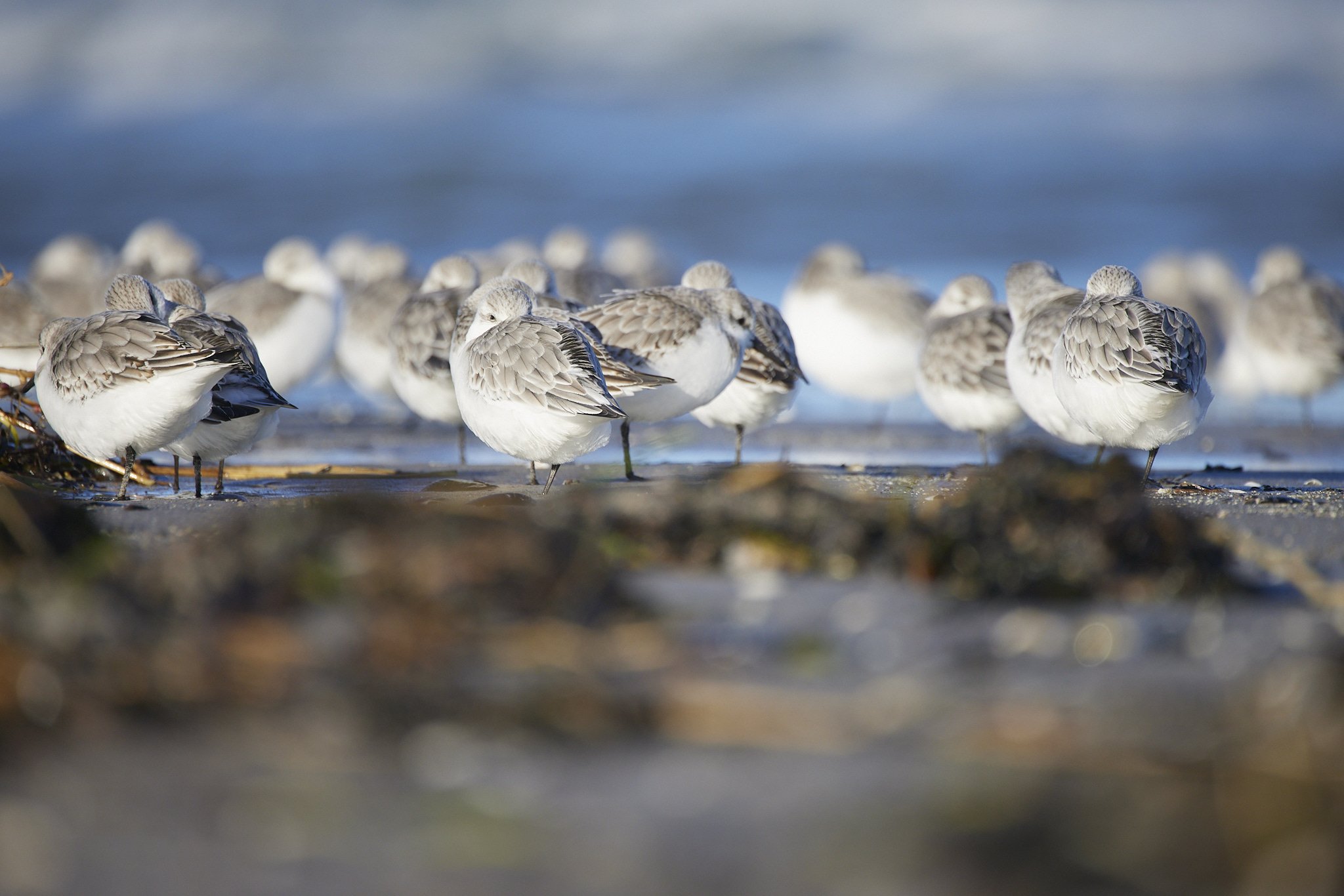
At high tide, thousands of Dunlins (Calidris alpina) rest at the beaches of Baltrum.

Baltrum (An island in the Wadden Sea)

North of the German mainland lie the East Frisian Islands within the Wadden Sea. Baltrum is the smallest of the seven main islands. The whole area is entirely dependent by the tide. At low tide you could walk the ten kilometers to mainland Germany. At high tide, you feel the power of the North Sea. During bird migration, the whole Wadden Sea area is the resting place of around 12 million migratory birds. And with low temperatures and strong winds in late October, early November, there is not a lot of tourism. One up: There are no cars allowed to the island. It’s a breath of fresh air and so liberating. Baltrum was the perfect canvas for a week of nature photography.

European herring gull (Larus argentatus) with a crustacean in its beak.

Birds

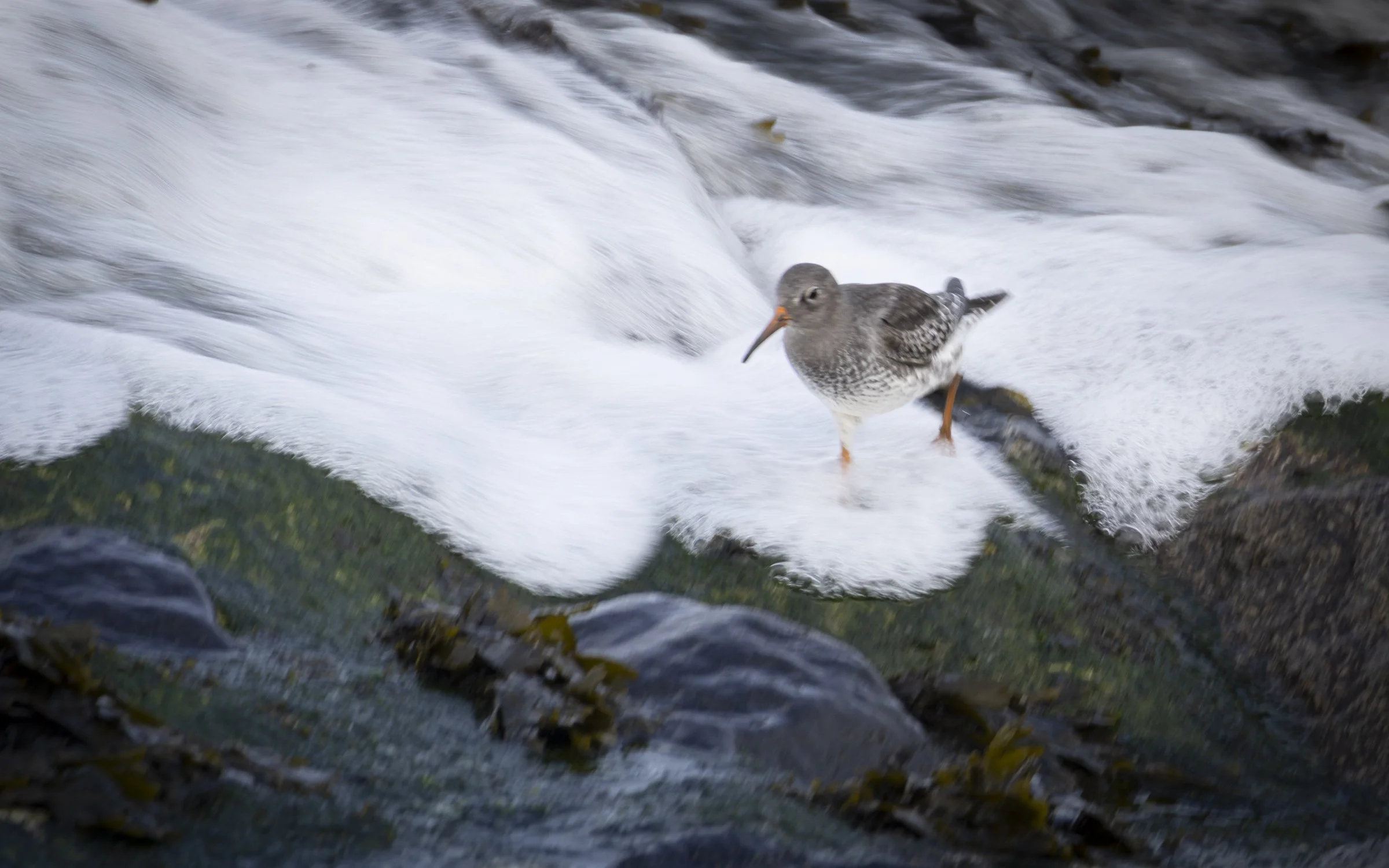
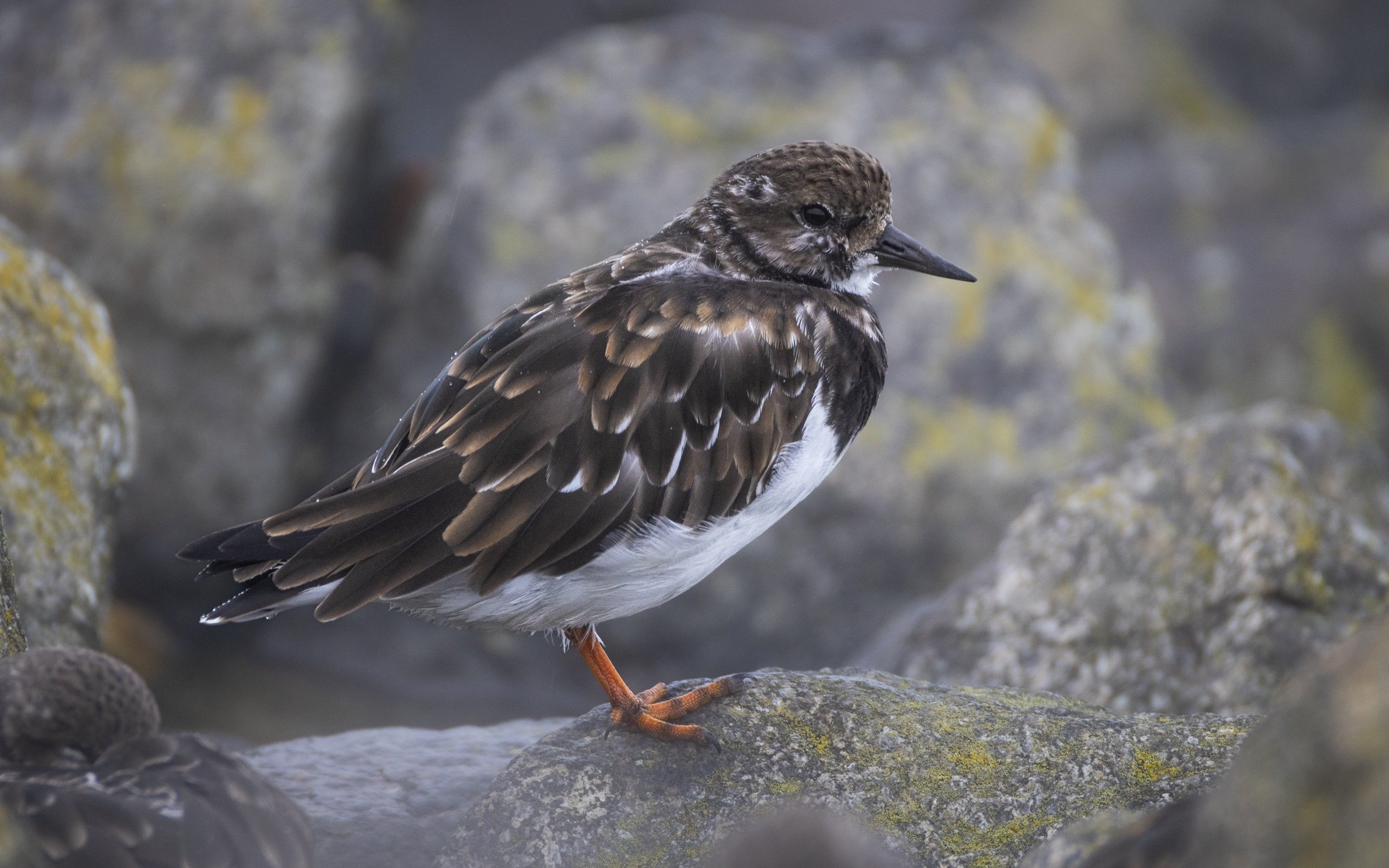
When you are on an island like Baltrum during migration season, birds are a natural motive. Purple sandpipers (Calidris maritima) and Ruddy turnstones (Arenaria interpres) shelter from high tide at the north end of the island. Thousands of Dunlins, Red Knots (Calidris canutus), Eurasian curlews (Numenius arquata) and other waders doing the same at the westernmost beaches. White-tailed eagles (Haliaeetus albicilla) and different kinds of harriers hunt while small arctic songbirds like Snow buntings (Plectrophenax nivalis), Horned larks (Eremophila alpestris) or Redwings (Turdus iliacus) gather some well needed strength for their further journeys.

Waves

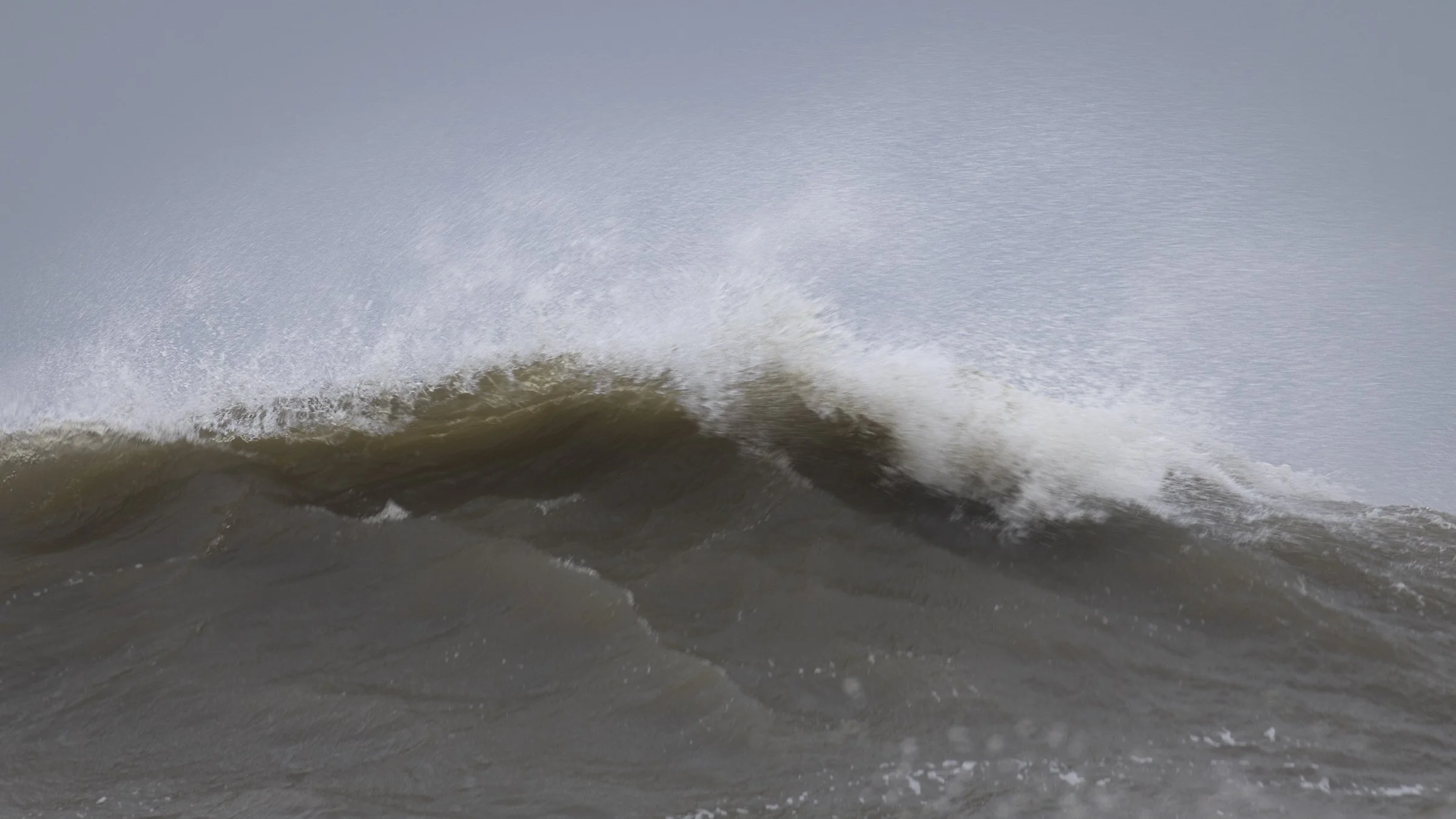
When at Sea, make sure to photograph waves. Large ones, small ones, fast shutter speeds, slow shutter speeds, crashing waves, calm waves. Do waves!

Scapes

Sunset over the Wadden Sea at low tide.

I usually use the term “scapes” as a more abstract form of still life. Could be a landscape, seascape, cityscape or an abstract macro. Luckily, the island was full of such visuals. Sunsets over the Wadden Sea at low tide. Abstracts of the sea or seashells.

Woodlands

Crouching birch trees, impressionistic style.

Amidst the island of Baltrum, well-hidden between the large sand dunes is a very small but beautiful forest. All the trees crouch down and low. As long as they are not growing too tall, they are protected from the wind by the larger dunes. If they grow too tall, the merciless wind takes over and bends them into even weirder shapes. And those trees lend themselves very well to some experiments with ICM-photography (intentional camera movement).

Workshop wrap-up

Me and the Dunlins. 📷 zeitweise.art | Instagram-Story

It has been a great week. The workshop-setting worked well for me. Hermann and Jan were wonderful guides, well prepared with a lot of tasks and a lot of time to be creative; great feedback, friendly, solidaric and on point - which set the tone for the whole group: collaboration is key. And it was great fun. Highly recommended!

More:
https://www.zeitweise.art/workshop
https://www.instagram.com/zeitweise.art/
https://www.youtube.com/@zeitweise

Heather 💜 /  by Arne Bischoff

I have been born in a region of Germany that is famous for its vast fields of heather. When the heather is blossoming in all its vibrant purple glory, it is really wonderful to behold. Enjoy “Lüneburg Heath”!

Croak, croak, Water frog! (Botanical Garden revisited) /  by Arne Bischoff

The common Water frog (Pelophylax kl. esculentus)

In spring I often visited the local “Alter Botanischer Garten” in my hometown of Goettingen to photograph early blossomers. I dedicated an entire blogpost to this topic. Now I revisited the Botancial Gardens with an entirely different purpose: Frogs. More precisely: The common Water frog, also known as Green frog (Pelophylax kl. esculentus).

Water Frog courtship

From May to early June a small pond inside the garden is the stage of a beautiful and rather noisy spectacle. The courtship of the Water frogs. They gather in quite some numbers in the pond and do not care at all about stealth. They sit and swim and mate quite openly, but most of all: They croak. They croak that loudly that you can hear them from the nearby streets when you just walk by. It’s fantastic!

Both of its names, the Water and the Green frog are describing some key characteristics of the frog as it as mostly aquatic and very green. But from here, it gets way more complicated. According to Wikipedia, “Pelophylax kl. esculentus is the fertile hybrid of the pool frog (Pelophylax lessonae) and the marsh frog (Pelophylax ridibundus). It reproduces by hybridogenesis.” Hybridogenesis has only been described with three frog and some fish species. So in the end, this little screamer is quite special in a biological way.

All biological oddities aside, it is quite a beautiful sight to behold (if you are into frogs). The frogs allow you very close, they are active, but not hectic. This makes it quite easy to observe and photograph. Usually people in urban environments tend to overlook wildlife, but not here. The courting and croaking frogs attract a huge audience to the beautiful Old Botanical Garden of Goettingen University.

Seabirds in North Frisia: Where Germany ends /  by Arne Bischoff

An Arctic tern hunting over the water.

In the northwestern corner of Germany lies the province of “North Frisia”. It has a coastline with the Northern Sea of over 400 kilometres and is famous for its “Warden Sea” and Schleswig-Holstein Warden Sea National Park, the largest in Germany. Together with the neighbouring Wadden Sea national parks it is over 8.000 km² large. Around two thirds of the area is permanently under water, while one third is periodically dry. The Wadden Sea is one of the most important resting habitats of arctic birds in Europe if not the world during the annual bird migration. The neighbouring salt marshes are a large and important breeding ground.

Land of the Wadden Sea

Black-tailed godwit (Limosa limosa) in breeding plumage.

At the German coast, the North Sea has a tidal range of about three to four and a half metres. During low tide the water retracts and exposes mud flats of up to 40 kilometres width: The Wadden Sea. It is an enormously important habitat for nature and wildlife of all kinds. Hundreds of thousands of birds have their feast on marine worm, shellfish, crab and other. With high tide, when the water returns every twelve hours, all those birds are force inwards towards the shoreline and beyond into their rest places in the saltwater marshes and koog’s (a large type of polder) which makes for an unique observation and photography opportunity. And this is, why I recently went there with a group of local birdwatchers. To watch and marvel and photograph.

Birds, birds, birds

A Grey plover (Pluvialis squatarola) in breeding plumage.

Mid-May the area is a birding paradise. Waders, terns, seabirds, gulls, songbirds, birds of prey. They were there in abundance. The sheer numbers of waders, and terns but also of White-tailed eagle and Harriers was simply astonishing. This and the high number of observation spots and hides made for some unique birding, some in really close proximity, such as a Black-tailed godwit (Limosa limosa) and lots of Northern lapwings (Vanellus vanellus) right next to the street. The smaller waders such as Dunlins (Calidris alpina) and Red knots (Calidris canutus) proved a lot harder to photograph, but still beautiful to watch. Bearded reedlings (Panurus biarmicus) were feeding their young in the reeds. Warblers and skylarks were singing everywhere.

Waders, waders, waders …

From left to right:

  • Black-tailed godwit (Limosa limosa): A large, long-long-legged, long-billed shorebird which is actually breeding in the Northern Frisia region.

  • Grey plover (Pluvialis squatarola): A circum-polar arctic breeder with a striking breeding plumage of black, white and golden speckles.

  • Bar-tailed godwit (Limosa lapponica): This species holds the record for the longest non-stop flight for any birds. In August 2007, a female specimen departed on an eight-day non-stop flight from western Alaska to New Zealand: 11,680 km (7,258 mi). This female then continued a 174 day round-trip journey of 29,280 km (18,194 mi) within 20 days of flying.

  • A flock of Dunlins (Calidris alpina): One of the most common species of waders in Europe. Flying in large and spectacular formations.

  • Northern lapwings (Vanellus vanellus) do have an unmistakable flight-call. Its sound (“Ki-Witt”) lead to its German name (Kiebitz). They perform spectacular courting flights.

Terns, terns, terns

One beautiful evening, our little group was watching the high-tide resting place in a local “Koog” behind the dyke, when a member of the group pointed to a group of hunting terns (both Artic Terns; Sterna paradisaea and Common Terns; Sterna hirundo respectively) right at the far side of the levee. The scenerey was astonishing. Back-lit, with the sun causing millions of beautiful reflections in the sea. Terns are famous as blazing-fast flyers and to see them hunting so close was really impressive. I shot a lot of frames and luckily captured one or two moments when the terns caught some prey.

An Arctic tern hunting.

The best of the rest: Reedling, Warbler, Hare, and so much more!

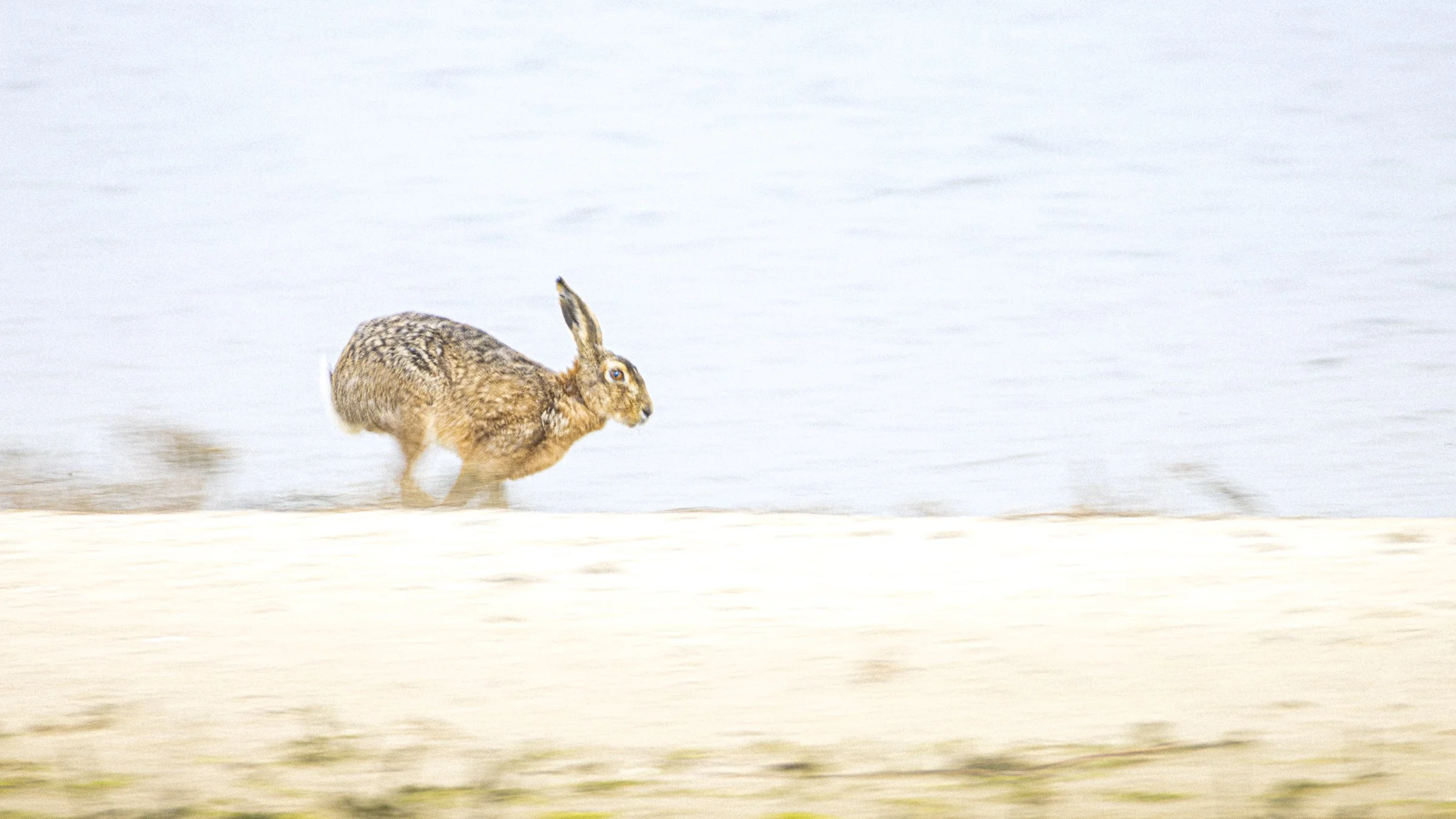
But this was far from it. There were animals literally everywhere. Bearded reedlings (Panurus biarmicus) feeding its young. A Sedge warbler (Acrocephalus schoenobaenus) displaying right in front of me. Grey partridges (Perdix perdix) in the evening. So many sheep. A White-tailed eagle (Haliaeetus albicilla) on a fence (“Lahnung”). And a European hare (Lepus europaeus) crossing a sandbank at full speed.

A European hare (Lepus europaeus) running over a sandbank.

Rarities

During our five-day trip we even beheld some absolute rarities, such as Gull-billed tern (Sterna nilotica), Red-necked phalarope (Phalaropus lobatus), Eurasian dotterel (Eudromias morinellus), Green-winged teal (Anas carolinensis) and Ruddy duck (Oxyura jamaicensis). Of course birding is not all about rarities, but it still is nice to see them.

The Ruddy duck

Great crested grebe's courting.

A Red-necked phalarope searching for food by rotating around its own.

Northern lights

While at the North Sea, we were not only graced by bird rarities, but also by a very special solar phenomenon. Northern Germany was hit by a heavy solar storm which caused us to see Northern lights (Aurora borealis), which is extremely scarce as far south. Although the photographic sensor (in this case a quite crappy smartphone) enhanced the colours quite a bit, it was beautiful and visible to the bare eye, too.

The grand finale

For the grand finale, please enjoy all images in one large gallery. Please navigate with the left and right buttons.

Trip list

The whole trip made up for 122 species of birds. You find the whole list below (German only). A big thankyou to Christian Dienemann for keeping both track and account!

An ode to the Fire salamander /  by Arne Bischoff

Fire salamander (Salamandra salamandra).

I stumbled over one of the little Fire salamander (Salamandra salamandra) fellows this very morning when I was doing my woodpecker monitoring round. And boy, do I love them! It’s a sad kind of love though. When I moved into the area, nearly 20 years ago, they were ubiquitous in the local Harz mountains. Climate change with less precipitation and more heat and especially the Batrachochytrium salamandrivorans (Salamanderpest) fungus decimated the beautiful salamander heavily. The chytrid fungus has only been described scientifically in 2013. In the past ten years, the fungus has killed 98 percent of the population in the federal state of Niedersachsen (Lower Saxony), This brings the little guy to the brik of extinction within only ten years.

It’s our shoes and our dogs who trasmit the disease. So please desinfect your shoes regularly and keep your dogs leashed when in Salamander area.

The Botanical Garden /  by Arne Bischoff

A bunch of pasqueflowers (Pulsatilla vulgaris).

My hometown of Goettingen boasts not only one, but three huge Botanical gardens, all founded by the university. As one of Germanys oldest universities, the gardens are very old, too. The oldest of the three, subsequently named “Alter Botanischer Garten”, was founded back in 1736 by famous botanist Albrecht von Haller. All three are quite different, but very beautiful. And throughout the year, they are a place of bloom and beauty. Recently, I visited this “Old Botanical Garten” right in the city center, to photograph the spring bloom. While it was midday and the light very, very bright and harsh, I focussed on my recent area of interest, which is high key.

I concentrated on mainly three topics. Pasqueflower, winter heath and grape hyacinth. But I was very happy to notice the humming and buzzing around me. The gardens are home to a lot of wild bees and also bumblebees. And of course, birds. But this is a matter for a different blog post.

At the fox den again /  by Arne Bischoff

Mr inquisitive!

I know quite a lot of fox and badger dens in my local area. But this one came as a complete surprise. Last year, my friend Luka (make sure to check his work!) called me. His dog, Boris the pointer, had been a good boy and sniffed out a fox den in the most unlikely of places: inside a huge stack of wood right beside a forest track only a kilometre from the next village. Fear not: Boris only pointed to the young foxes, but did them no harm.

It turned out the little fox cubs had come out every evening to play and explore the huge world outside their stack. And this is right when I went there.

The curious little guys where punctual like a clock. About an hour before sunset they came out. I usually heard them sniffing and playing before I saw them. They never strayed far from the safety of the stack though and if, then in the opposite direction of me into thick thorns and bushes. One pup was particulary inquistive and hit the forest road more than once. Exploring and sniffing. But even he kept quite close to the stack which provided him for safety and me with a quite ugly backdrop.

The experience was still beautiful though: Seeing the young cubs play and explore. I even saw mother bring food once and call them out. It was only then when I saw all four pups together.

I hope all five of them made it and they are happily roaming the area. Looking forward to seeing next generation of young foxes in a few weeks time. At another place. Special thanks to Paul for your company!

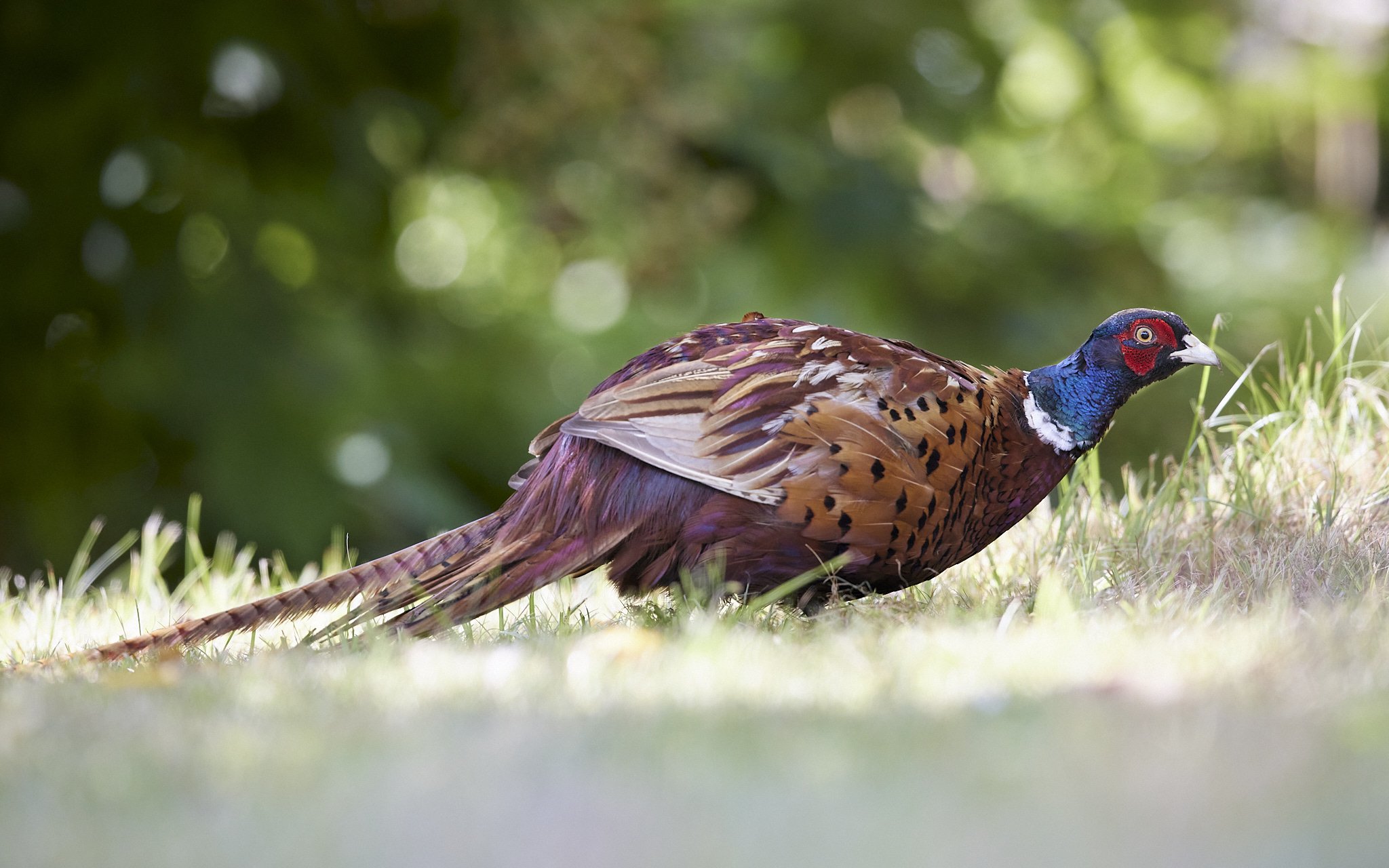
Pheasant tales: Beautiful bird, sad bird /  by Arne Bischoff

When it comes to splendour and grand air, not a lot of European birds rival the Common Pheasant (Phasianus colchicus). But this is where the sad part starts. Because it is actually not even European.

Jagdfasan. The pheasant which lives to be hunted.

The Common Pheasant is native to East Asia. During the medieval period it has been introduced to European courts and royalty. With the beginning of the 19th Century humans began to breed and raise Pheasants to be released into the wild only for hunting purposes. This sad practice continues to this day and is reflected in the Common Pheasants German name “Jagdfasan”, which literally translates to “The pheasant for hunt”. The population is not self-sufficient, so every year a new breed of the colorful Gallinaceous birds is released to “freedom” to be shot. The birds that escape the shooting will sooner or later die of cold or predation.

Colourful beauty

Whenever I see a Pheasant, I feel both: Joy and sadness. Joy, because it’s such a gloriously beautiful creature. And sadness, because it only lives to be shot.

Lovely local Tawny Owls /  by Arne Bischoff

So much fluff!

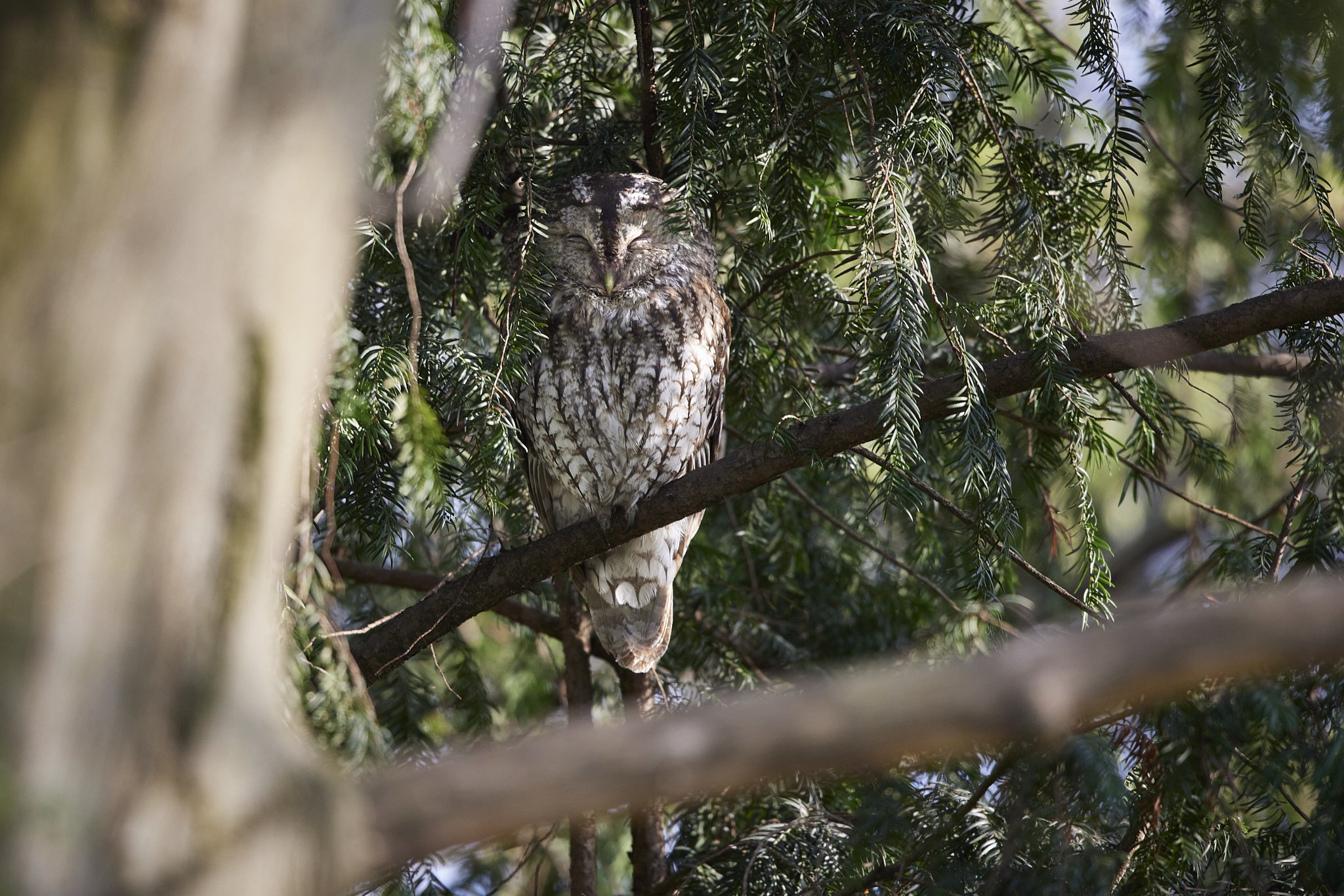
After a one year break, my well known urban Tawny owls came back to the local park nearby to bread. You recognise the female owl by its distinct reddish hue. In 2021 it bred downtown, 2022 it evaded an Eagle owl, and 2023 it came back.

The early owl

Tawny owlets begging

I was more than a little surprised when I heard the little owlets begging as early as the first week of April. The next few days revealed three branchlings - one distinctly smaller - who all seem to have made it through the dangerous first days and weeks before they finally learned to fly and I lost track of it.

Spring love

I visited the owls nearly every day for a period of nearly two weeks. By day, they and their watchful parents preferred to hide within the dense branches of a Thuja. After dusk they roamed a considerably larger area, sitting every night in different branches of the surrounding trees, begging. With the owls, the park vegetation grew and grew, too. A lovely spring!
Seems sleepy, but always keeps an eye open. A parent owl.

Early blossomers: Liverleaf, wood anemone and snowdrop /  by Arne Bischoff

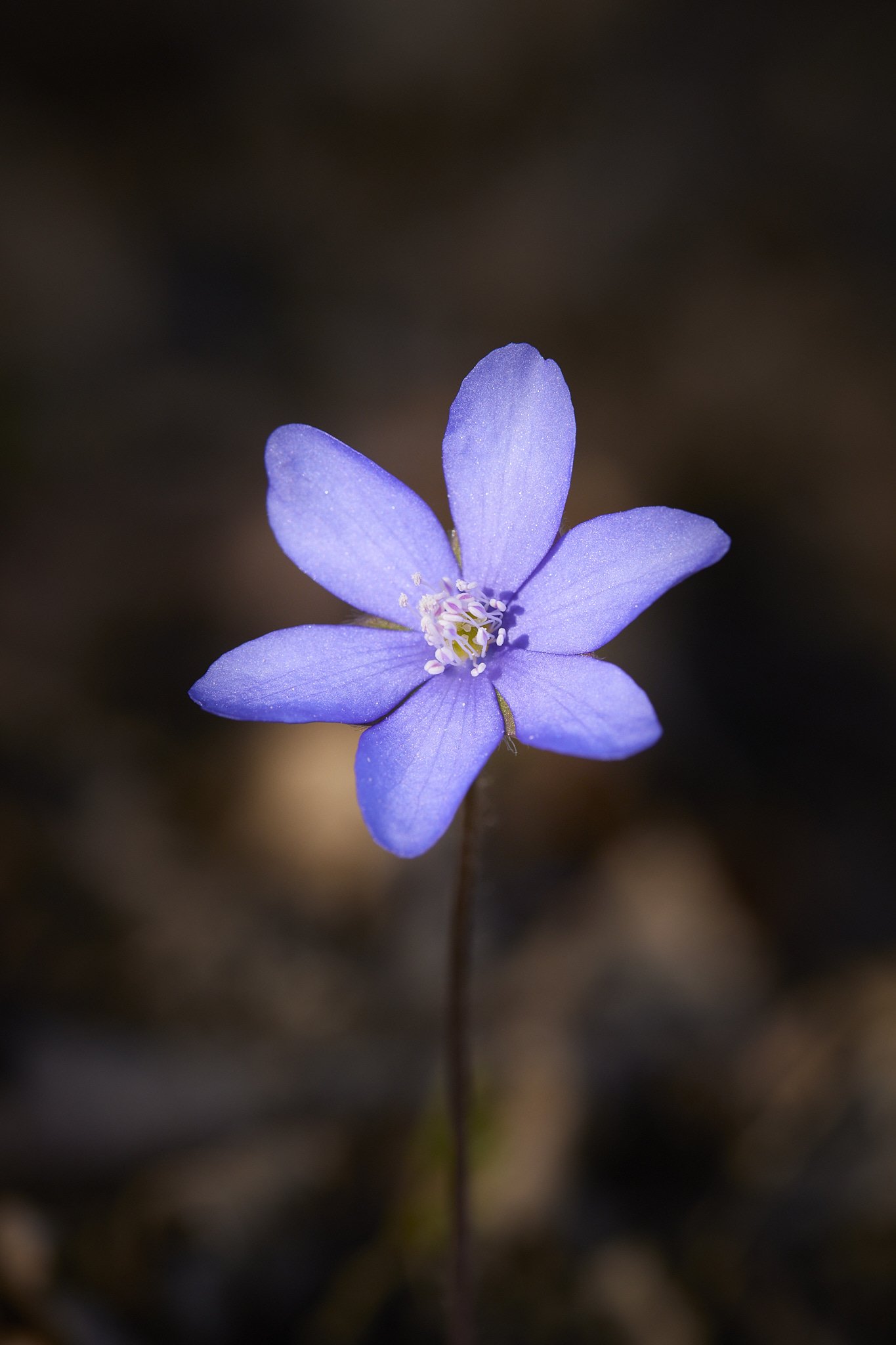
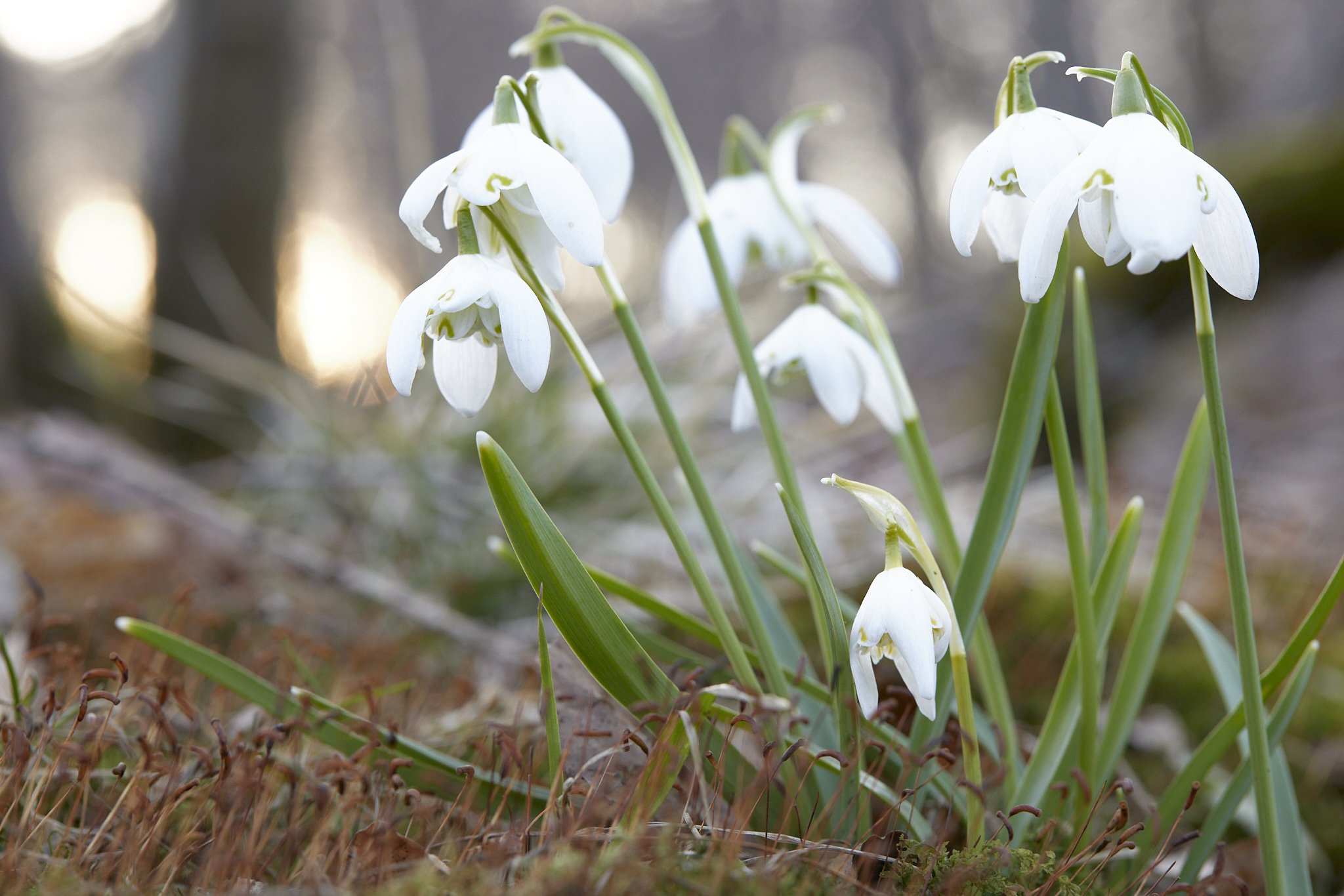
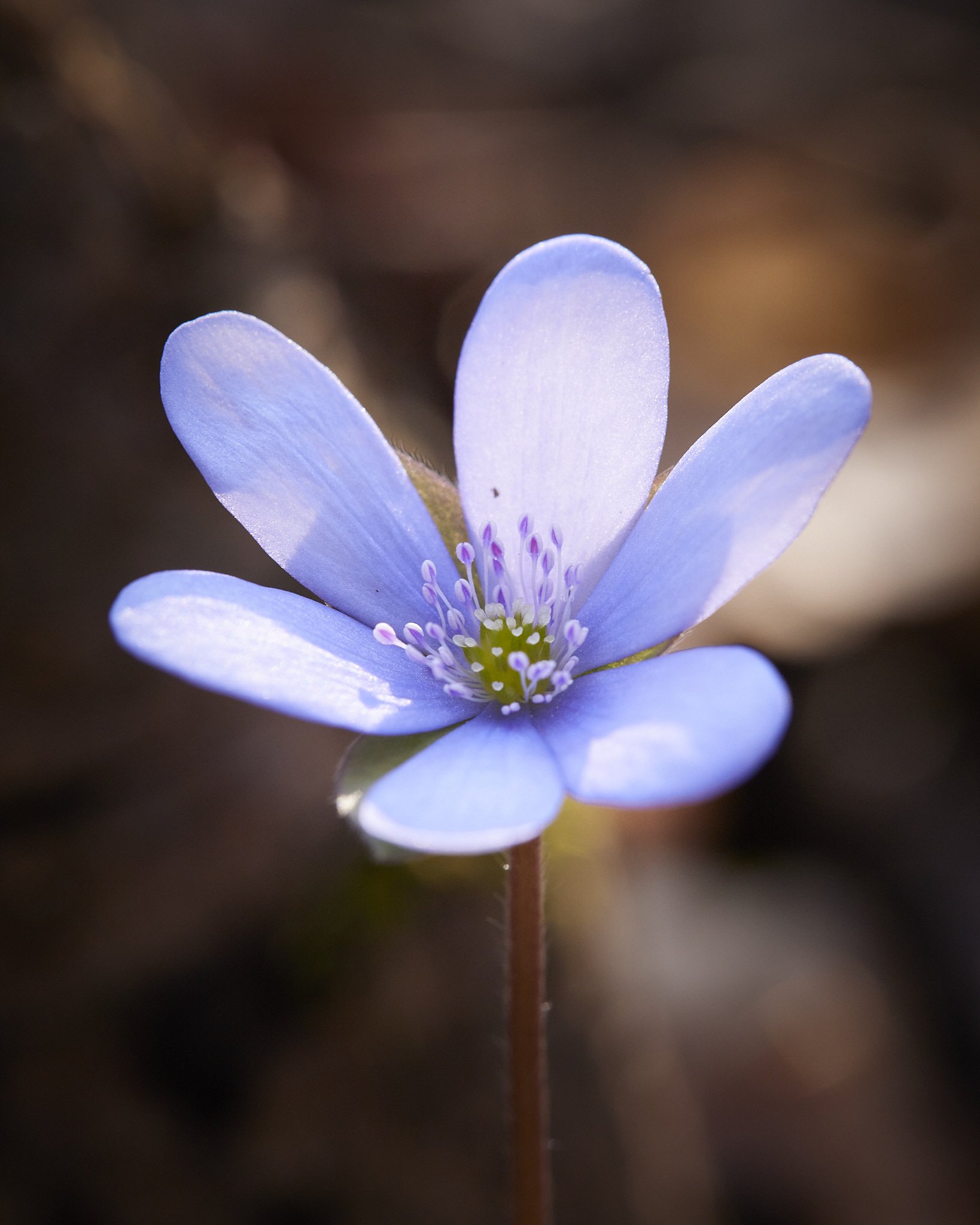
Right now, while I am writing these lines, the first liverleafs stretch their heads through the ground. Time for me to revisit two wonderful days in spring 2022 with lots of liverleaf (Anemone hepatica), wood anemone (Anemonoides nemorosa and Anemonoides ranunculoides) and snowdrops (Galanthus nivalis).

I am not a botanist, unfortunately. I had a flower lover with me, and without her, I would not have taken these images. This makes me very thankful. I myself overlook the wonder and beauty of plants way too easily, as I have very little knowledge about those beauties.

That’s why there is not much of a story that I can tell here. I leave it to you to behold and wonder and make your own story of it.

PS Oh and of course, I met some animals, too.

At the Baltic Sea /  by Arne Bischoff

January 2022 had it all, although it is long gone now. A new hope and a return to an old love. The beautiful Baltic Sea. A long weekend that felt like a full-on holiday brought me to the Darss peninsula in eastern Germany. A place that is as famous for its long sandy shorelines, dramatic dunes and pine forests, abundance of birds and other wildlife and its solitude in winter, as it is for overtourism in summer. It is just a good place to be.

The western beach (Weststrand) of Darss peninsula.

A walk down the shore

The Darss peninsula is a really young landscape - in geological terms: Dating back only 12,000 years to the Weichselian glaciation. Originally an island, about 1,500 years ago the growing spits attached it to the land. By the end of the 14th century it finally became a peninsula. Both the Weststrand and the Nordstrand are famous for its long beachlines and large sanddunes with dramatic woods, reed beds and marshes. The area is of international importance as rest area for migrating birds and as wintering grounds especially for arctic seabirds. Maybe even more famous are the large herds of Red deer and Wild boar in the region. And of course, it’s beautiful there.

My favorite of all birds! “Rokk, rokk!”

A feast for Crows Ravens

One long walk along the western shores revealed two Common ravens scavenging on a carcass. Given their behaviour and the time of year, they seemed to be a breeding pair.

Over a period of over an hour at least one Raven, oftentimes both, worked the cadaver with astounding stamina. They allowed me quite close - laying flat down in the sand - to take some images. Thank you very much, lovely Ravens, my favorite of all birds.

Eye-level with a Raven and a carcass.
📷 by Nicole | Instagram: Apples ‘n’ Pears Interior

Thousands and thousands of ducks

Ahead of Nordstrand thousands and thousands of ducks were bobbing up and down. Way to far for a photography, but not too far to be watched through the spotting scope. One moment, when a lifeboat left the harbor to go on a routine ride, all of it (or at least it felt like that) went up in the air at once and left me open mouthed. So many ducks: Common eiders, Common scoters, Velvet scoters, Long-tailed ducks, Northern pintails and Greater scaups were making up for the lion’s share. A Northern gannet flew by.

Adorable little Sanderlings (Calidris alba)

The shoreline had its bird-stars, too. A flock of ever so active Sanderlings went in and out, hither and tither with the incoming waves. Again, I found myself flat down in the sands. A young Black-headed gull posed beautifully in the waves. I only missed out on the Snow buntings in my back that were busy searching the wash margins for food and chose to concentrate on the more beautiful background that the sea provided.

Sanderlings in the tide.

A long craved boar pic

I am a firm believer that Wild boar are a shamefully overlooked species, when it comes to nature photography. In an Instagram post from 2021, I challenged myself and all fellow nature photographers to take more images of those amazing animals. It was only two months later that I succeeded with some images that I hold very dear. As I do the whole trip and the person, who did it with me.

They were both incredibly close and extremely well camouflaged in the reeds. It was a special moment, being as close to wild animals that are often - and falsely - touted as aggressive and dangerous. Of course, they know how to look after themselves, as Hagrid would put it. But here, they chose the distance, as it should always be with wildlife photography. They roamed the reeds along the footpaths, relying on their incredible camouflage. Focussing was difficult. But you could hear them from time to time, making wonderful swine sounds and then you could see them and all was wonderful.

A true master of camouflage.


Velkommen til Vassfaret /  by Arne Bischoff

Beautiful Vassfaret.

Vassfaret, southern Valdres, Norway. Fall 2021. If you want to know how I got there, maybe read my Dovrefjell disappointment first. It turned out to be luck, though.

Partisan country

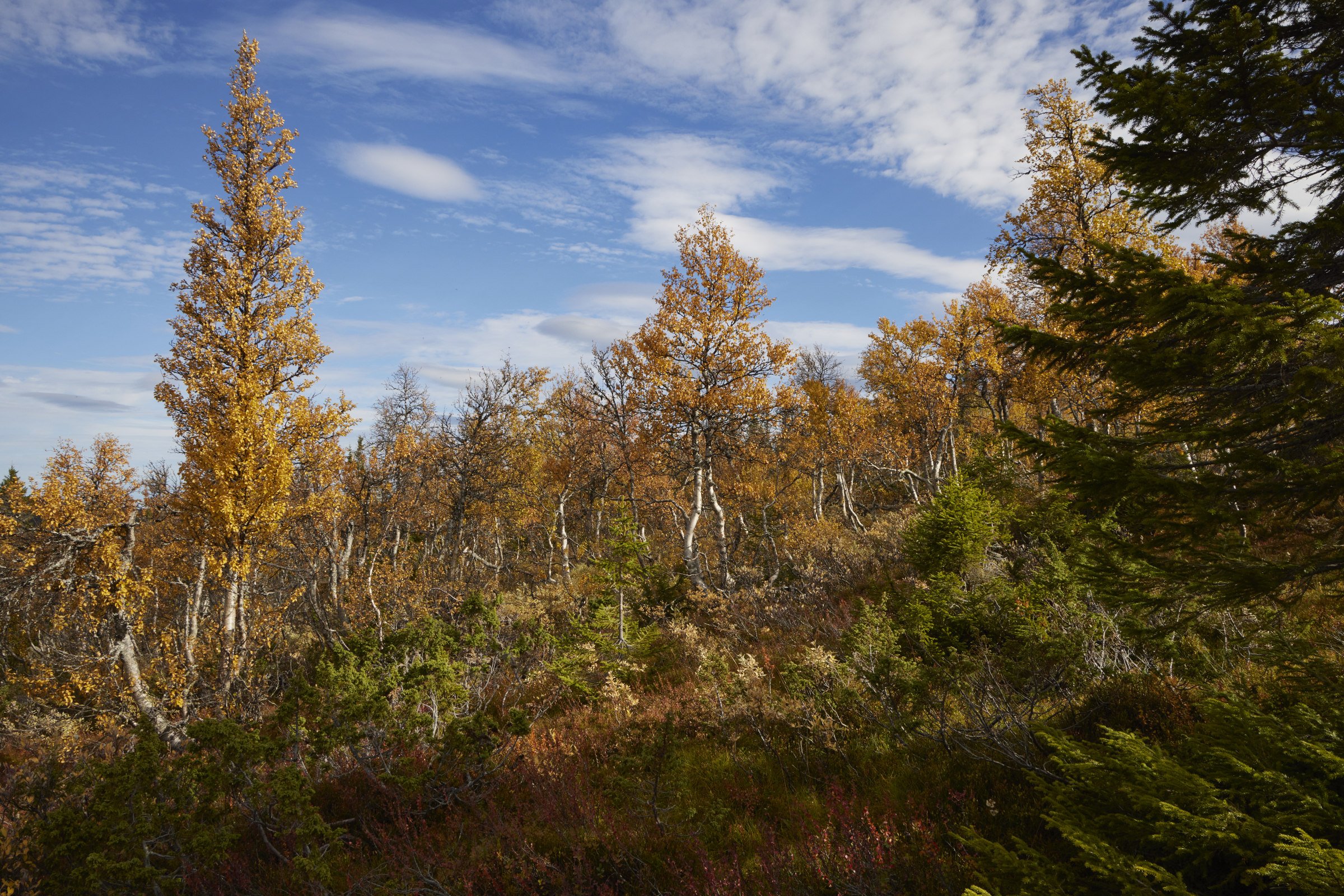
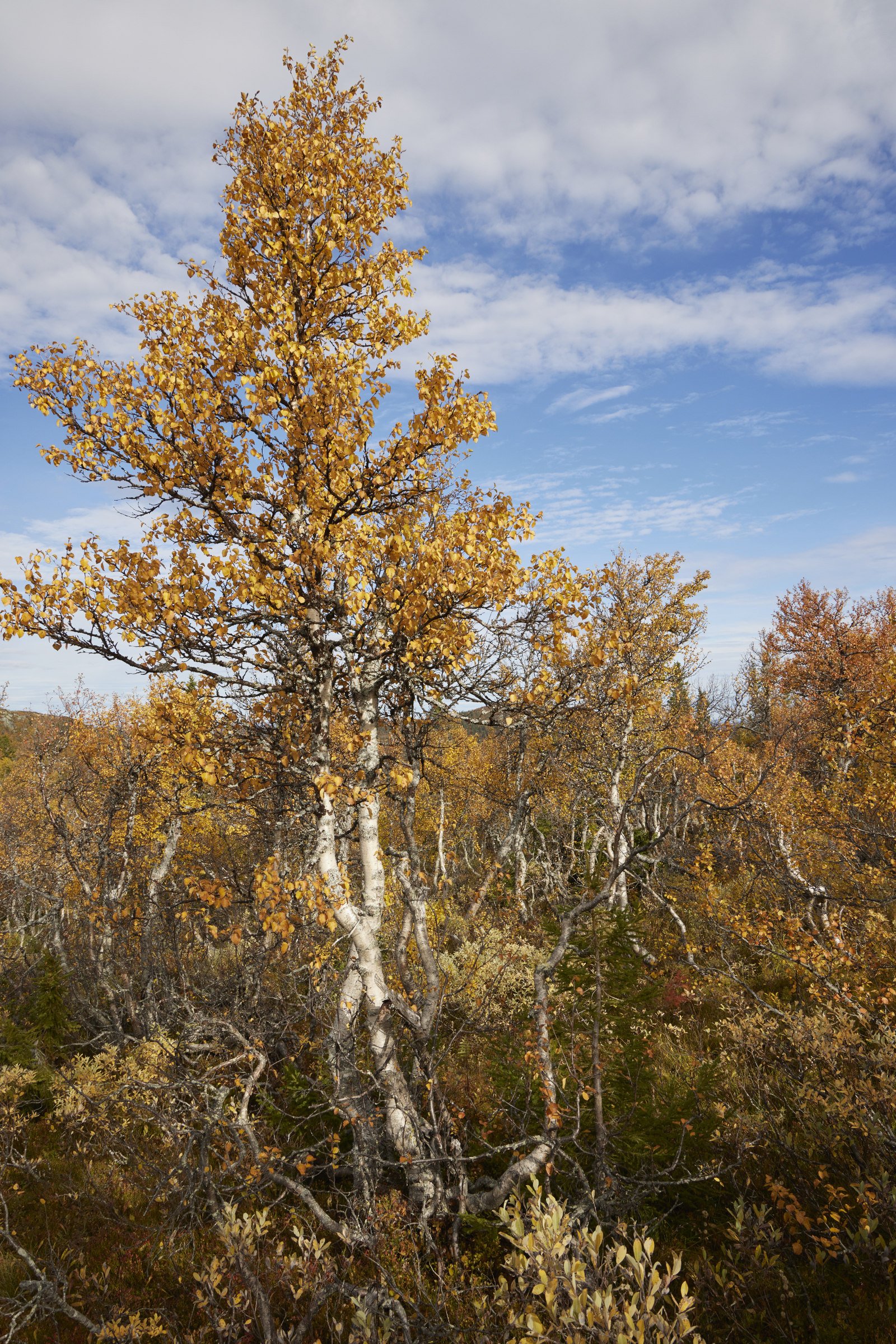
This region is a gem. Vassfaret sits between Hallingdal and Hedalen in the Valdres region. The region boasts low alpine coniferous forests, heather and bog. The fjell around rises to over 1,000 metres, which is well above treeline. You find rivers and lakes in plenty down in the valleys. What makes Vassfaret so special is that it’s wild, but had centuries of cautious human activity, especially logging and timber floating. This results in a number of old an ancient footpaths - quite rare in the Scandinavian fjell, where paths are usually scarce and scattered.

It’s no wonder that Vassfaret was a hotspot of Norwegian resistance against German occupation in World War II and operational base for a guerrilla group codenamed “ELG”. The region offers plenty of cover and resources while still pretty centrally located and quite close to the Norwegian capital Oslo.

Beautiful fall

My friend Linn and I walked into Vassfaret via Hedalen and we could not have wished for a more beautiful fall hike. Striking autumnal colors, warm days, cold(ish) nights in the tent and no one else around. A pleasant change to the over-crowded Dovrefjell, I had experienced only days before. We hiked only three days, but it felt exactly how it should feel for me. Out, remote, wild. I stayed in a little hut in the region for another ten days and it’s safe to say, I will come back. Actually, by the time of writing, I already have been back. But this is yet another story.