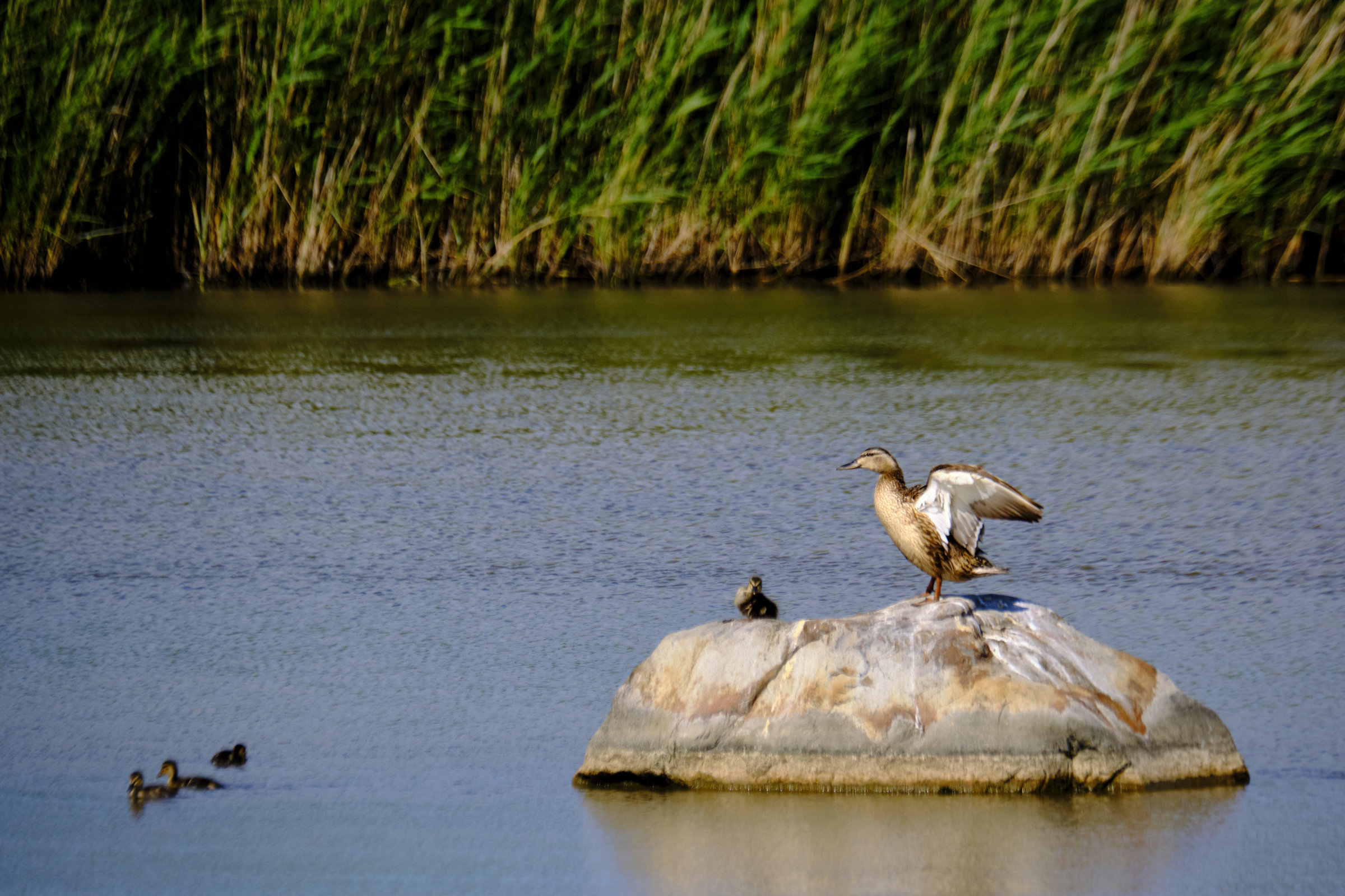
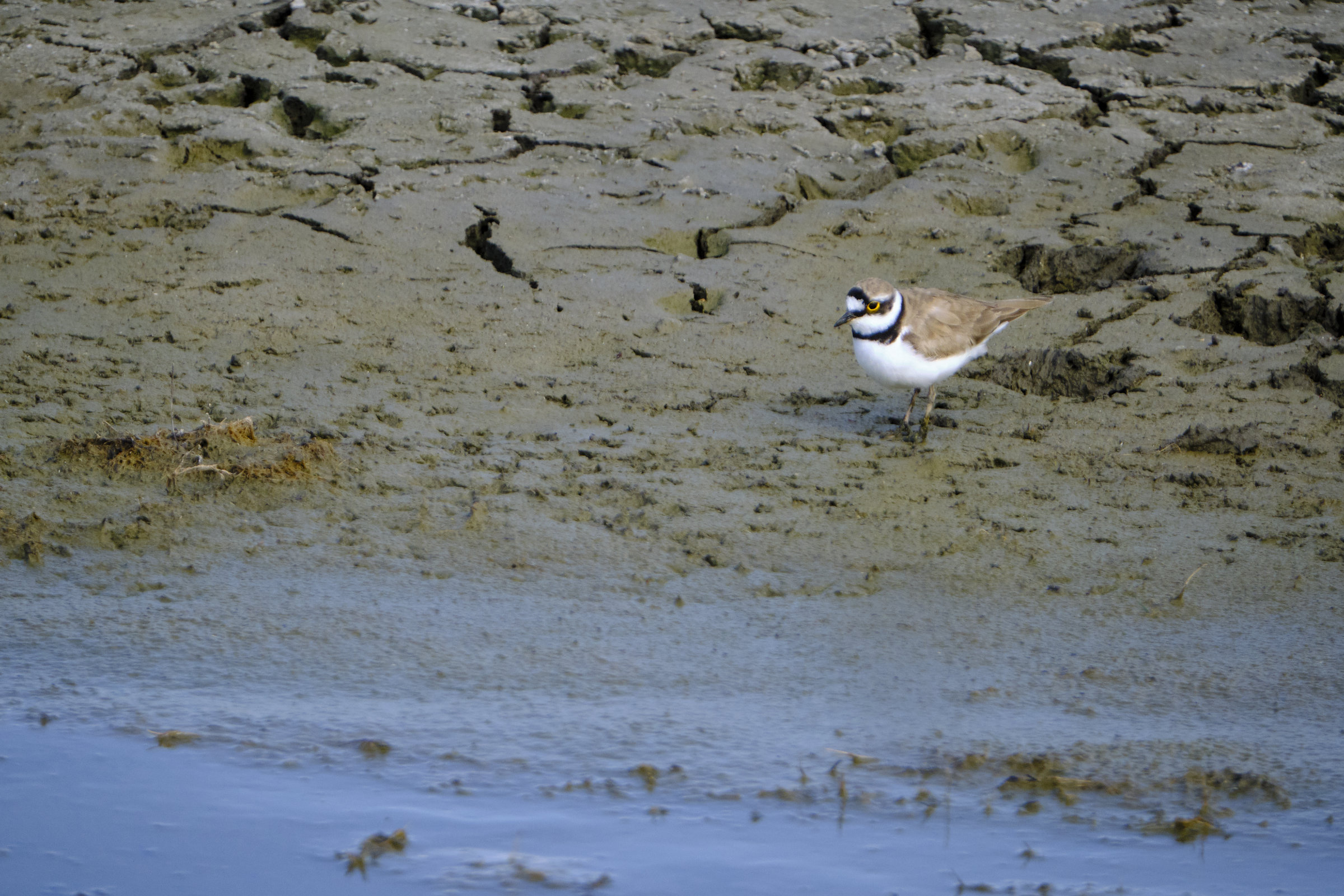
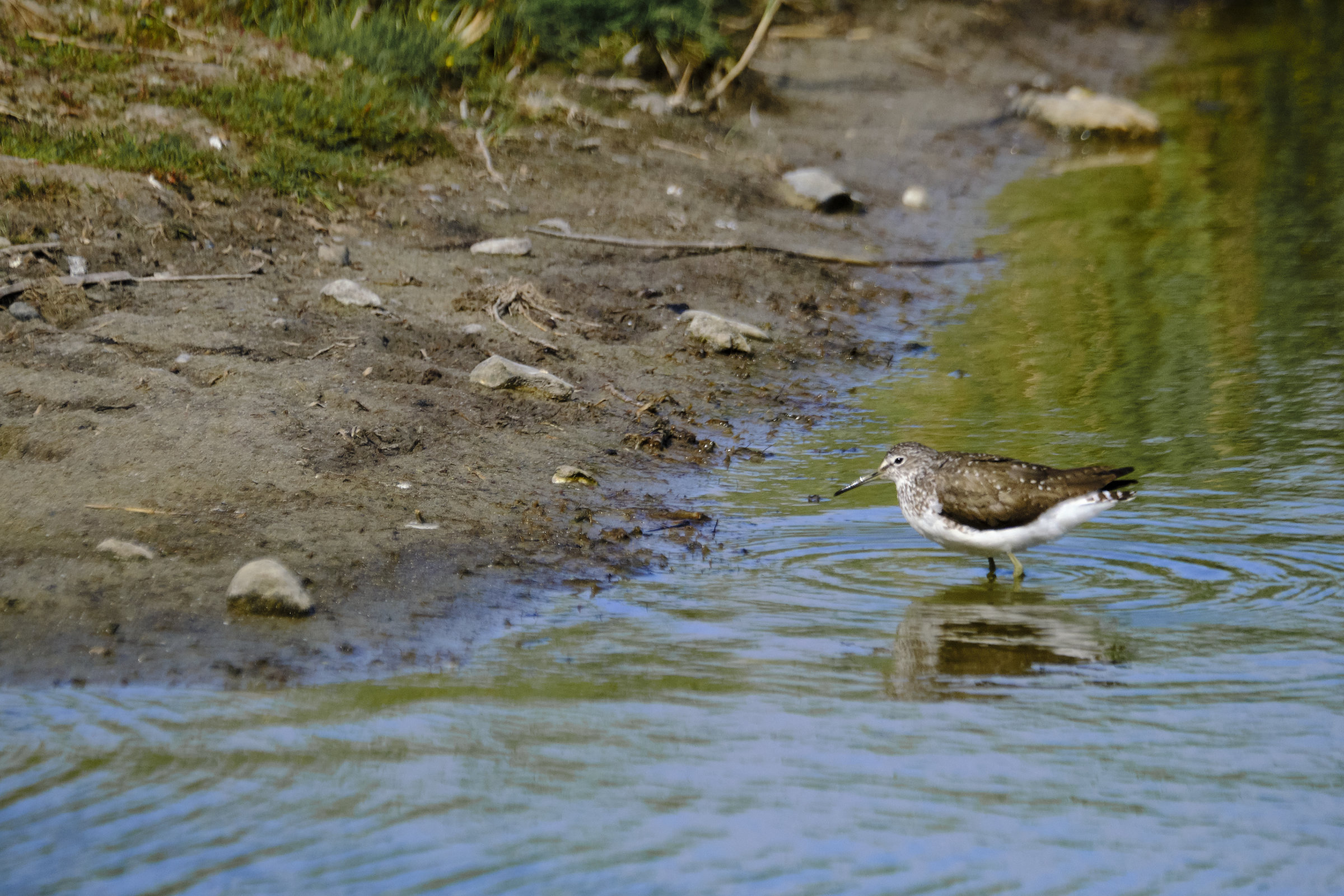
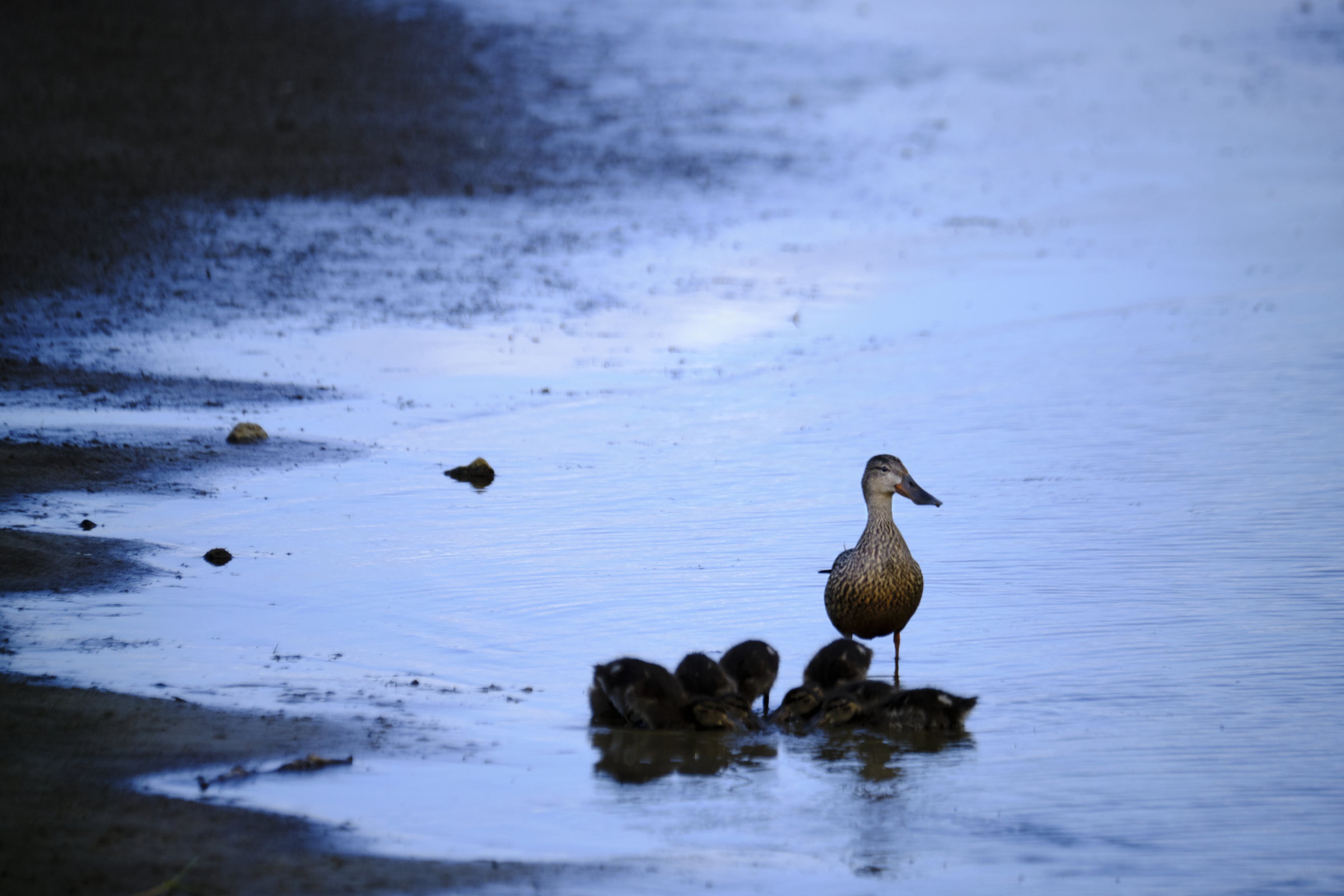
birds

Looking backwards: Winter /  by Arne Bischoff

It is spring - full swing. Everyone in the animal realm is courting, mating, building, nesting, breeding or already having its offspring. Although in the local Harz mountain range, there is still snow and the night temperatures in Northern Germany remain around freezing temperature, there is no doubt: nature is starting up. For me, this is the time to finally look back to a winter, when I have been out quite a lot.

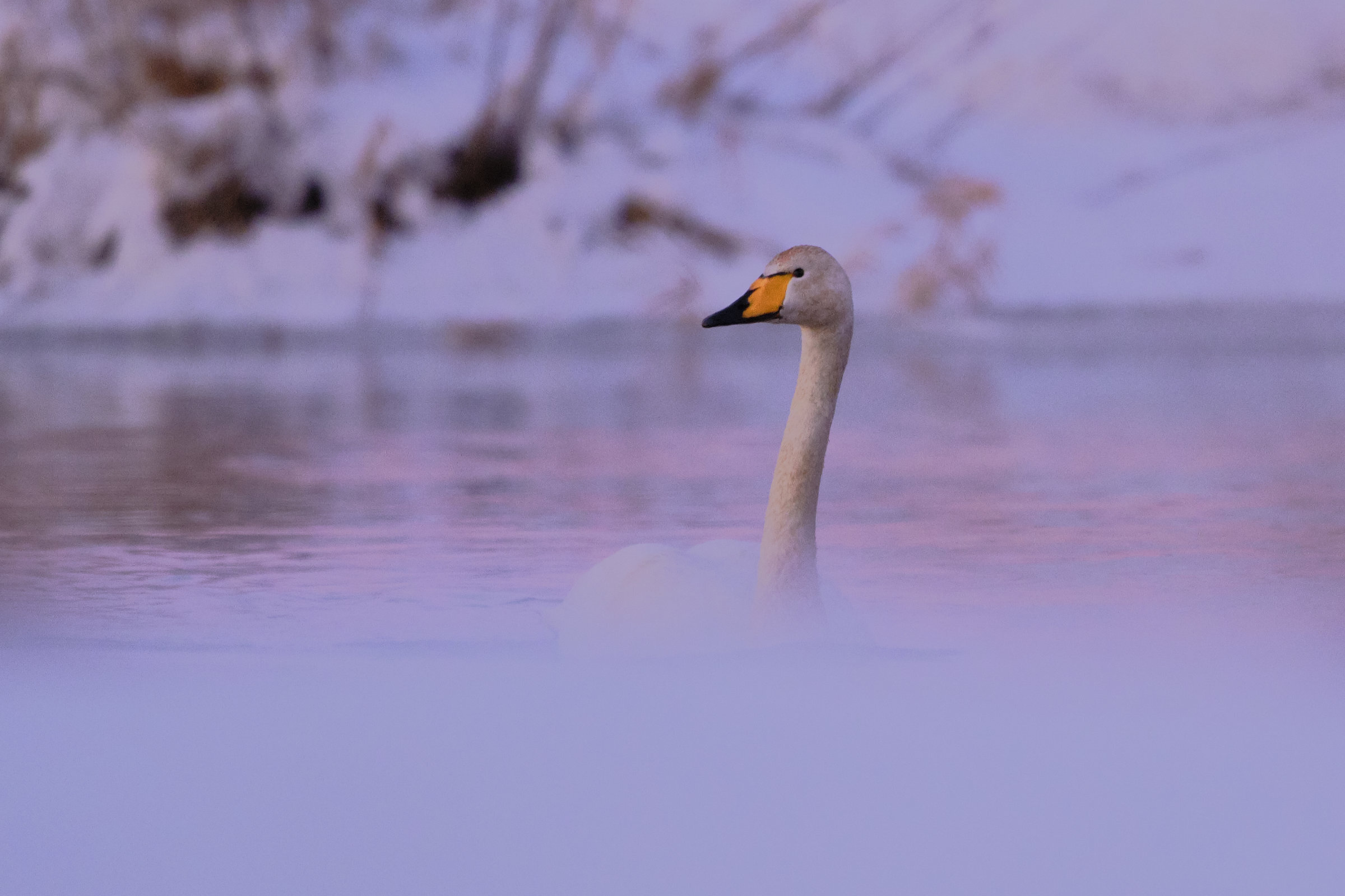
Whooper swans hibernating in Northern Germany. Mid-winter it looked a lot like their Scandinavian breeding grounds.

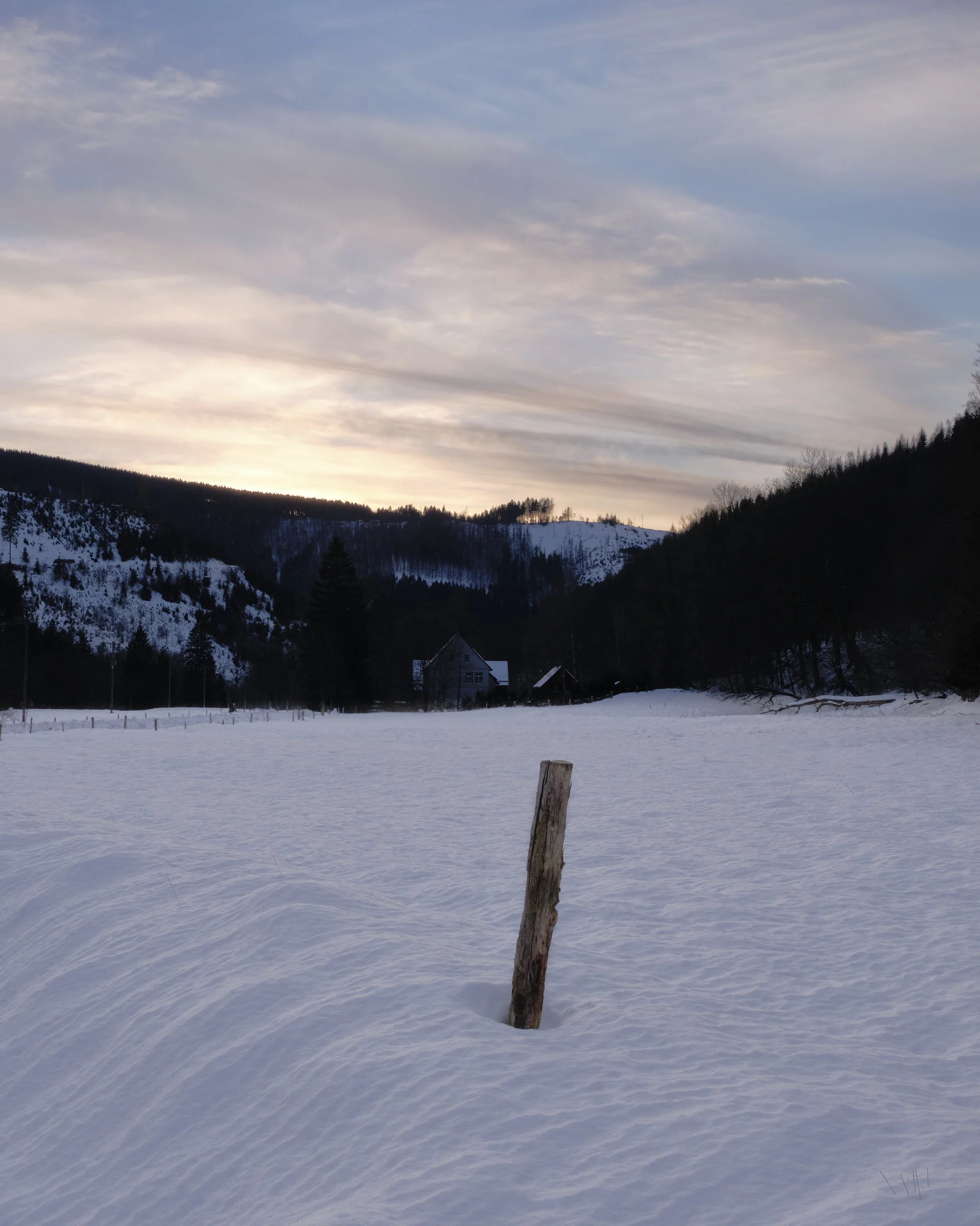
Cold and snowy: A surprise winter in Northern Germany

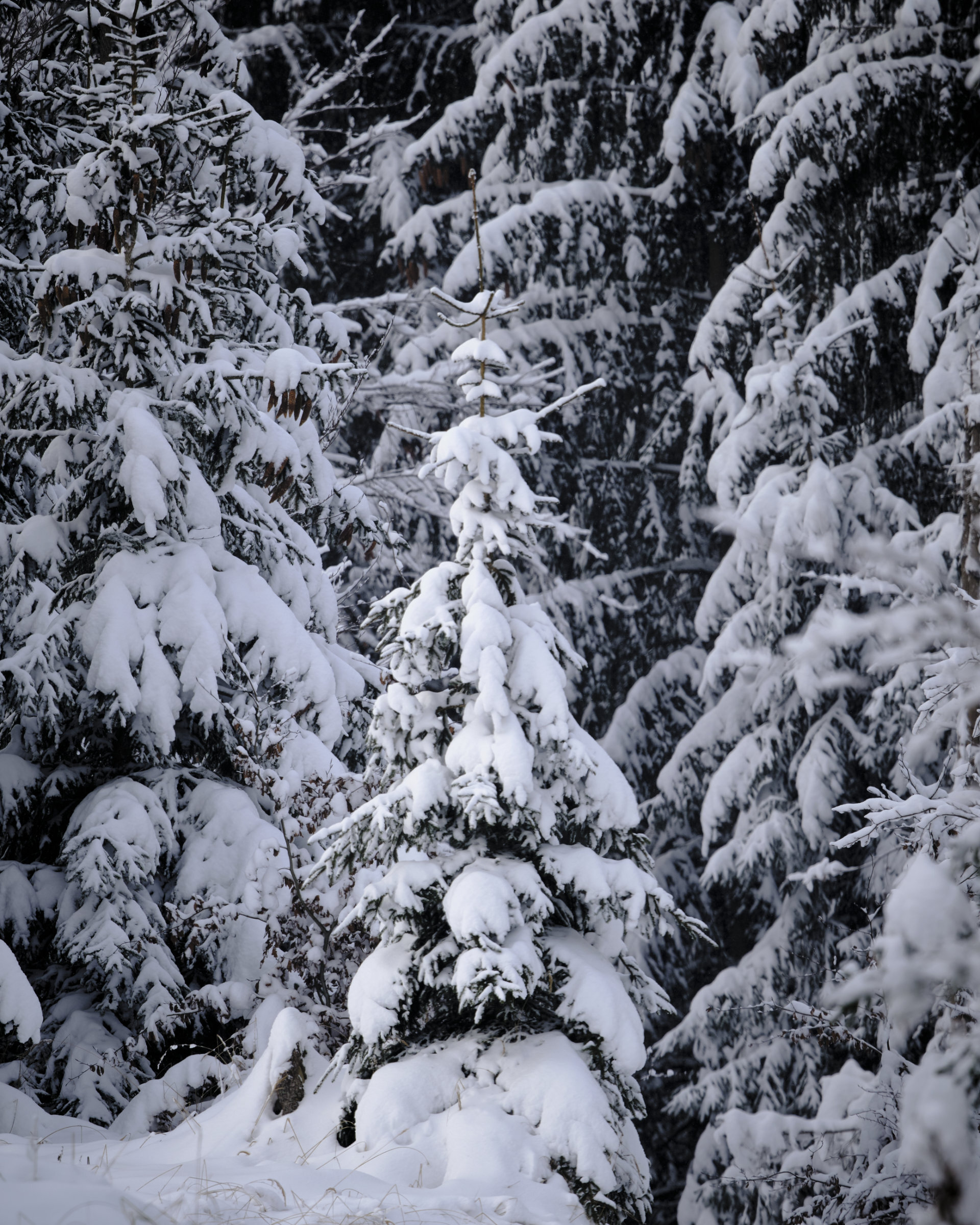
Usually winter in Northern Germany is a dull affair. Grey and with a lot of rain. This year has been different. Especially January and February brought really low temperatures and a lot of snow. My hometown of Goettingen recorded over 30 cm of snow and temperatures as low as -28° C. This is a once-every-30-years-occasion. The local mountain range had more snow, while even the lowlands received its fair share of the white stuff. And while a lot of humans enjoyed the pleasures of winter, nature struggled. Especially smaller birds and birds of prey died in some numbers. The local kingfisher-population nearly entirely collapsed. Surprisingly the white storks, geese or cranes that hibernated here, fared pretty well. With four weeks, the cold was not long enough to seriously harm it.

I mainly have been around at three different places or regions this winter.
My hometown of Goettingen, the local Harz mountains and the southernmost parts of Lueneburg heath.

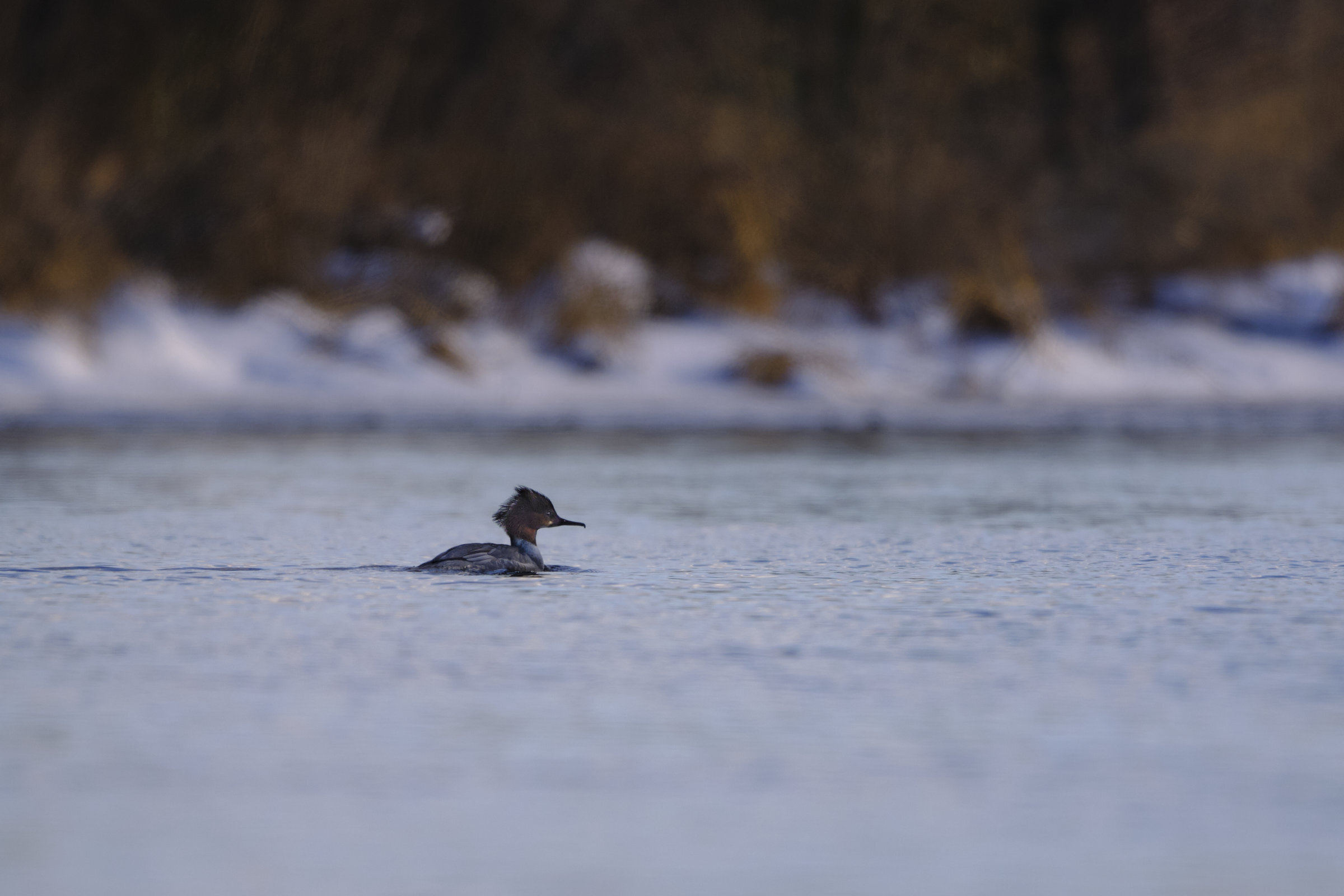
The latter is famous for a lot of different Scandinavian birds such as all sorts of geese, swans or cranes hibernating there. But all three places had one thing in common. Due to the really low temperatures, nearly every pond or lake was frozen - so all water related birds resorted to the rivers, where they found some open water.

1. Images from the lowlands

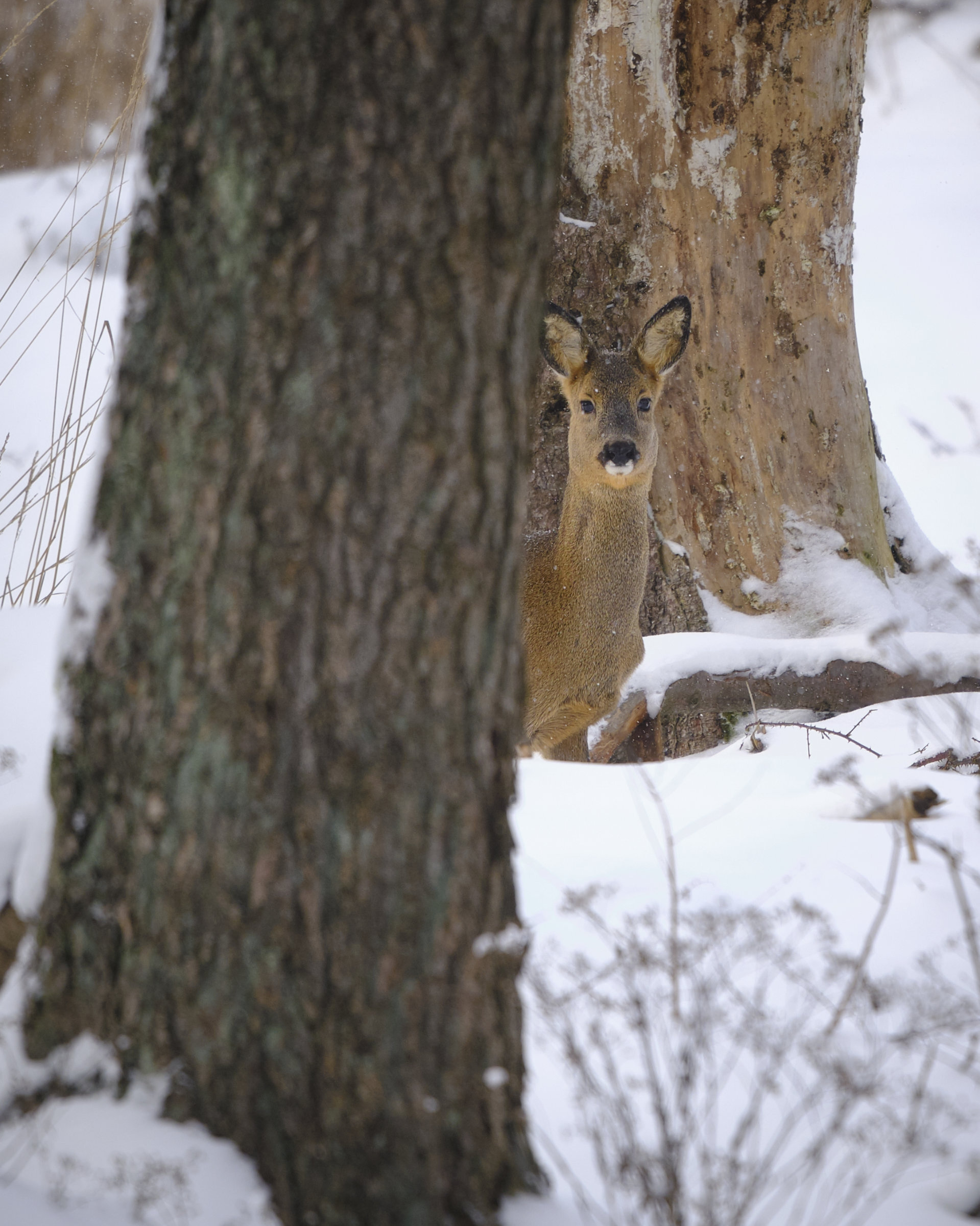
Especially on the Aller river, you could find hundreds of ducks, geese or swans. One day, a young roe deer surprised me big time. A cross-country skier disturbed it on the farther bank of the river. The roe deer dashed off, into the river, navigated its way through the drifting ice and climbed the near bank. The water was around freezing and the air way below -10° C. The roe deer looked pretty miserable, but it simply shook the water off and strolled to the safety of the near forest. Wow - what hardships those animals can endure. The unusual conditions provided plenty of opportunities to watch Whooper and Tundra swans which are not too often even in Northern Germany.

2. Images from the (Harz) mountains

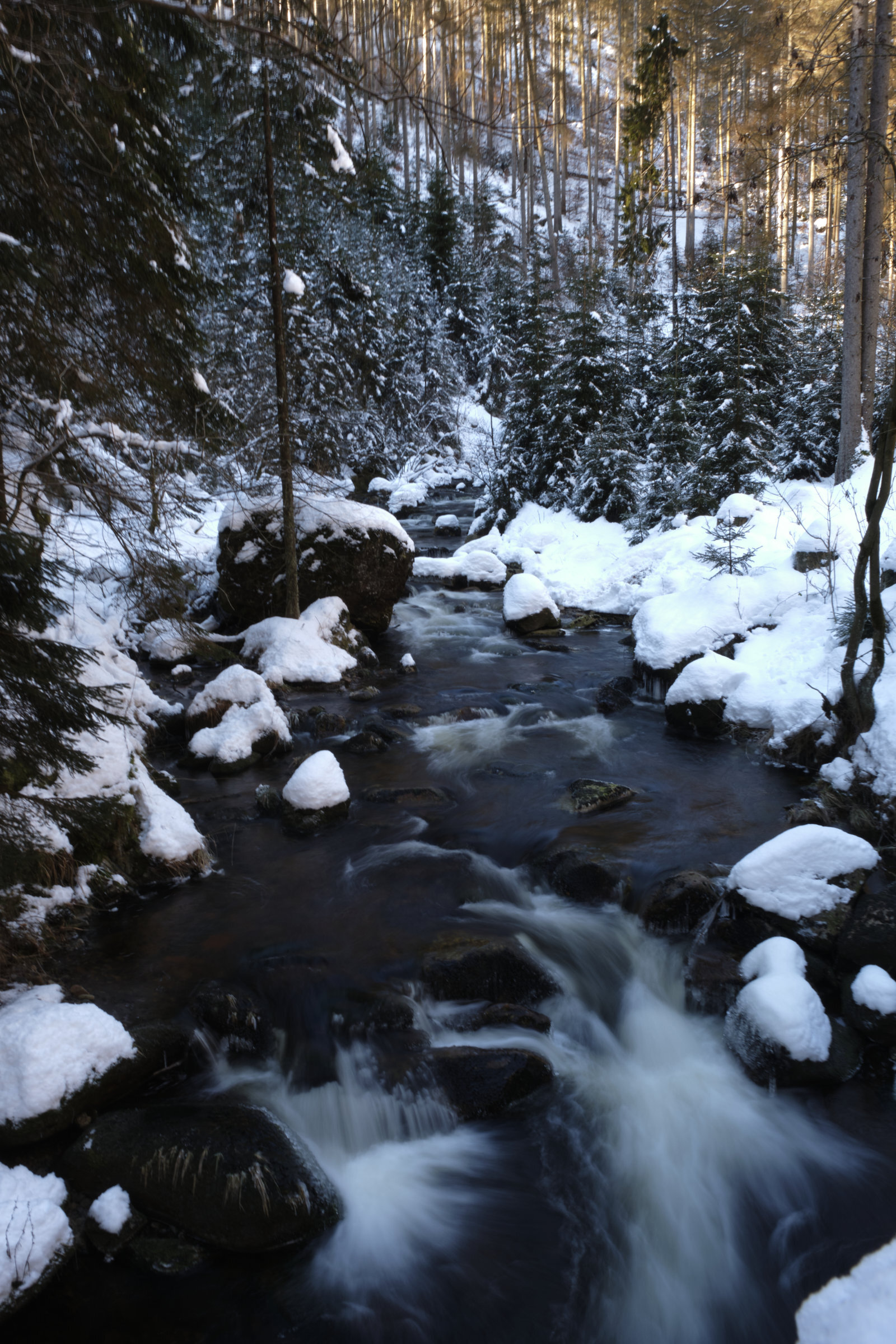
Winter and lots of snow aren’t too unusual in Northern Germanys highest (and pretty much only) mountain range. In the middle of the mountains sits the protected National Park, which is a sanctuary for a lot of wildlife, such as Red deer, Eurasian lynx or the wildcat. Deep valleys, dense forests and small rivers make the most part of the range.

3. Images from my hometown

Depsite its relatively small size, my hometown Goettingen has been on the national news quite often this winter. Over the course of two weeks in February, it has been the coldest place ih whole Germany, with temperatures constantly below -20° C and snow heights over 30 centimeters. For Northern Germany, this is highly unusual. Every body of standing water was frozen and even the slower running rivers. Only the swifter flowing waters remained open, even if there outer waters were frozen, too. No kingfisher remained in the area, they either died or fled. A lot of buzzards died as well as the few remaining redstarts. But life and death are oft pretty close in nature. Thousands of finches flocked the remaining patches of sunflower or hemp and attracted Sparrowhawks and even a Merlin. The population of Grey partridge fared surprisingly well, too and cuddled together into large groups of ten or more birds that withstand not only the cold, but all the skiers, who literally rode “cross-country”. Only the White-throated dipper remained entirely unimpressed of all the cold and white. It continued hunting larvae in the icy-cold waters of the swifter rivers and rivulets.
Ms Kingfisher - The master of hunting /  by Arne Bischoff

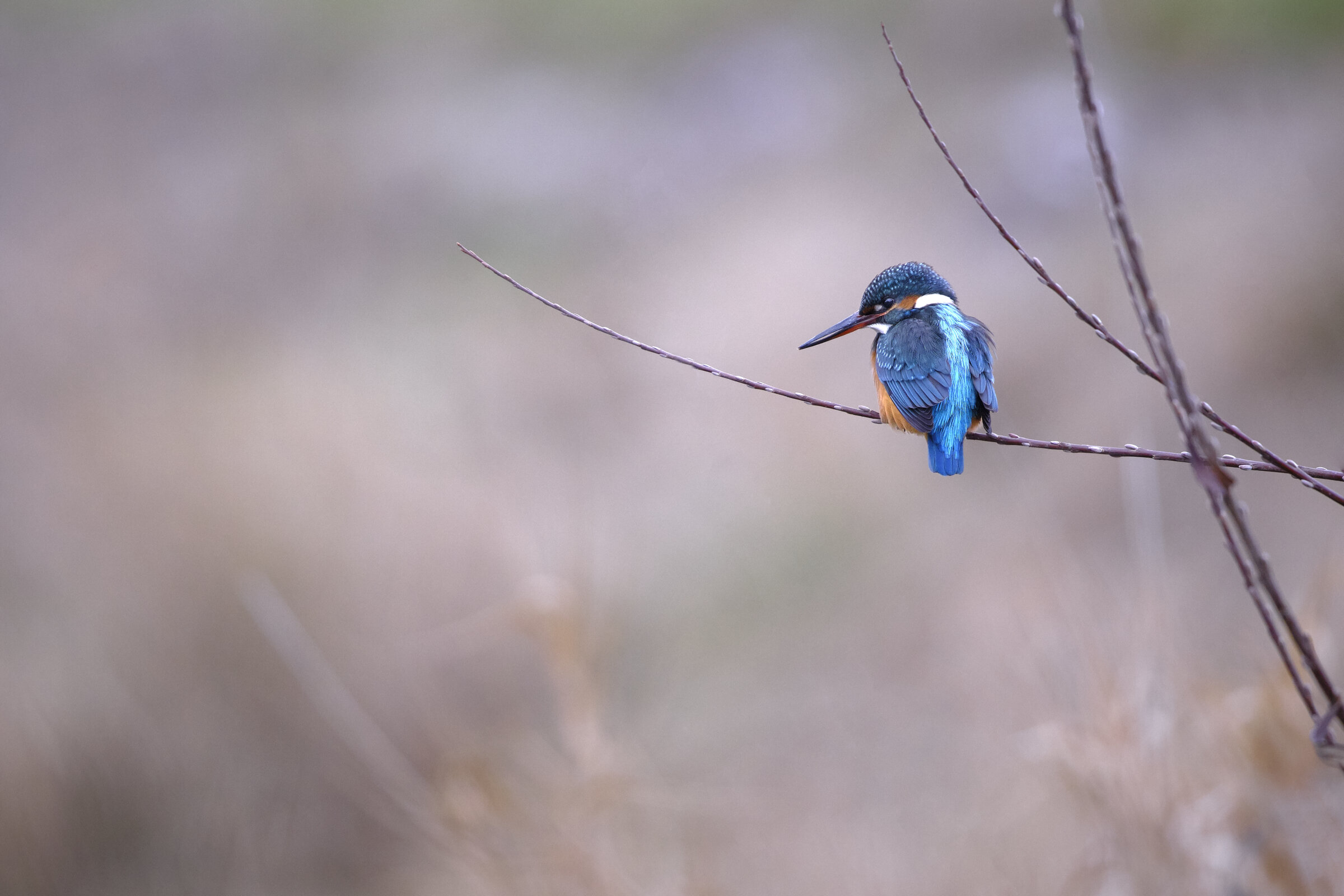
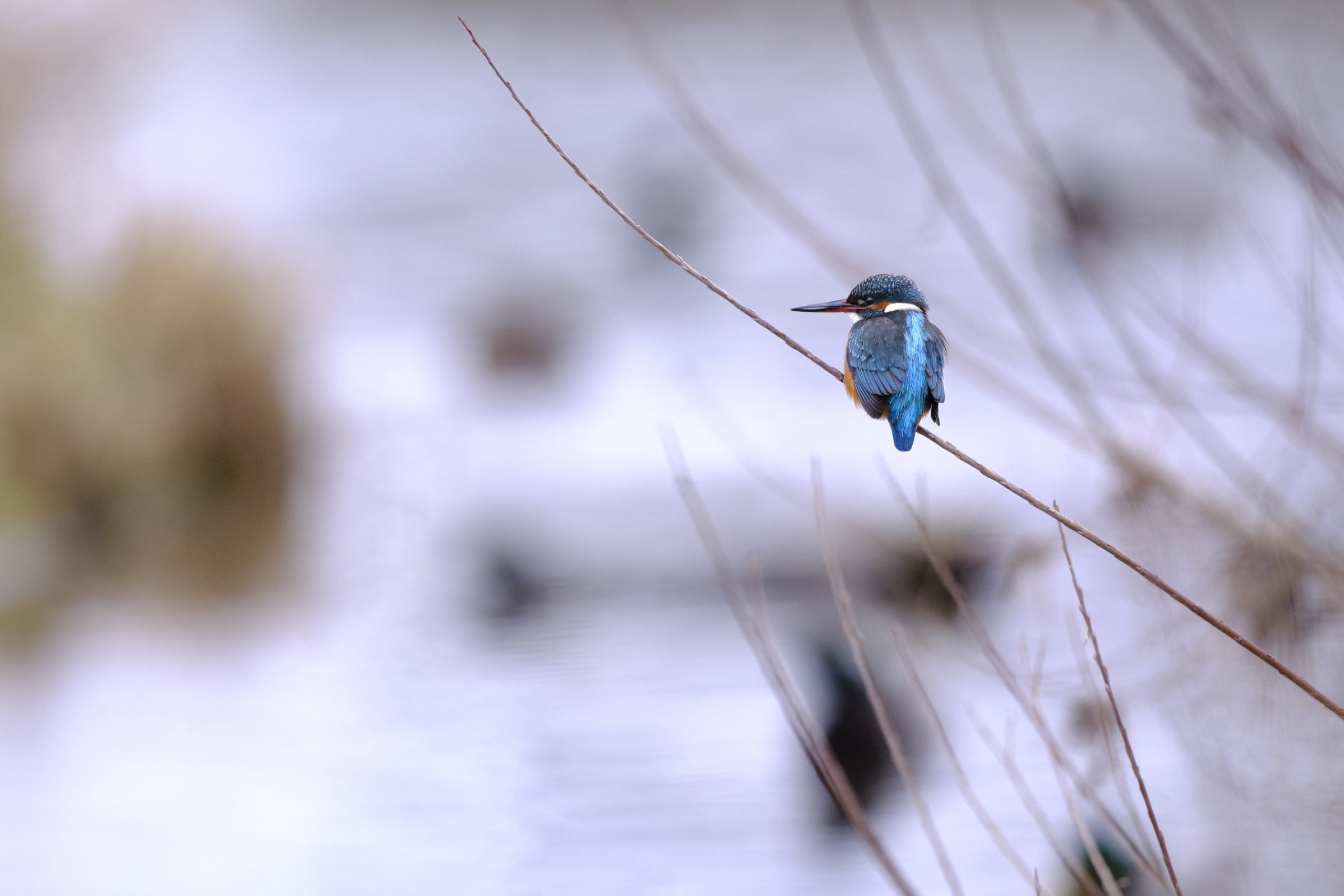
Ms Kingfisher in the tall grass.

There is something special about the kingfisher. It is one of the most photographed species of birds. There are so many amazing kingfisher images out there, you might as well give in and realise that there is no more story to tell, no more images to show that has not been shared before. But every time I have the chance to meet one, I get really exited.

The blue jewel

This January, Northern Germany has seen some days of heavy frost. The poor kingfisher had to quit hunting at lakes or ponds since they were mostly frozen. Luckily though, it wasn’t cold enough to freeze the rivers - that would mean near certain death to the local kingfisher population. So the blue jewels resorted to their raised stands along running water. One memorable day, I counted four kingfishers along 800 metres of waterline.

21-01-16_Eisvogel_17_web.jpg

One of those was this particular Ms Kingfisher. She was hunting right next to a local recreation area, only 20 metres from a street, pedestrian crossing, car park and exactly where a tiny stream flows into a larger river. This place being so busy proved a very lucky spot for me.
Ms Kingfisher was well used to all sorts of crowds: humans, dogs, cars, ducks, herons - me. I crouched into the bank and watched her fascinated for more than two hours. Once, she came as close as two metres. Closer than the minimum focussing distance of my telephoto lens. This gave me the goosebumps.
I always try not to disturb the animals I photograph. This often leads to not getting the shot. But to notice that a wild animal tolerates my presence and does not flee me is more than reward.

An exceptional hunter

My Ms Kingfisher proved an exceptional hunter. Within those two hours, she caught as many as eleven sticklebacks. She had chosen her hunting spot perfectly. A lot of branches and twigs provided both platform and ambush to wait and then make the dive, those little birds are so famous for.

“I cheered her for every catch. Because for kingfishers, every catch counts.”

Winter is a particularly hard time for kingfishers. Despite its German name “Eisvogel” (literally: icebird), ice is its deadly enemy. Its little size and weight and very active behaviour means that it needs to succesfully hunt each day. Harsh winters and frozen waters can wipe out local populations within days. Migration is oft not an option either since the little bird can not cover longer distances without eating.

When I finally decided to leave her, I went some 100 metres upstream, where I met another specimen. This time a male. The little guy hadn’t chosen his hunting ground nearly as well as Ms Kingfisher. There were no suitable branches around (directly over the water) and all his attempts to hunt from a grassy river bank proved unsuccessful. Eventually he left a few minutes later. I hope he did better, where ever he went.

Ms Kingfisher in her realm.

Luck and misfortune only a few metres afar. I hope both of them will make it through winter. I really like those little birds.

A finch feast /  by Arne Bischoff

A tree full of finches.

I am lucky. Around my town, the EU Interreg Partridge Project planted a lot of wildflower patches. The patches provide the highly endangered Grey partridge with shelter and food. But the gallinaceous birds are not the only ones who love their wildflowers.

“One very agreeable quality of those finches is that they form mixed finch flocks.”

In late fall, thousand of finches feasted on the wildflower seeds. Greenfinches, Bullfinches, Chaffinches, Hawfinches and Goldfinches roamed the area in huge numbers. They live together, they eat together, they migrate together - well at least some. Of course they sometimes quarrel for food. They especially love the last remaining sunflower seeds. So they tend to sit right on top of the sunflowers and albeit being very social in general they are not happy to have other finches on their sunflowers.

Speaking of quarrels: The occasional fighting finches were not the only ones who got a bit heated during my last visit. A Common kestrel was around hunting and a Carrion Crow was just not having it. The Crow constantly bullied the kestrel until the bird of prey finally gave in and made way. I really like Corvidae for this quality. They are incredibly clever, they are great flyers and they don’t accept birds of prey around. The kestrel finally went hunting somewhere else.

Image of the day: Dreamy buzzard /  by Arne Bischoff

With this image, I try something new. I showcase some single-images here. Like on my instagram, but with better image quality and accessible for everyone who does not want to “share” his or her data with Facebook, Inc.

With this image, I tried to create a bit of a dreamy atmosphere. The light was so low and the buzzard so far, it was never going to be a detailed shot anyway. So, I decided to shoot right through the tall grass. What do you think? Did my creative experiment turn out well? Or is it just kitsch?

A Common buzzard on its late perch. Image taken June 23, 10 pm (CET).

A Common buzzard on its late perch. Image taken June 23, 10 pm (CET).

Meeting a ghost /  by Arne Bischoff

“When you meet a ghost, best be stealthy and see you do not disturb it.”

A black stork with both feet in a river. (Ciconia nigra)

This is what I thought when I met this black stork in a local nature reserve. It was fishing in a little river between old trees in a small stretch of Riparian forest - only about 25 metres from both shores.

But this is where the shy creature feels most comfortable. Sadly the black stork has become a very endangered species in Germany. It prefers old forests with running rivers next to wet- or open lands, but this combination has become quite scarce in the small sectioned agricultural landscapes of Central Europe. A lot of old Riparian forest has been destroyed by man. And even where such woodland still exist, it might be too small to provide enough food and space and shelter for nesting.

A close sibling: The white stork (Ciconia ciconia)

Unlike its close sibling, the white stork, the black stork is really sensitive to disturbances, which often causes it to abandon its breeding efforts when people come close. Even 200 metres to a nest might be too close.

I literally ran into this stork when it was fishing right next to a hiking path though. What’s more, this particular spot was only a few hundred metres from where both river and hiking path was to meet the next street. So this was a really daring stork you might think. Then again, it was really early in the morning and the stork might have learned that most humans sleep longer. However. We met and I had this split second to grab the shot. I was so excited about the moment that I clipped the poor storks feet. I hope the dreamy quality of the out-of-focus grassy foreground make amends. Just two frames later, the stork had left.

I hope it came back later to catch some more fish.

Archimedes was a Pygmy Owl (kinda) /  by Arne Bischoff

Do you remember Disney’s Sword in the stone? There is Archimedes, a rather dwarfish, but very hilarious owl with a taunting sense of humour. The ten-year-old me loved it. Archimedes might be an Eurasian pygmy owl, although I think an actual Little owl (Athene noctua) is far more likely to be the inspiration for the character, given its mythological pedigree. But for me, Archimedes is a Pygmy Owl.

Fast forward nearly thirty years, I met Archimedes in the woods, sort of. I was out counting Eurasian pygmy and Boreal owls on behalf of the local national park Harz. I did this kind of bird monitoring quite a lot in recent months. In order to deliver comparable data, it is a highly standardised way of scientific monitoring. Usually this takes place around the breeding season and you play a call of your target-species and hope that it responds. From the number of responding males you conclude on the number of breeding pairs. Without this systematic approach you would solely rely on incidental findings. Because this way of counting means stress for the birds, it is highly restricted to professional use. I do this, because it is a great way to learn about birds, to be out and about and help conservation a little. As I once said here, if I have to choose between watching and photographing, I’d choose the former. Nevertheless, I take my camera with me, when I go monitoring. Firstly, because I love taking images, secondly because images help from a conservation standpoint, too. You only protect what you know and love.

It was my second outing on this particular route. I had been out for about one and a half hour, without seeing or hearing any sign of an owl. When I arrived at my checkpoint and played the pygmy call, this male immediately responded. I instantly quit playing the call and held my breath. A very inquisitive and adventurous male approached me directly, flew over and took perch on a nearby fir tree. It called and called for at least five minutes and I watched speechless before I finally took some images. The spectacle carried on for a little while before I finally left my Archimedes and headed for the next checkpoint. When I arrived there and played the call, I was just stunned. Archimedes had followed me and took another perch in a nearby tree. By this time, it was too dark to photograph. So, I just watched and listened.

“Like in the movie, my Archimedes is a really courageous and curious little bird.
And I am one really happy birdwatcher.”

Editor’s note: Don’t use calls to attract birds on your own and without scientific reasons or supervision. Unfortunately, a lot of wildlife photographers discovered this “trick” in recent years. From an environmental standpoint, this is an absolute no. The scientific counting rules demand you to stop as soon as a species responds, in order to not disturb it any more than absolutely necessary to gather data which helps protecting wildlife. This is the exact opposite of what so called wildlife photographers do, who play the calls over and over again and whose only goal is to take images, not to help science protecting animals.

The real meaning of 1st. /  by Arne Bischoff

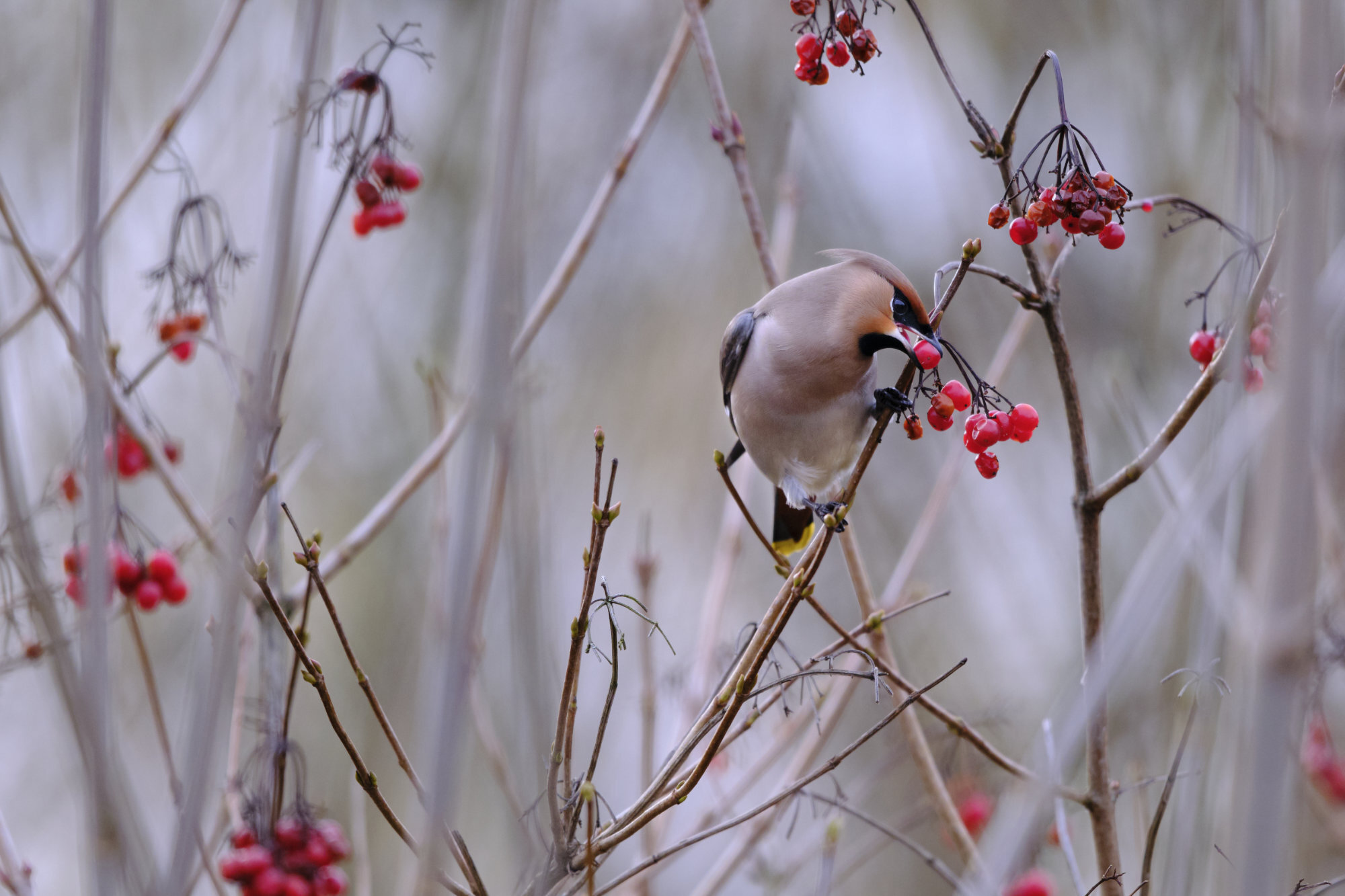
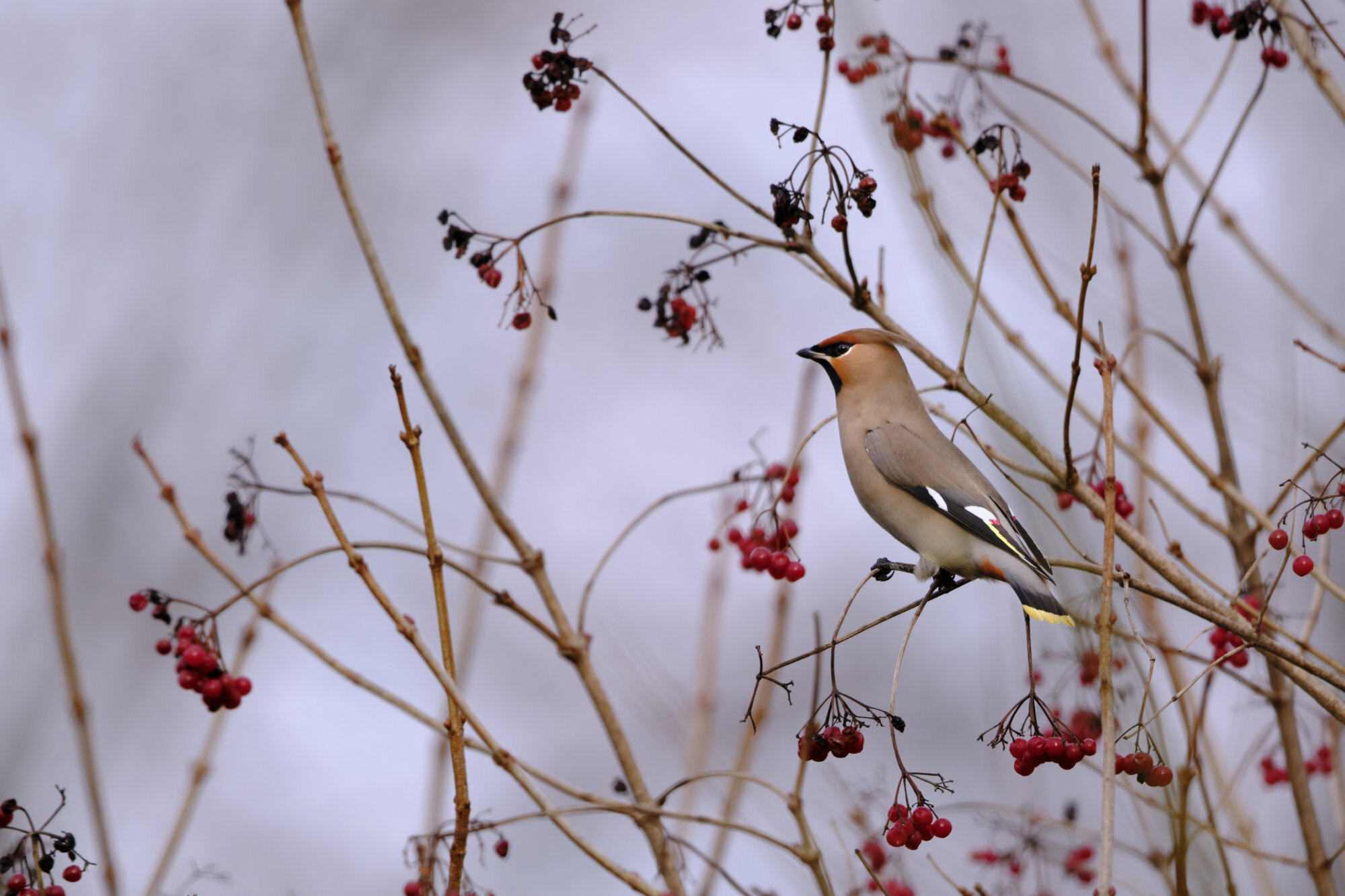
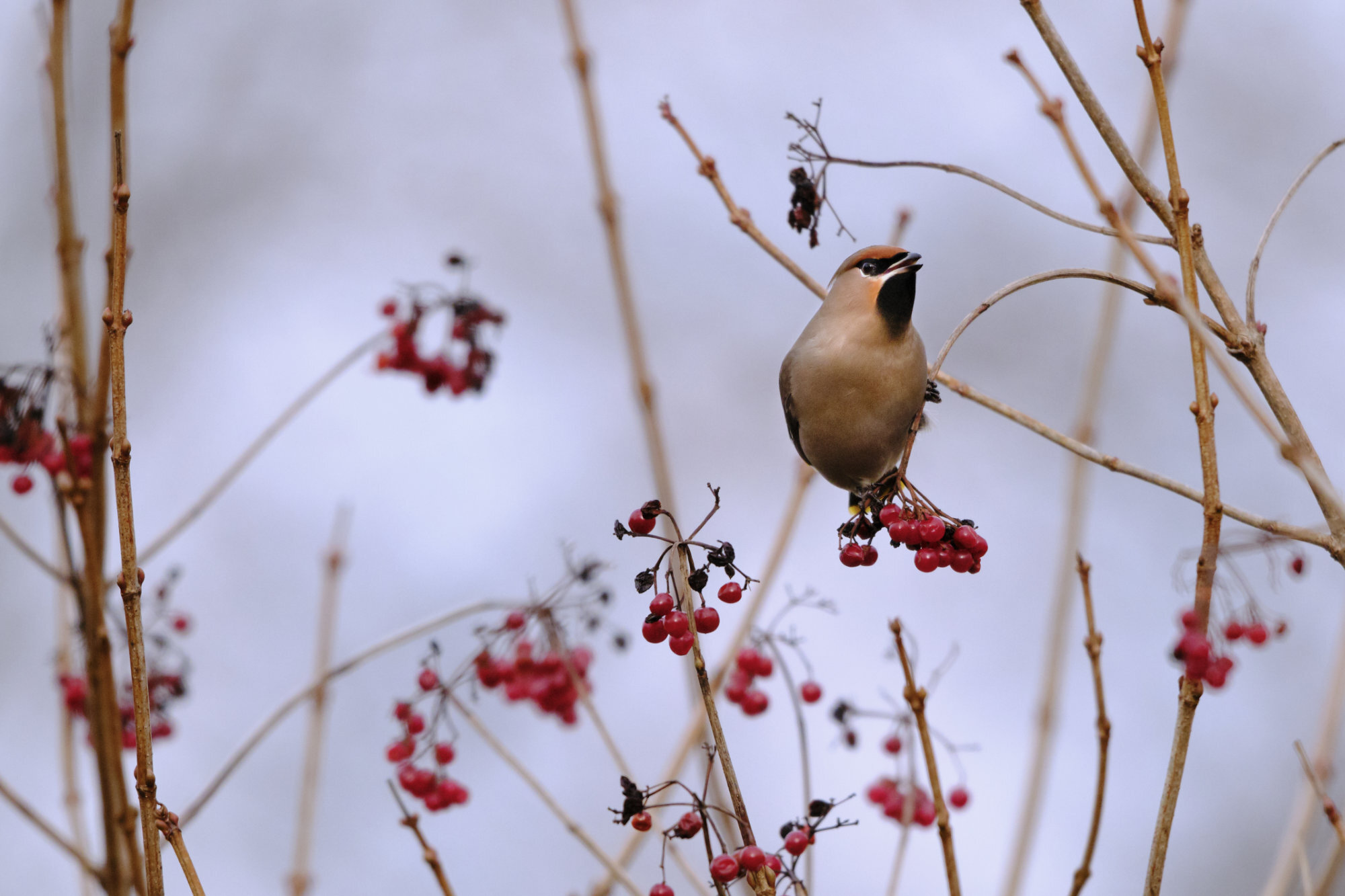
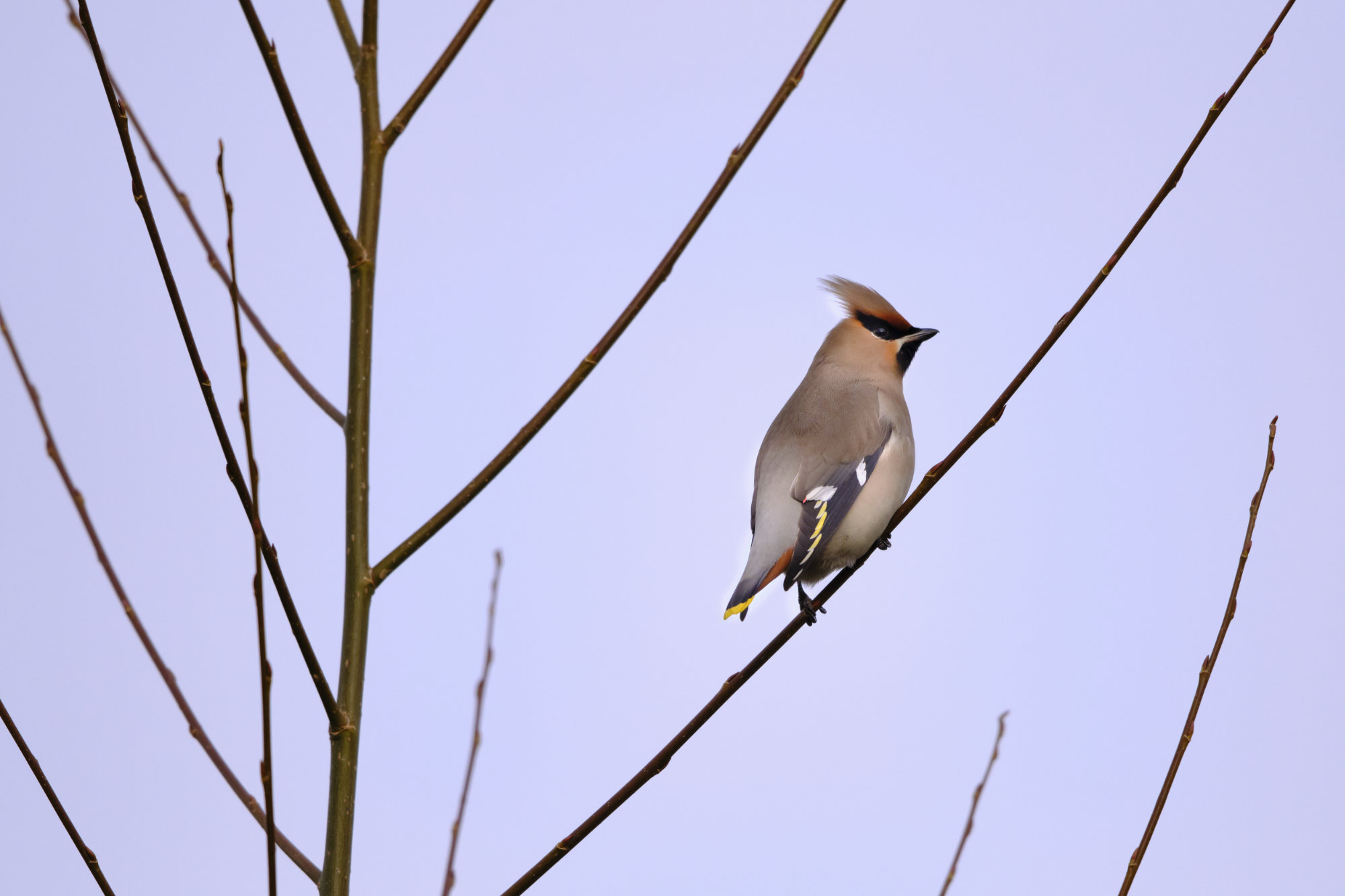
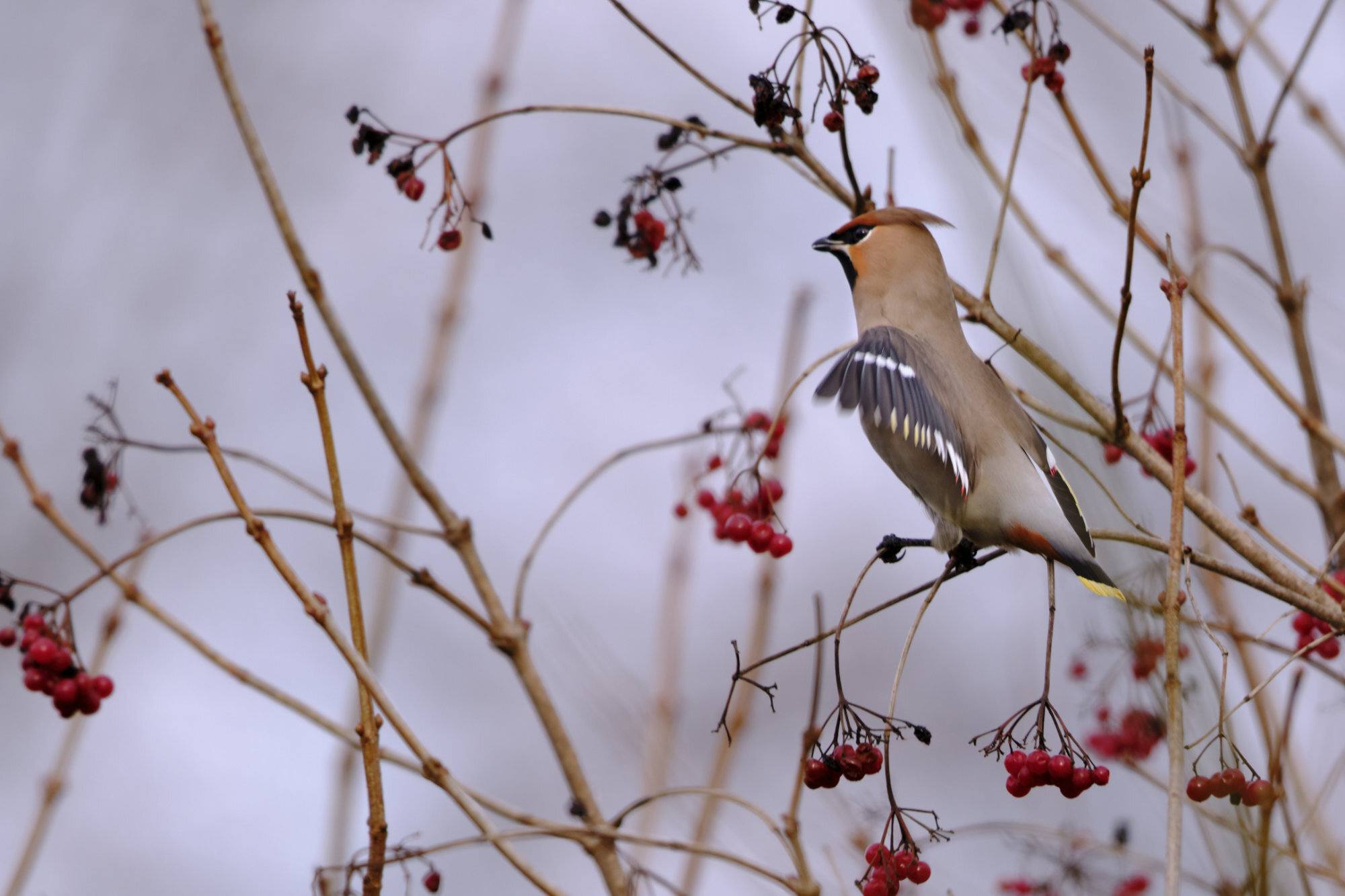
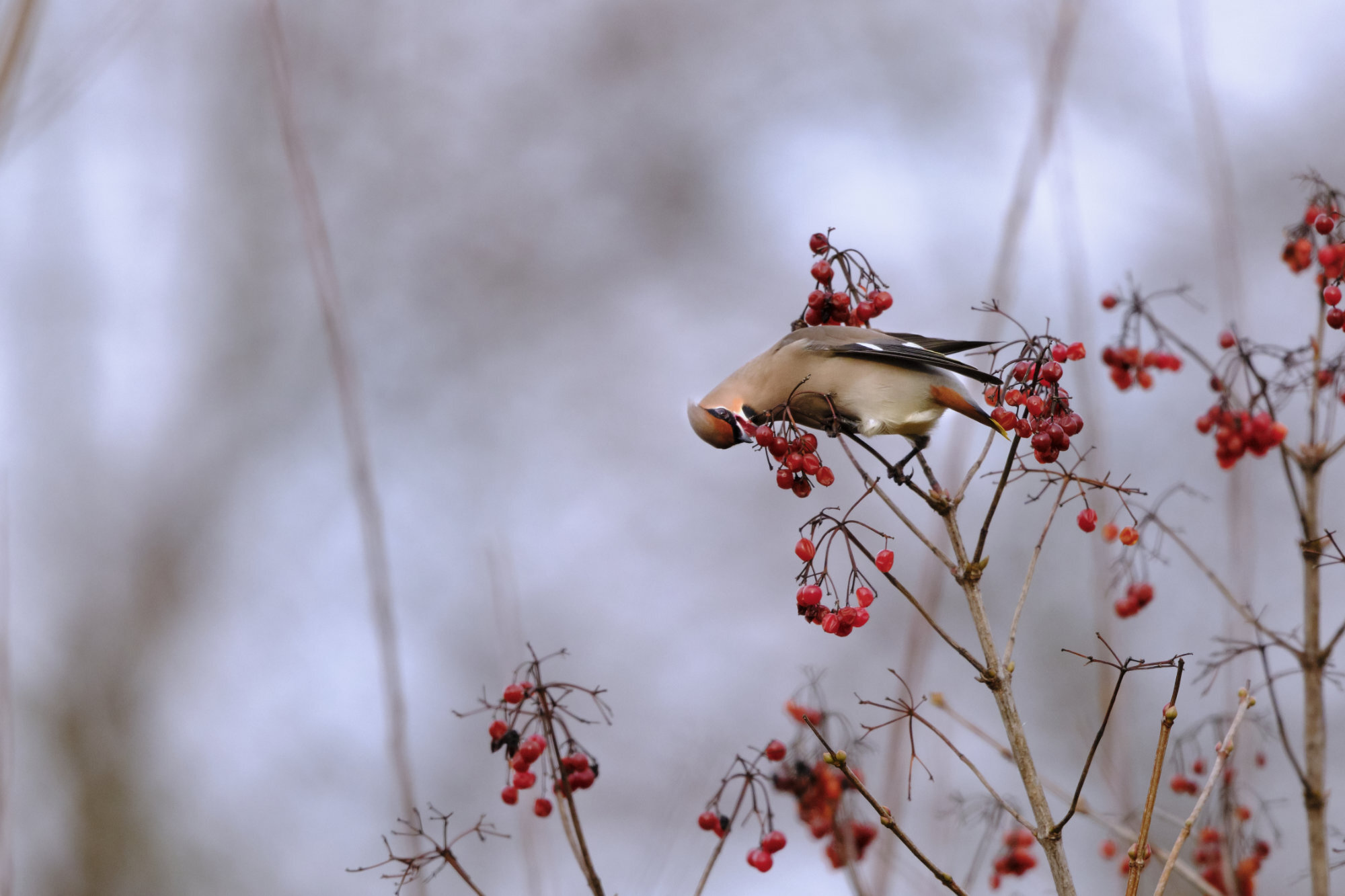
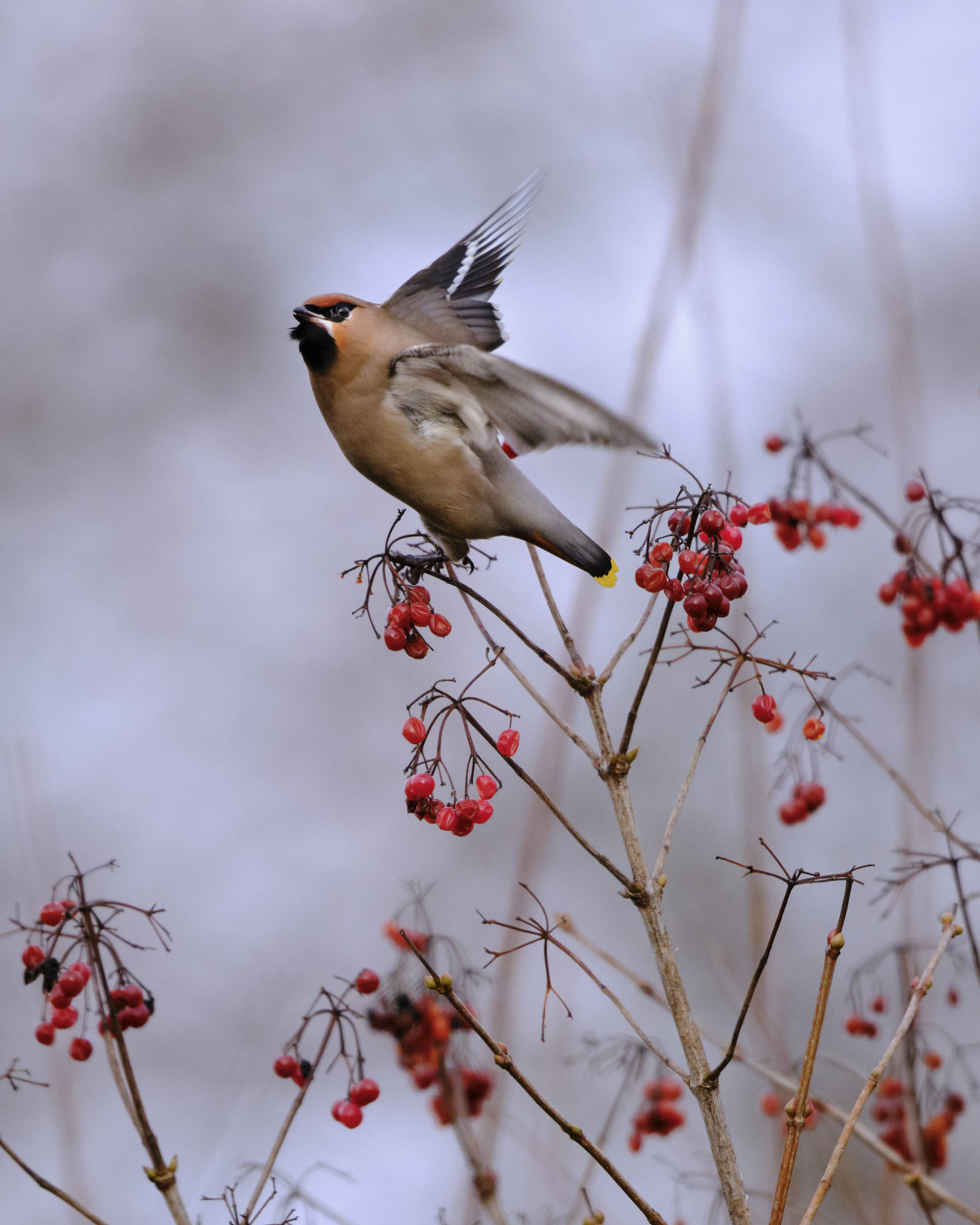
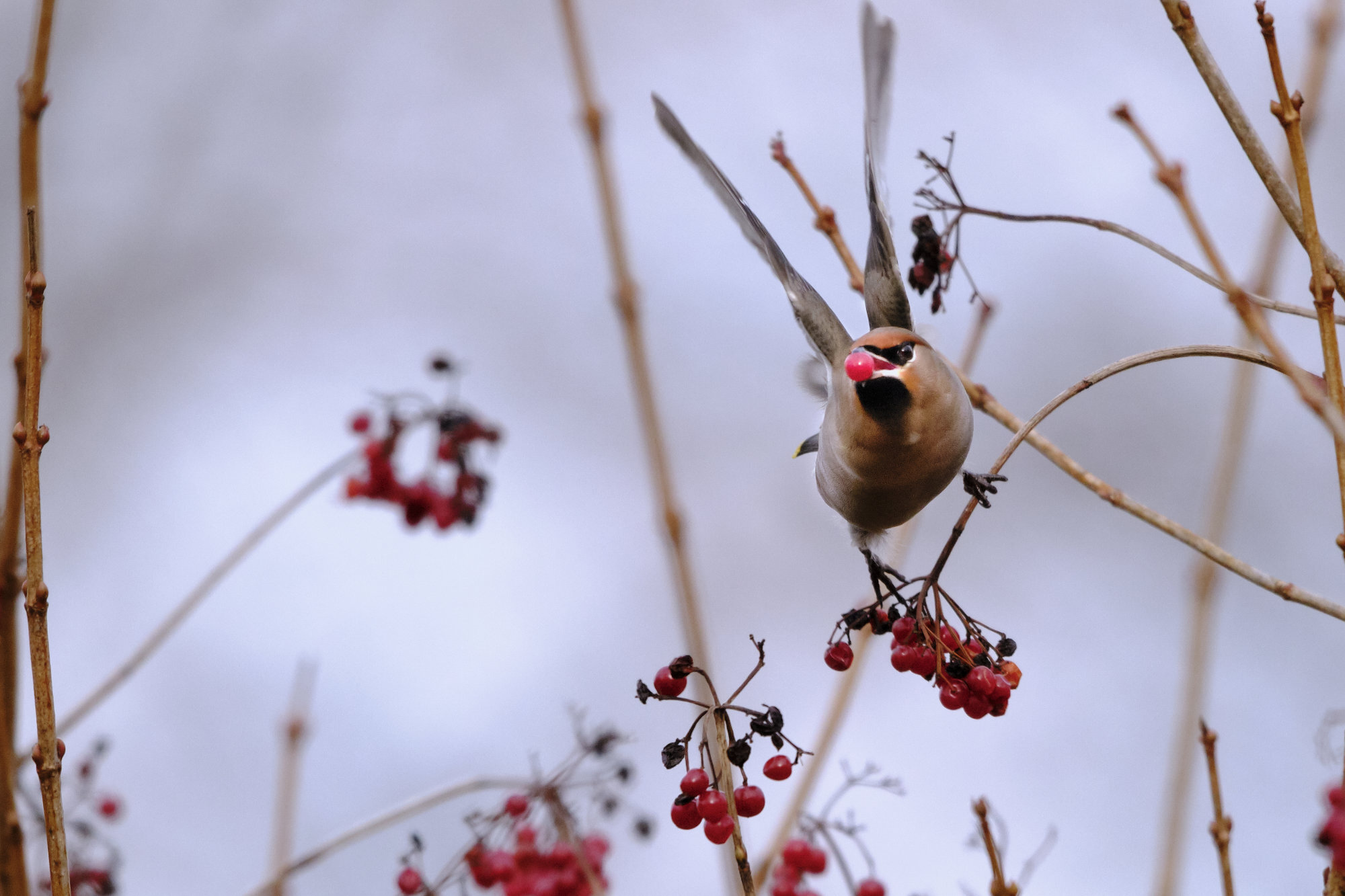
A Bohemian waxwing taking off with its favorite food.

Seeing a bird for the first time is a special and thrilling feat for most birdwatchers and -enthusiasts. Back in January I had this very pleasure. Bohemian waxwings came in quite some numbers to Northern Germany. This isn’t too unusual and happens every few years. But since I am still a newbie in terms of birdwatching, I did not yet experience this occasion.

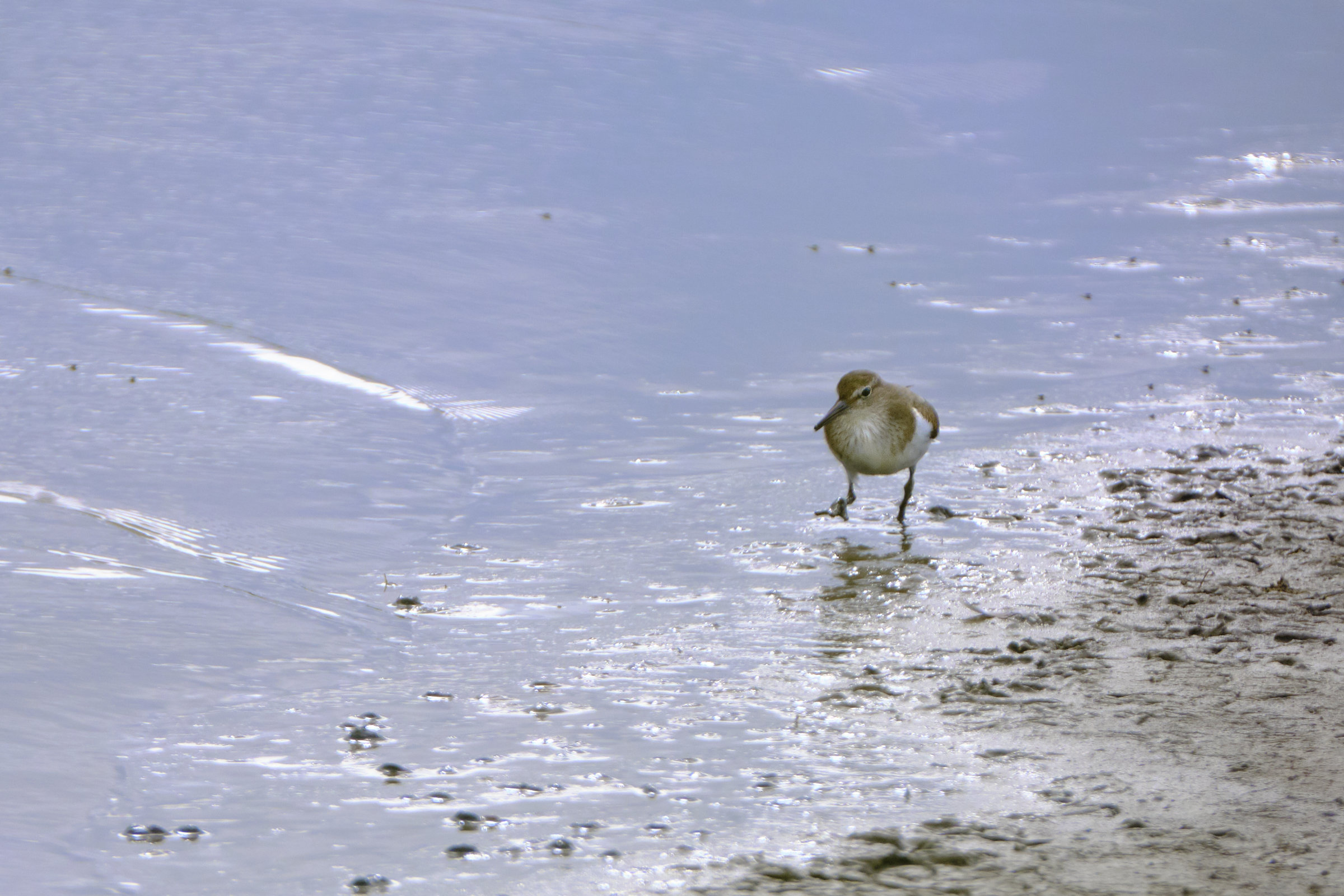
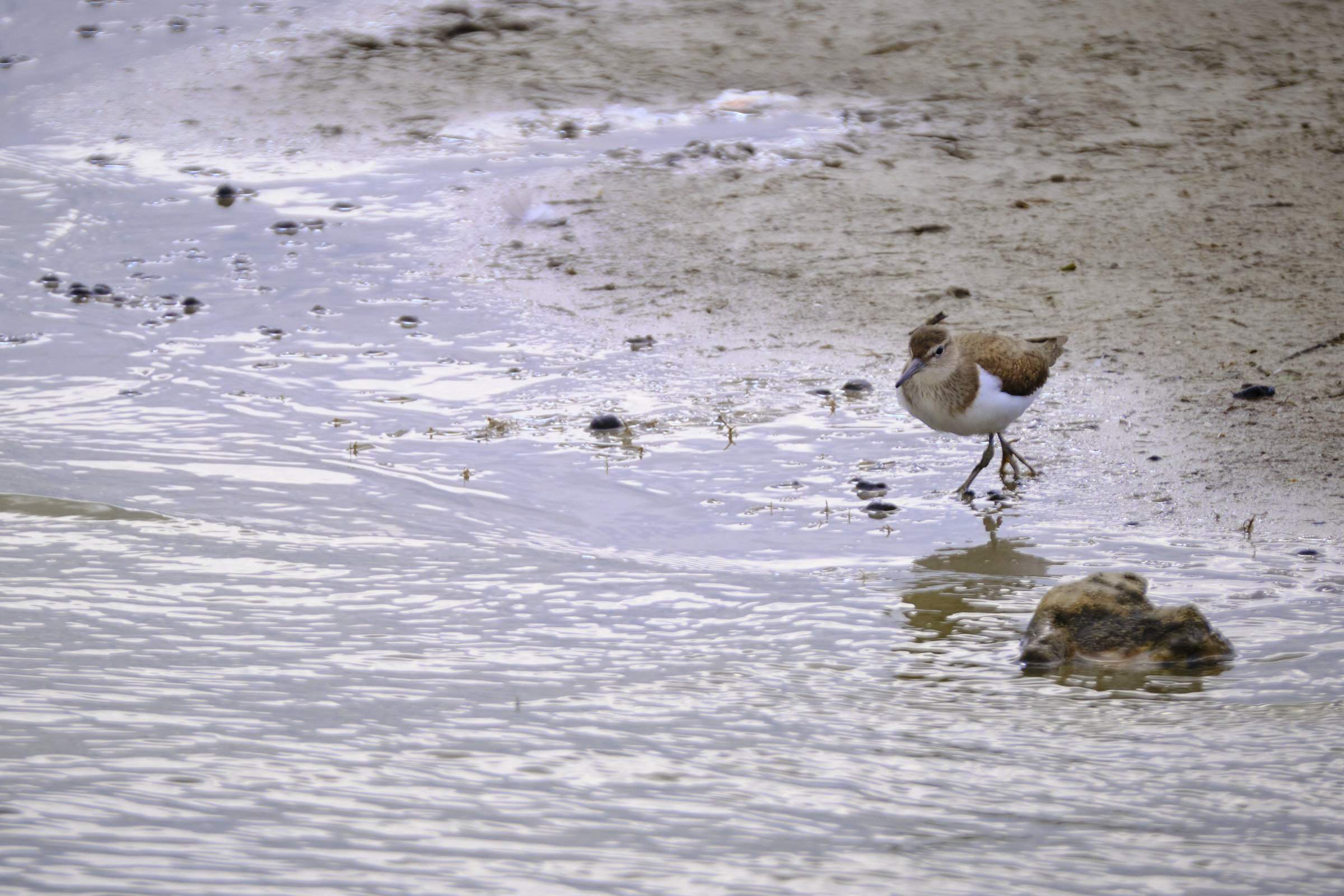
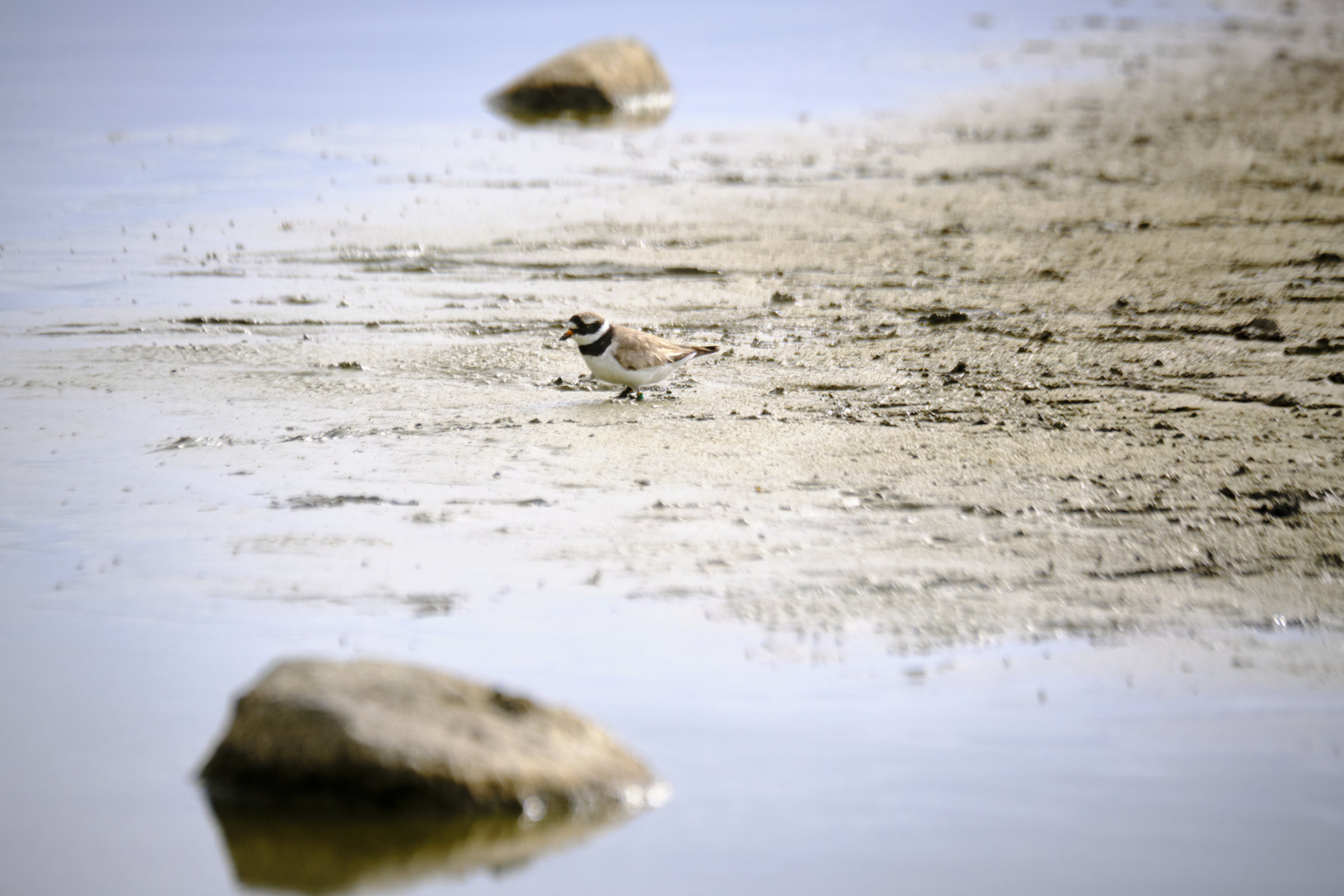
From the very beginning of my birding-thing, I was fascinated with some species in particular. First of all, there is my much beloved Raven - all kinds of Corvidae in fact. And I really have a fancy for the wonderful Spotted nutcrackers, Sanderlings and Common Ringed Plovers. Less originally though, I have always been fond of some of the the more colorful species since I acquired the great “Kosmos Vogelführer” - such as the Atlantic puffin, the Great kingfisher, the Bluethroat and of course the Bohemian Waxwing. Scandinavia-lover who I am, those Waxwings had a head start into my heart and the fact that one of my most appreciated wildlife photographers, Markus Varesvuo from Finland, often shared waxwing images helped with my fascination.

“When word spread that Waxwings were here, I became a little thrilled.”

I had to wait until this year to see it. When word spread with the local ornithologists that Waxwings were here, I became a little thrilled. I went out with my trusted binoculars, but without success on the first outing. Since they usually feast on Mistletoes, Rowan-berries and Common snowball I kept my good mood and was sincere to find it. One day later a large flock has been reported at a local camping site - easily accessible via car. What happened next was an unpleasant surprise. Loads of birdlovers and -photographers swarmed the place. All well equipped with hiking boots and trousers and heavy packs and what not - right within the city. More annoyingly they behaved as if this was there place, coursing the campers for scaring off the birds, getting in the way of everyone, noising and being way too full of themselves.

What was missing was the waxwings - smart little birds they are. I decided that this was not my place and went for a long stroll around a nearby lake, breathed deeply and forgot all the annoyance, came back - all those Waxwing-hunters had been gone, sat down and waited for ten minutes or so and was rewarded with a flock of 37 birds: noising and brawling and enjoying the Snowball berries. The light was wonderfully subdued. Short: I couldn’t have been more lucky.

Waxwings talking
“It’s not about ticking some species off of a list.”

The rest is history they say. One happy photographer with a shitload of images to process. Forgotten my irritation about those noisy birdloving photographers I met before. The magic of the moment took over. So I put aside the camera, grabbed my binoculars and watched and listened. Isn’t this what it’s all about? It’s not about ticking some species off of a list. It’s not about hunting for an image as inquisitive passerby oft ask. It’s about experiencing the moment, learning about the ways and behaviour of wild animals that are not subject to man. This is the real meaning of a first. The moment that you will only experience once. This excitement, this joy.

Holidays with birds /  by Arne Bischoff

Recently I spent some days at the “NABU Wasservogelreservat Wallnau”, a nature-reserve located on the west coast of German island Fehmarn within the Baltic Sea. This place has become very special to me in the last few years. It is a great example of a nature-reserve.

The visitor-centre of Wallnau. Image by Louis Bafrance, CC BY-SA 4.0.

The visitor-centre of Wallnau. Image by Louis Bafrance, CC BY-SA 4.0.

The place has been a fish farming until 1976. Then in 1977 NABU (Nature and Biodiversity Conservation Union) acquired it. Since the island of Fehmarn is a bottleneck for migrating birds from Scandinavia on their way south, the wetlands of the old fish farming promised to be a bird paradise. Fehmarn is not called “Vogelinsel” (bird island) for nothing in Germany and in very close distance to Wallnau, you’ll find the beautiful reserves of “Krummsteert” and “Grüner Brink”.

The rest is history. Wallnau has indeed become a paradise not only for migrating birds, but for breeding birds as well. The whole place is devoted to the conservation of nature and true to NABU’s motto “you only protect what you know”, there is a visitor centre with an excellent exhibition that teaches all about the island, the place and the migration of birds. Next to visitor-centre and exhibition sits a nature trail, which provides more insight into the functioning of Wallnau and is really fun to follow. The trail leads to a tall look-out with a commanding view over the marshes, the wetlands, shore, beach and sea.

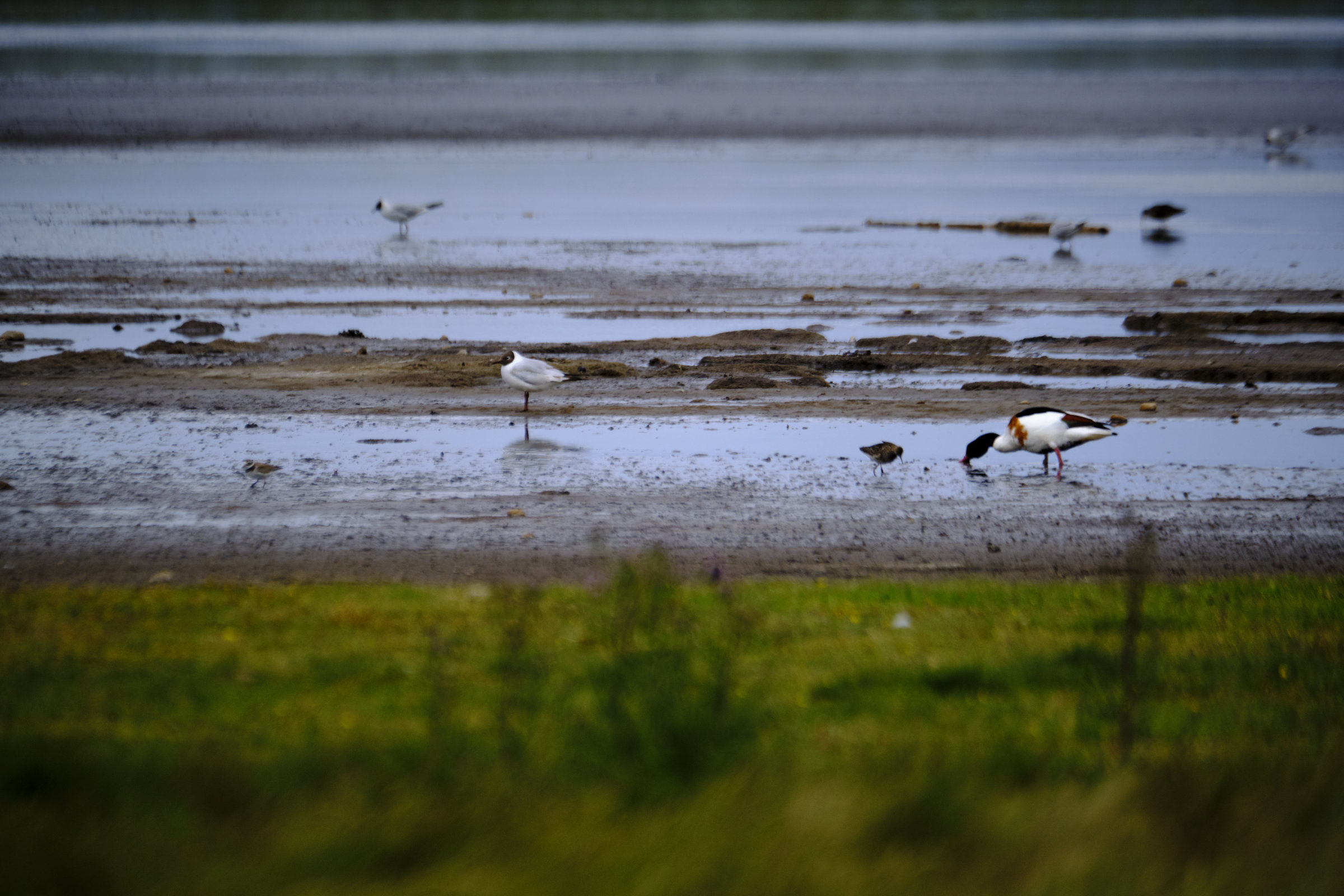
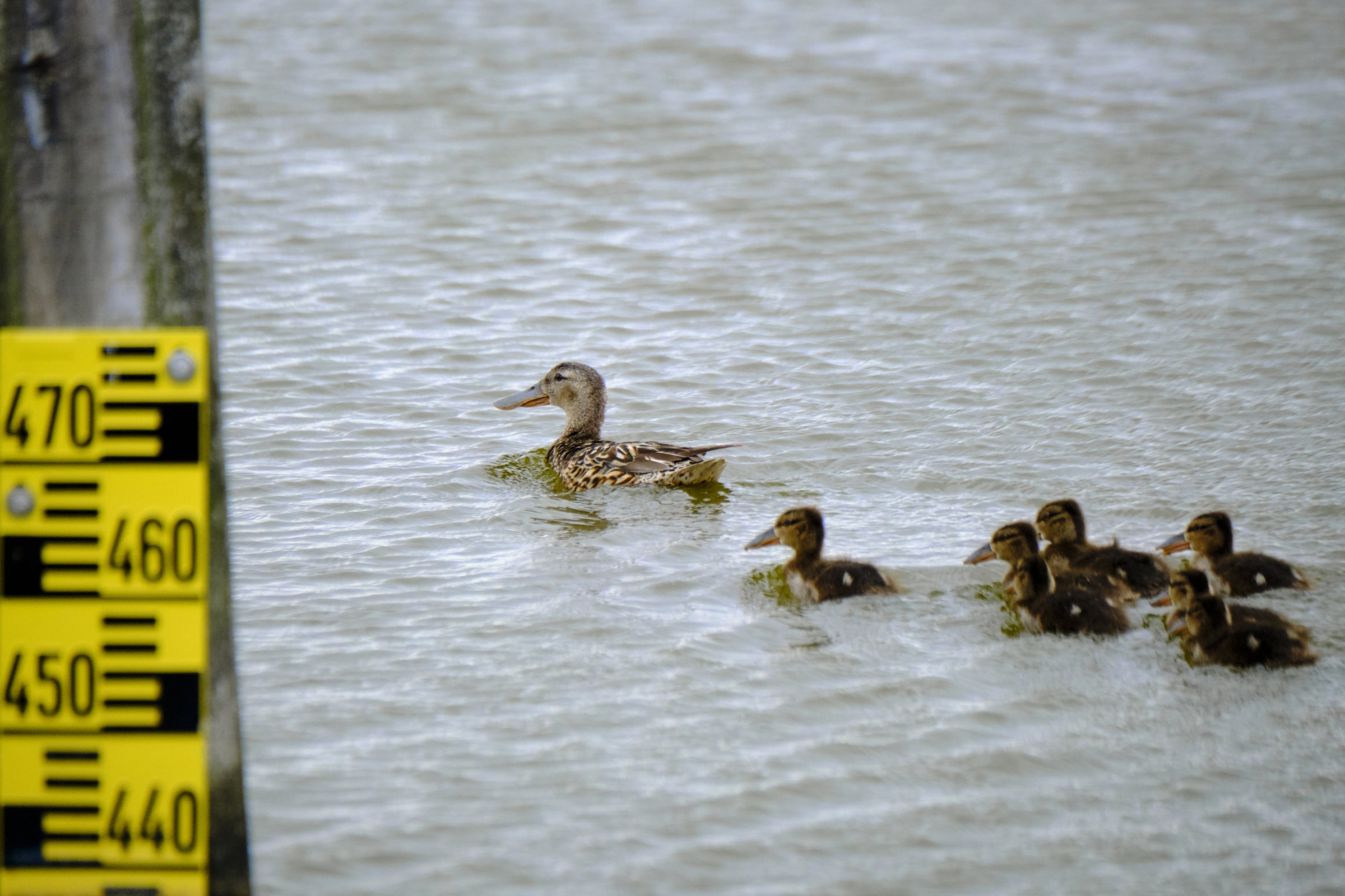
Entering the reserve itself is strongly prohibited, but four hides make for wonderful observation- and photo-opportunities. This is where I spent most of my time. You can see the birds beautifully, but they can’t see you and if you are silent enough, can’t hear you either. Since it is wetland, waders and gulls are the dominating groups.

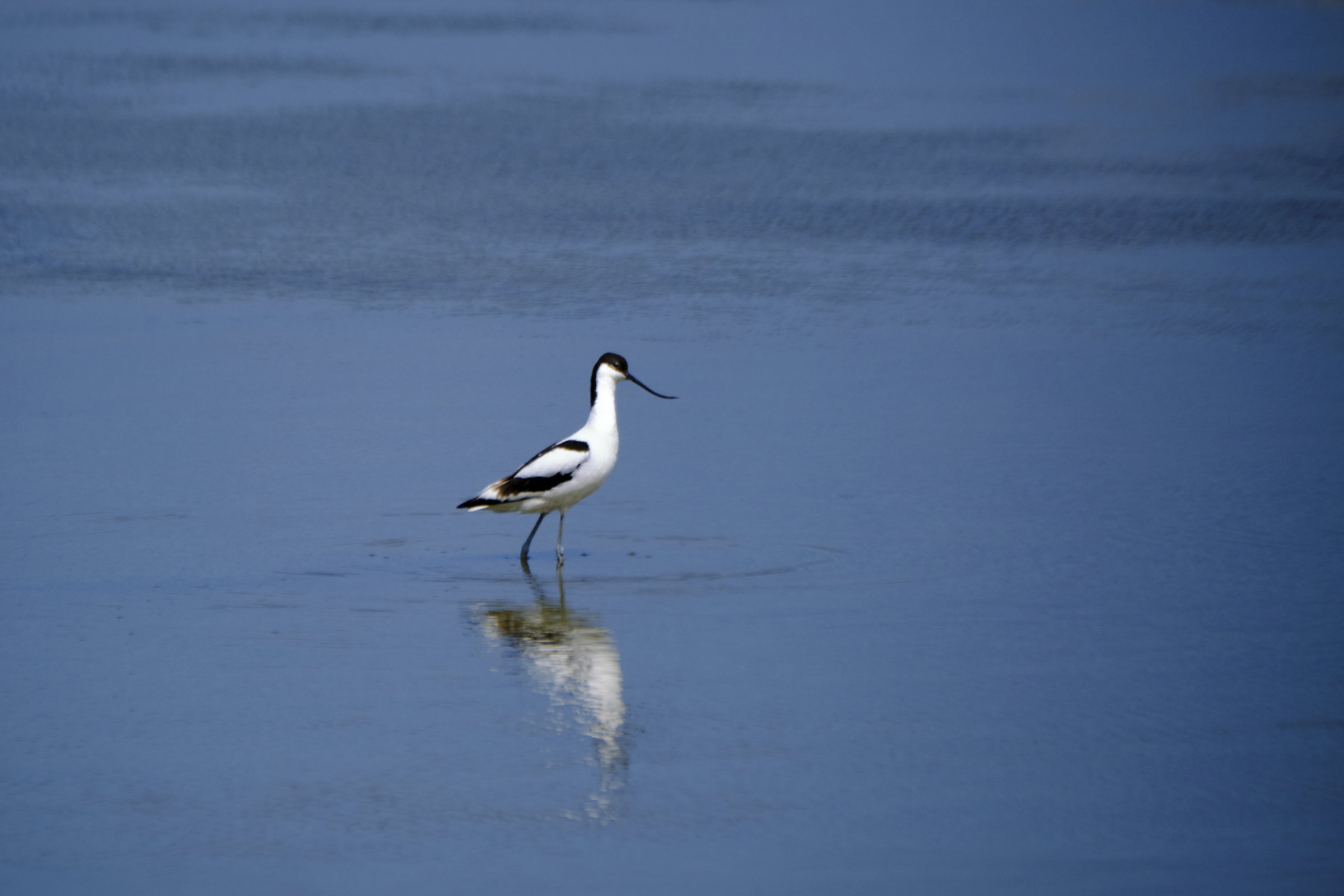
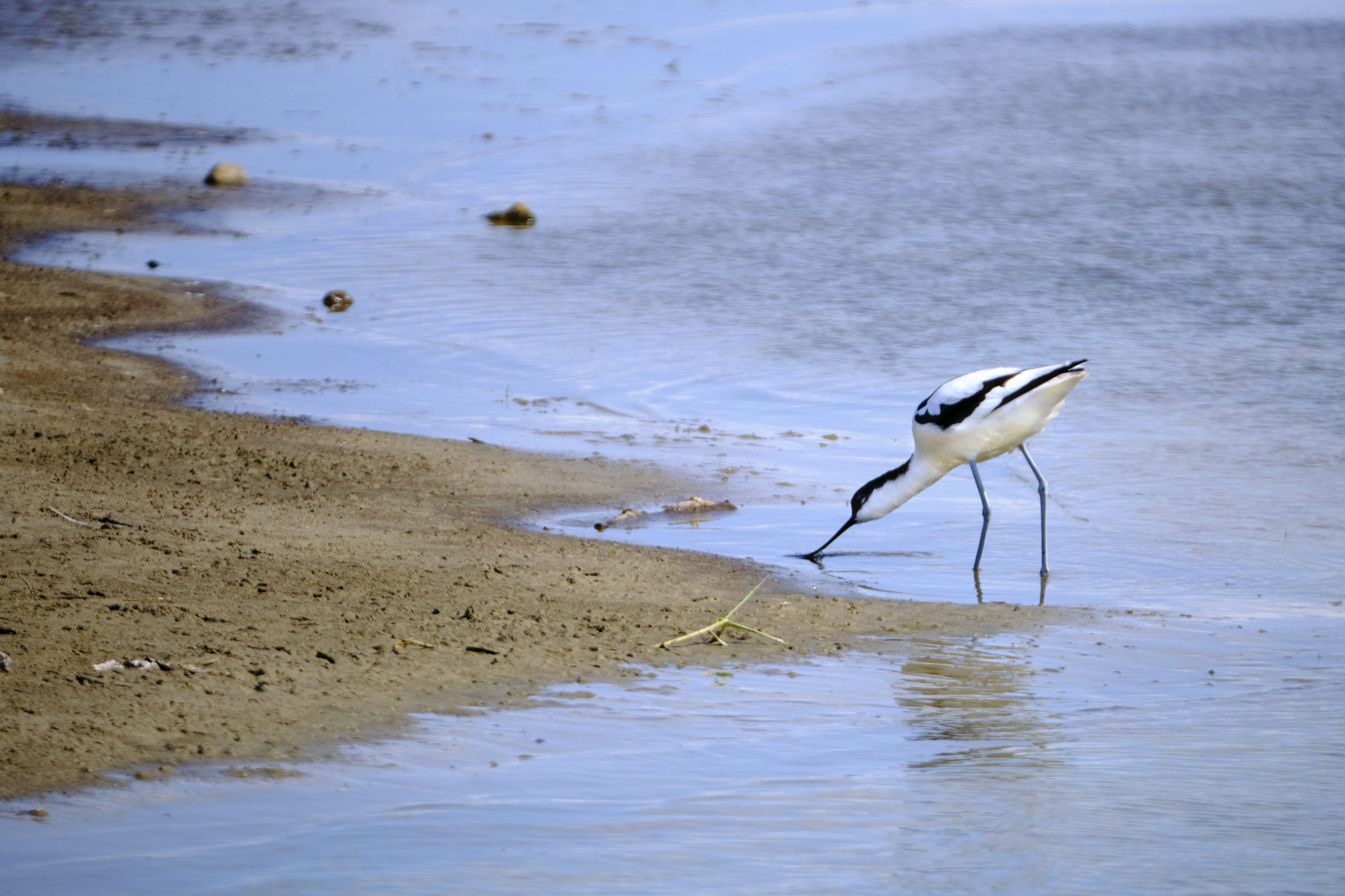
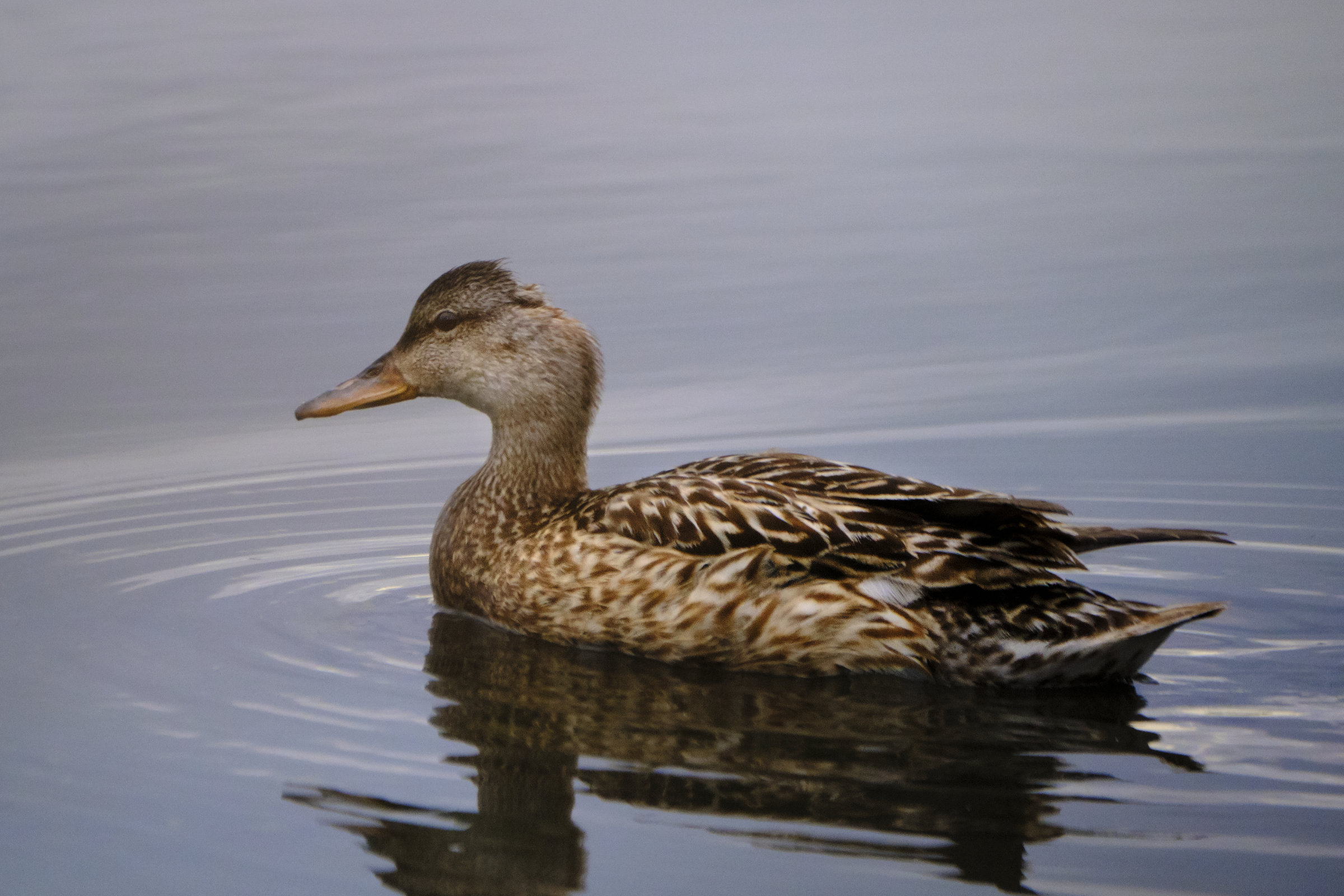
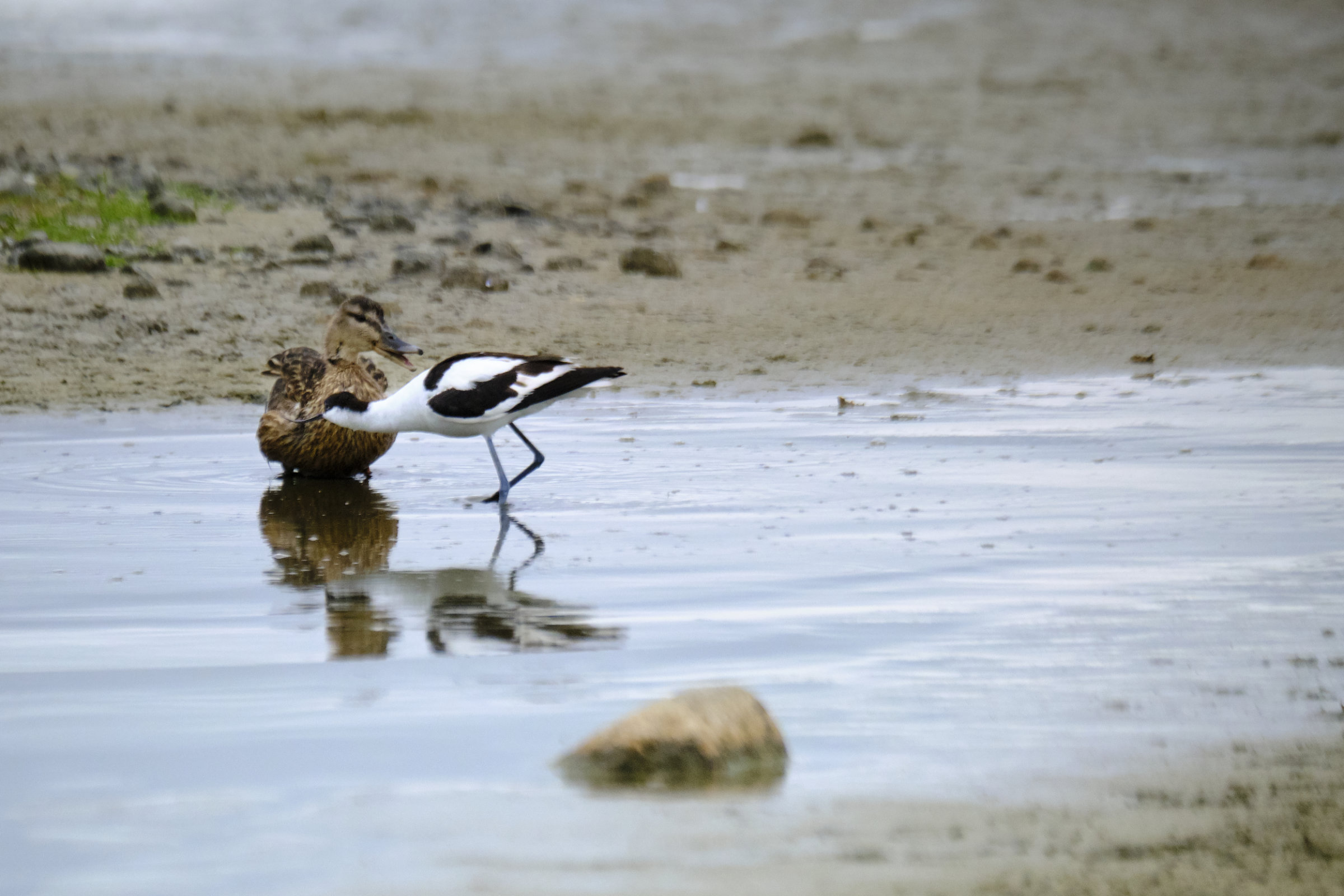
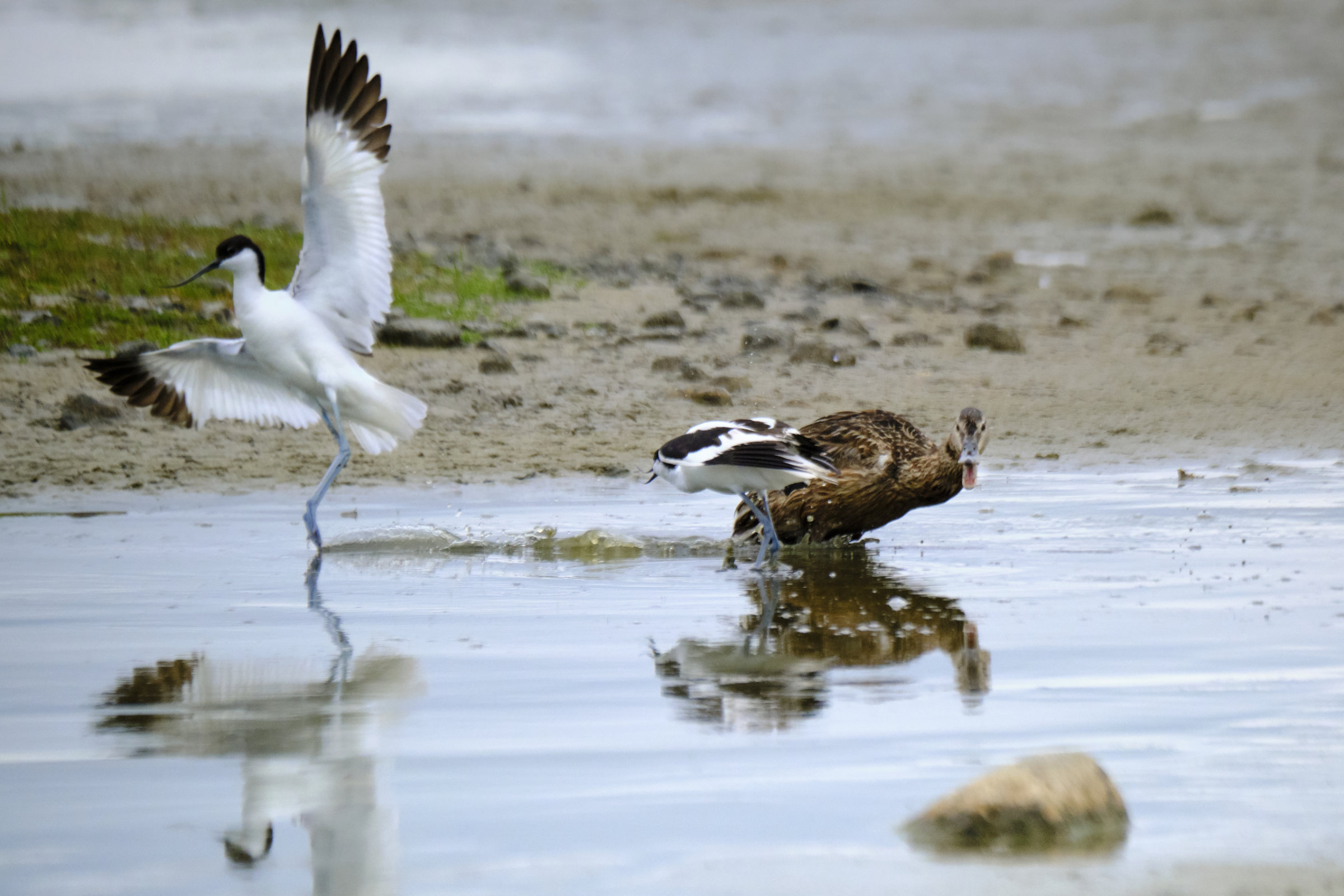
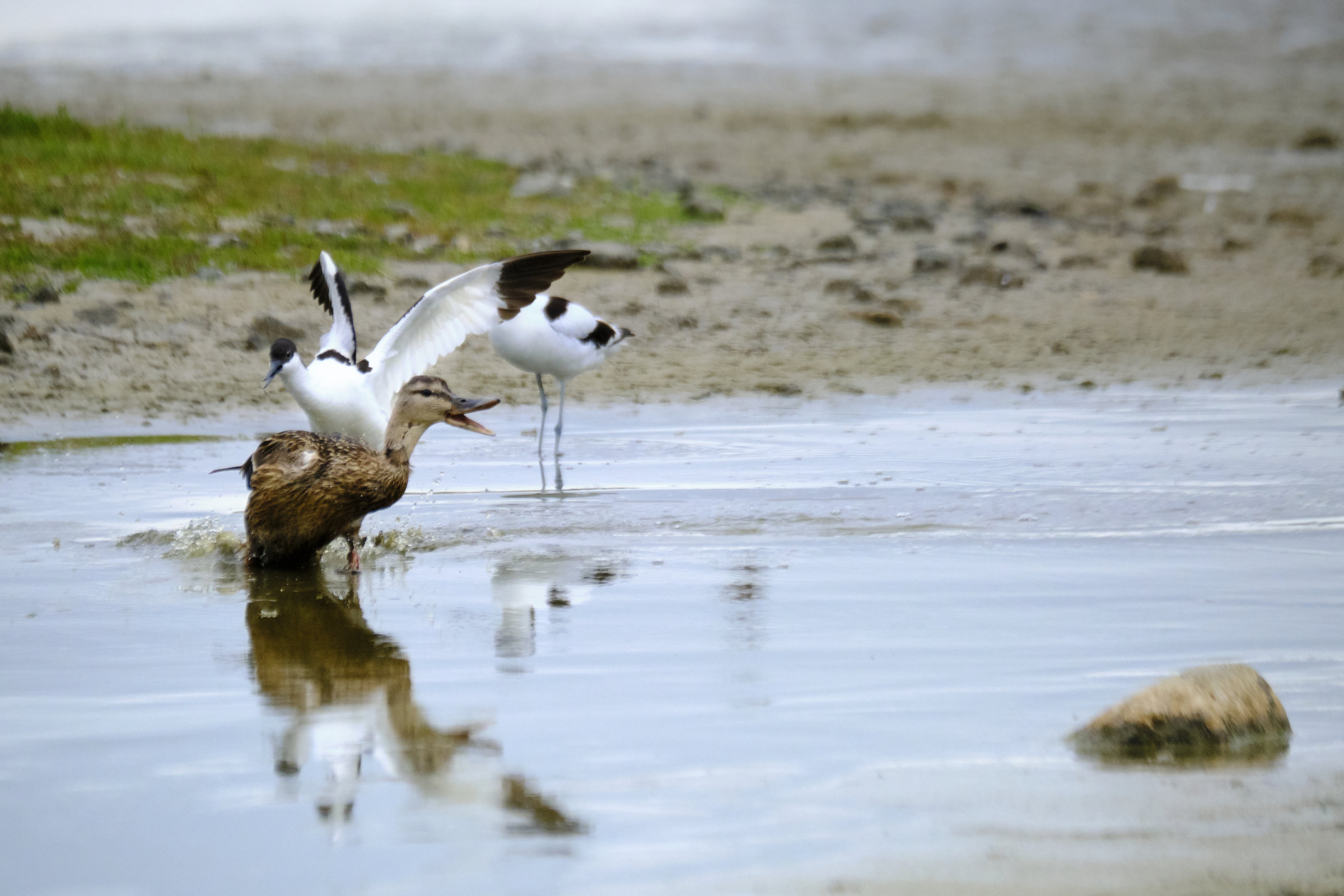
A Pied avocet succesfully mobbing a Gadwall.

A Pied avocet succesfully mobbing a Gadwall.

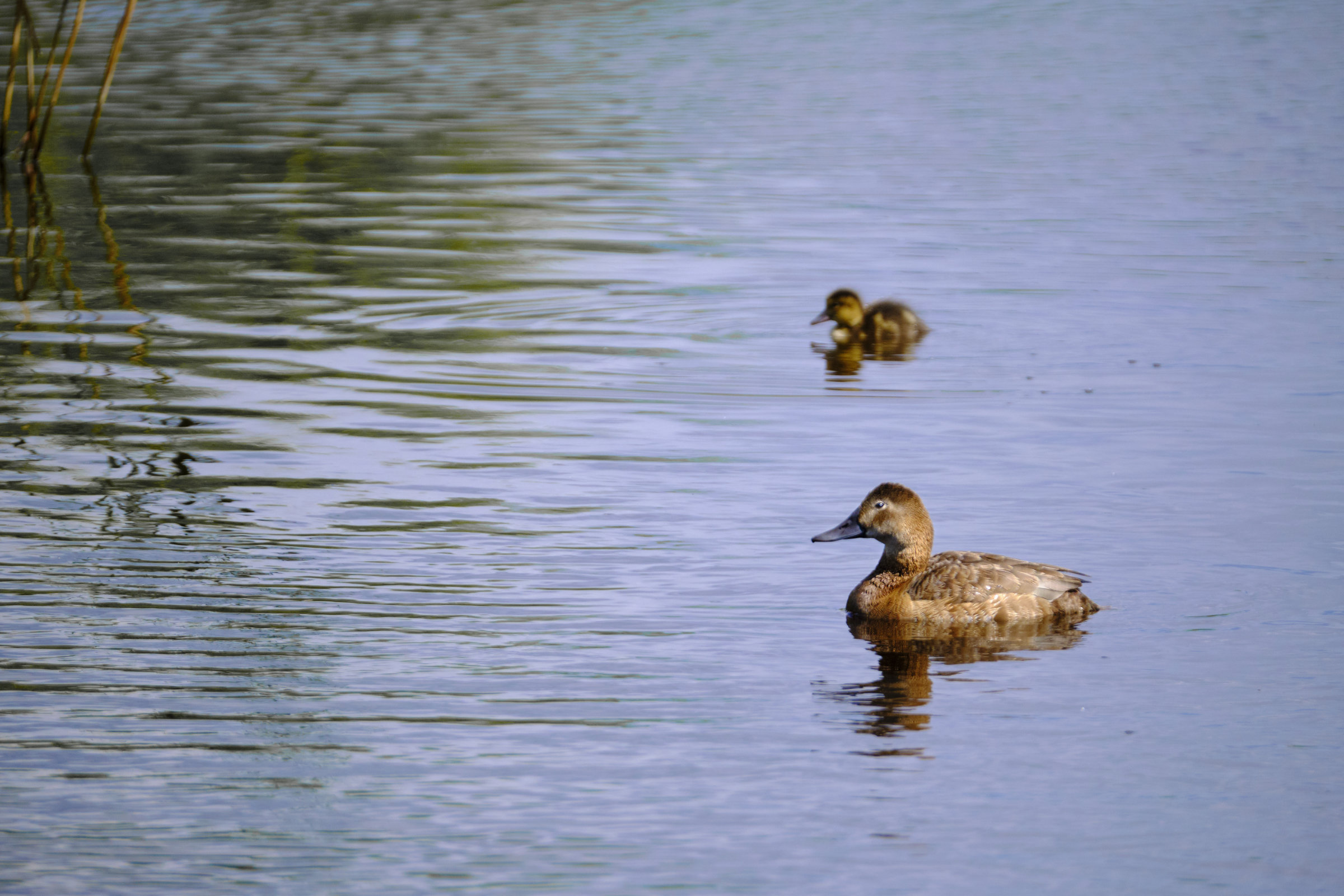
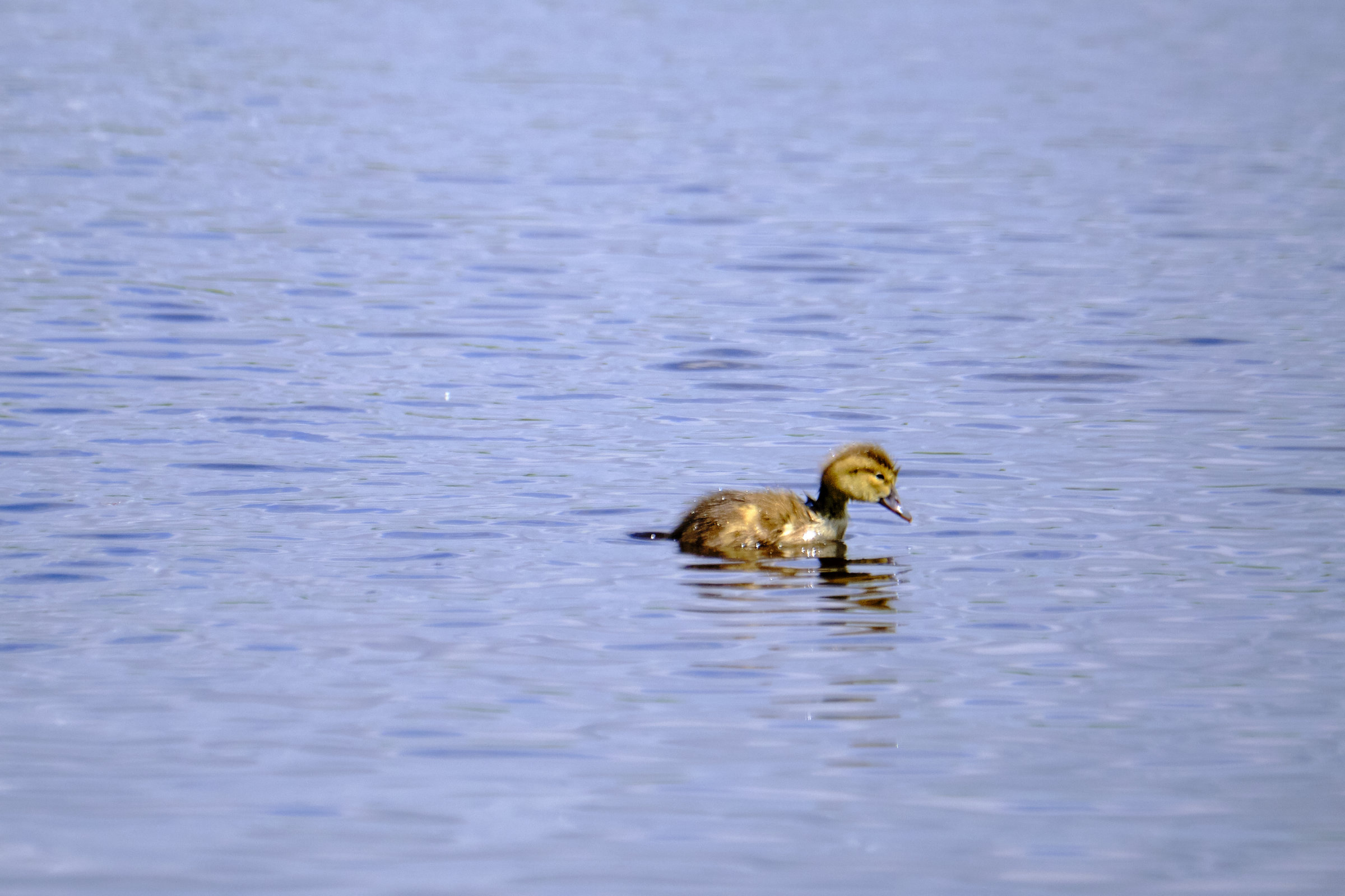
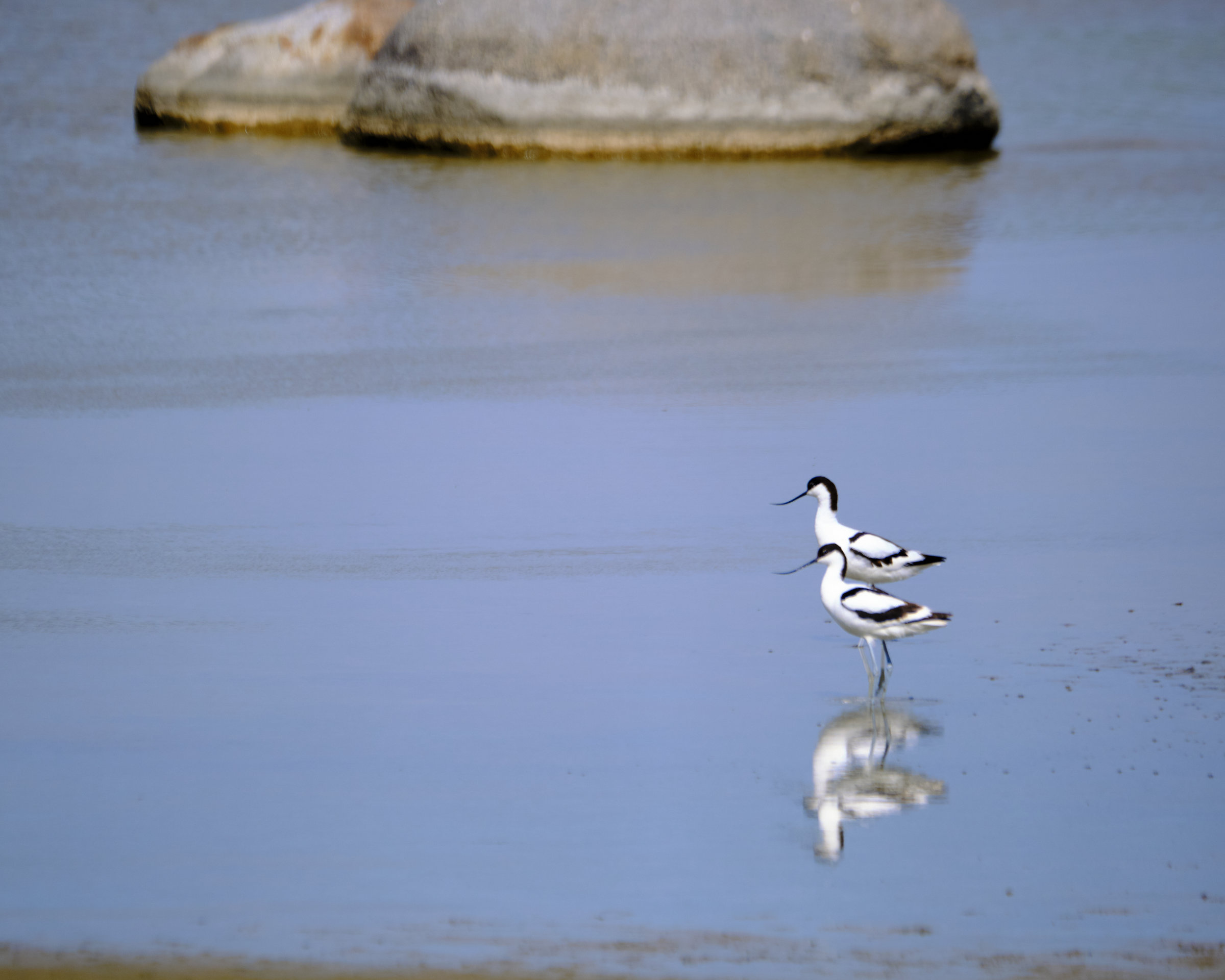
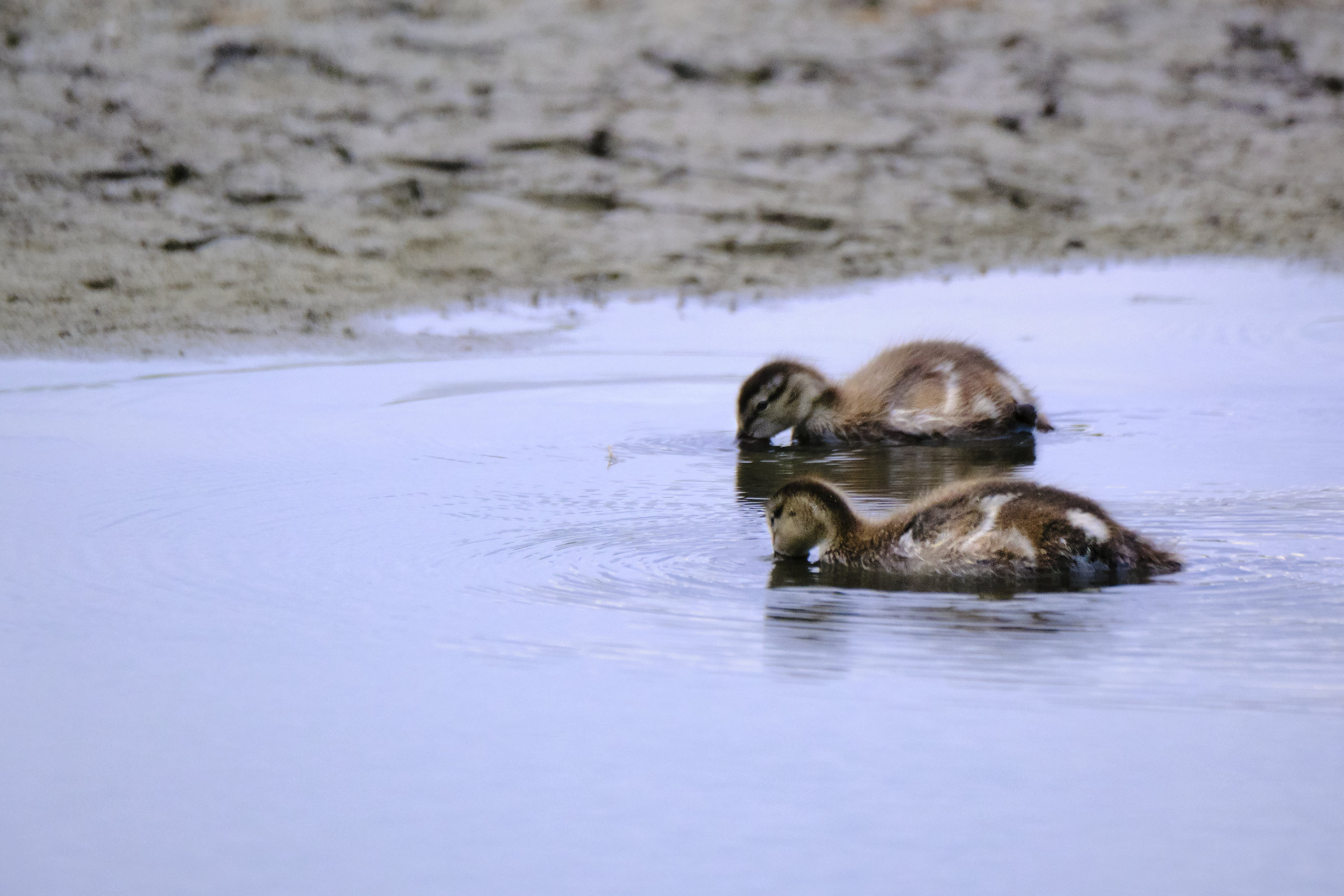
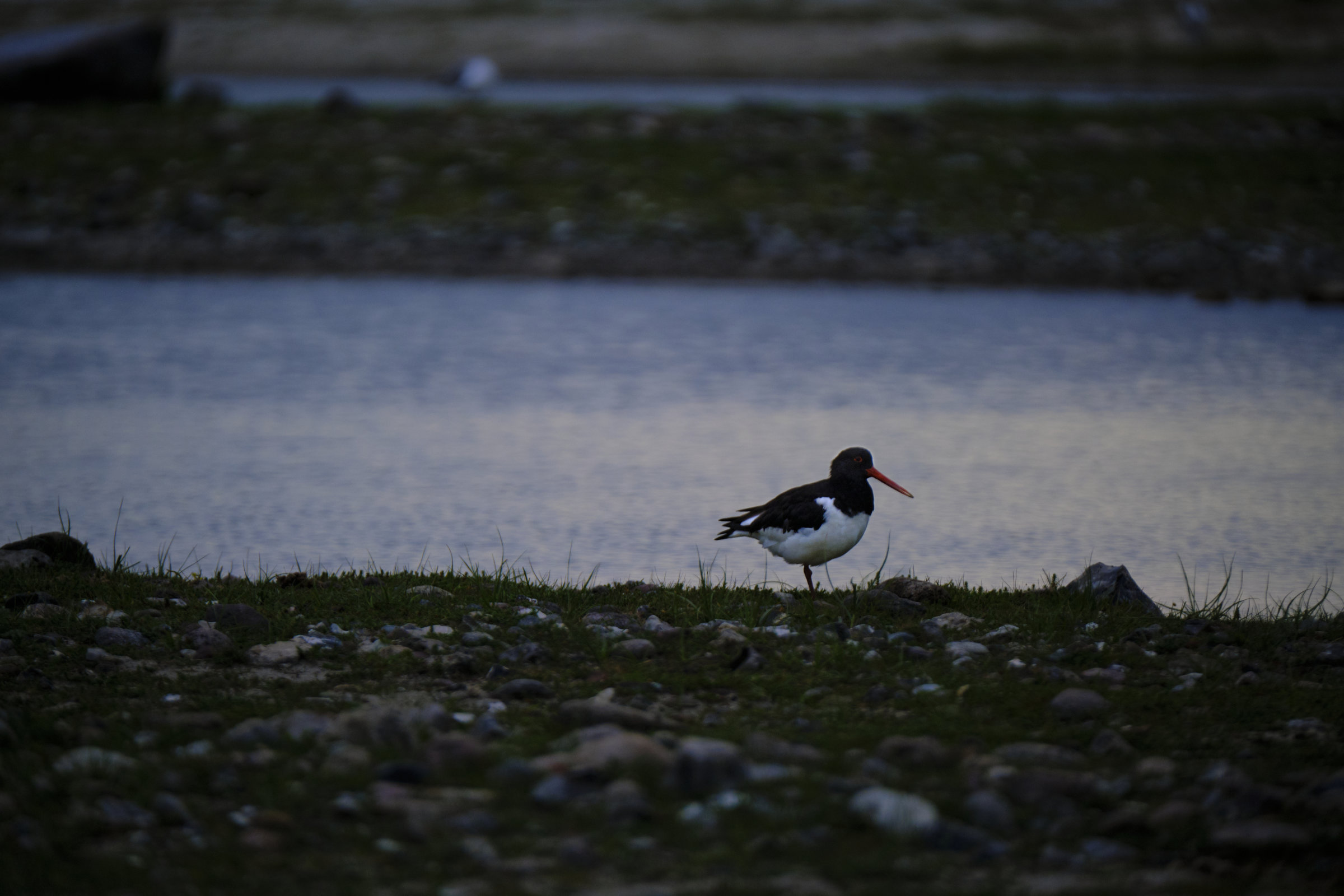
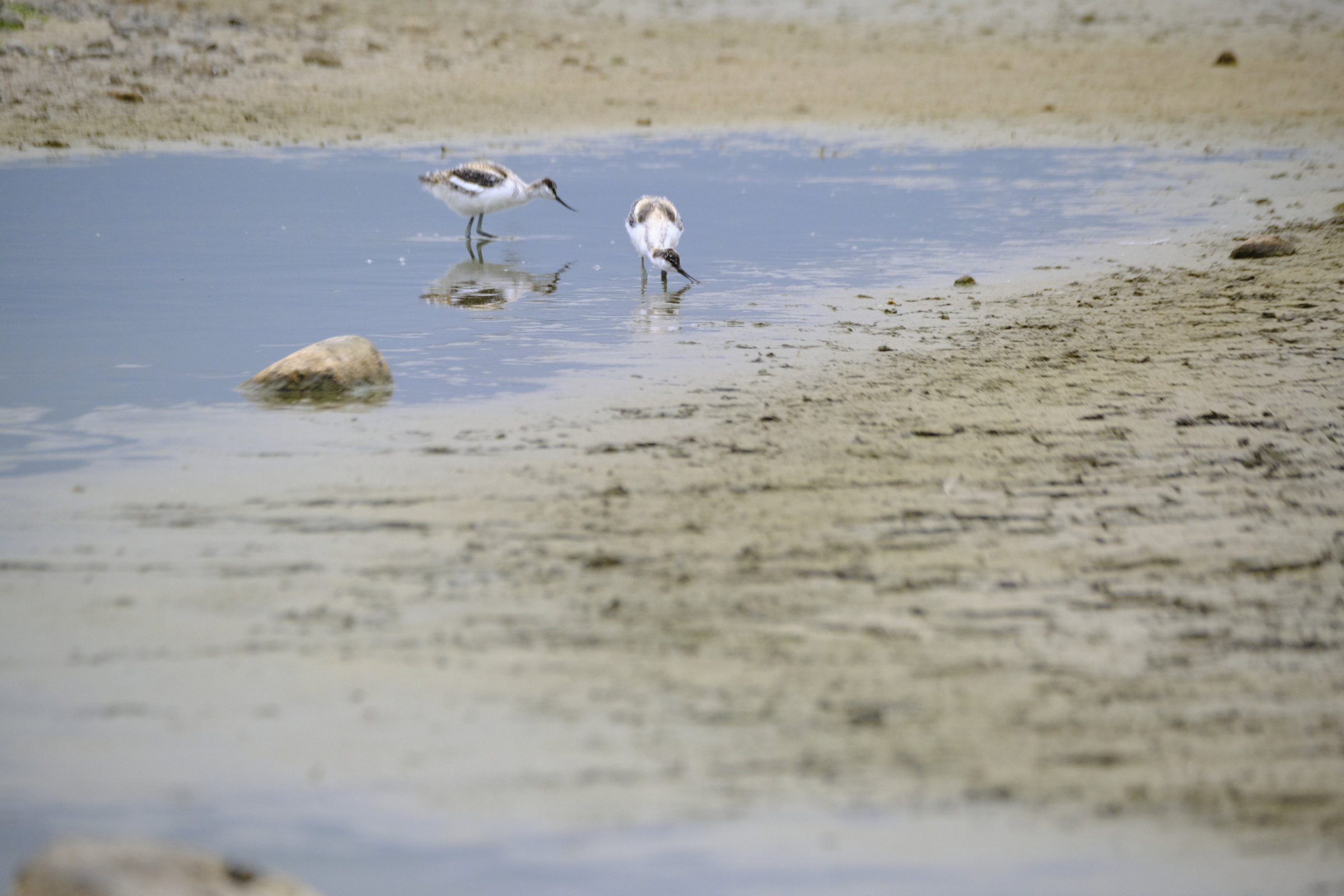
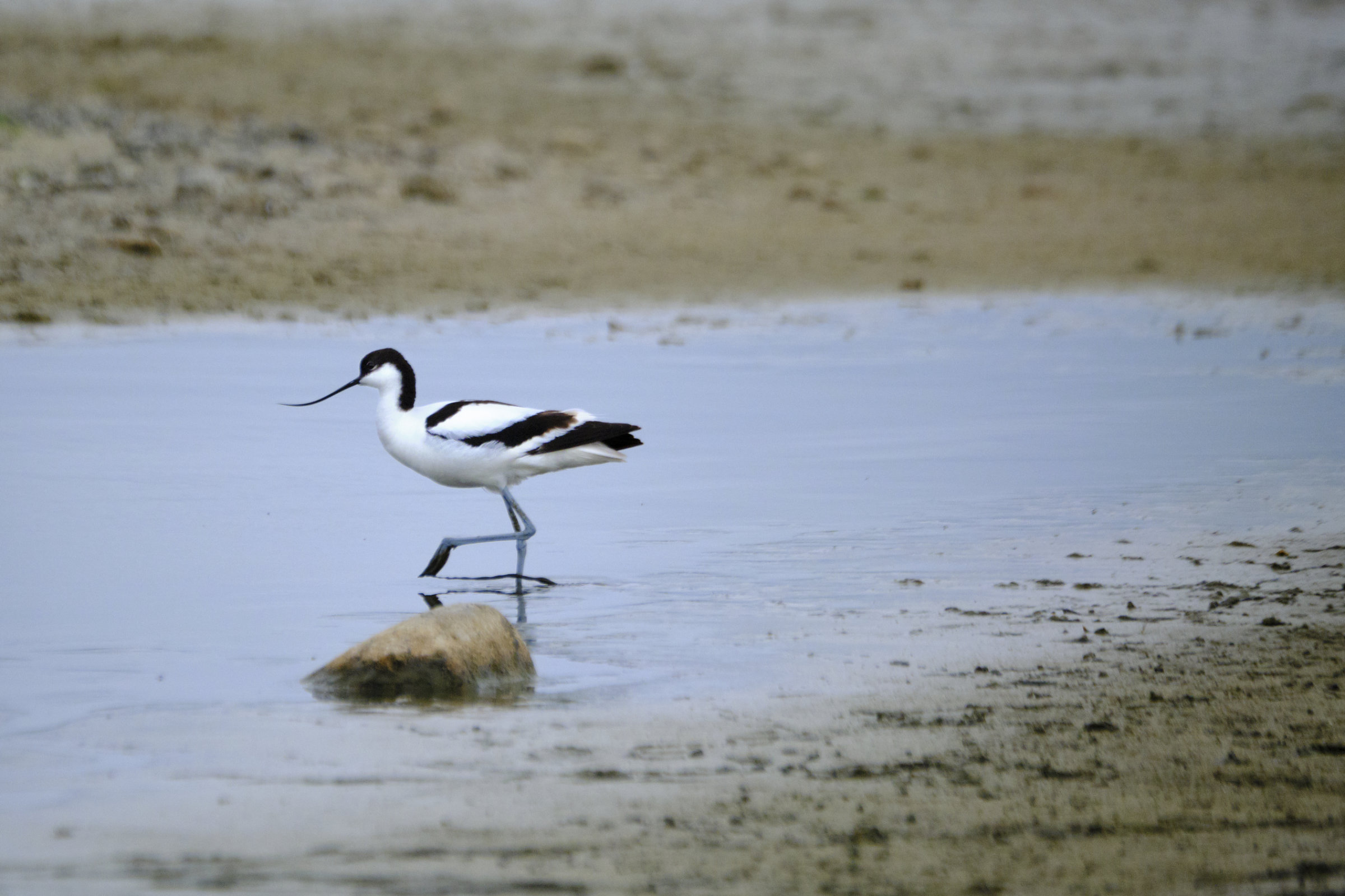
During my visit, Pied avocet have been especially numerous. Many of them had chicks and that did not benefit their character. The avocets did not allow any other birds around. Especially in the later hours before nightfall, they were bullying each and every one from the tiniest wagtail chick to the largest greylag goose. Only some occasional shelduck offered resistance.

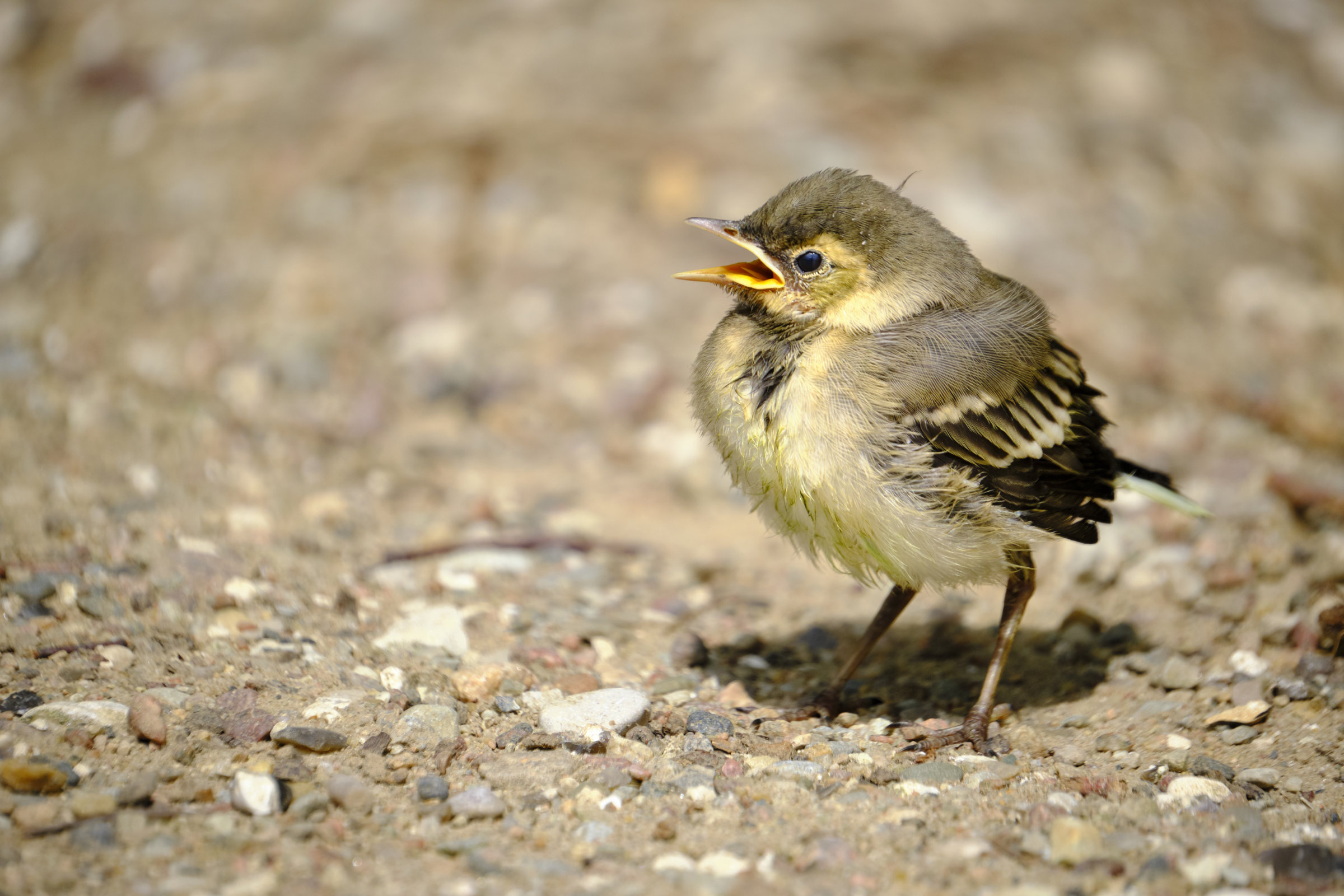
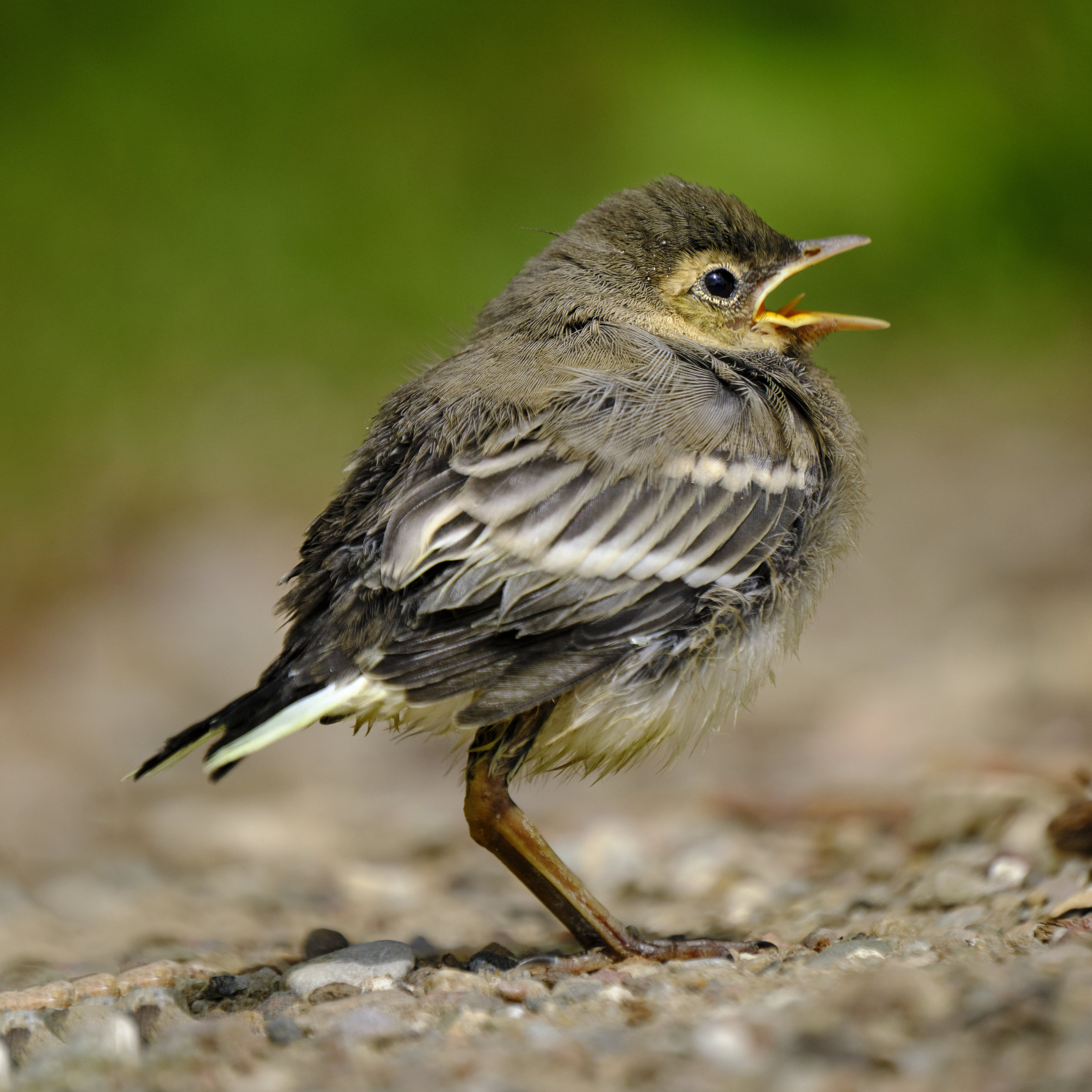
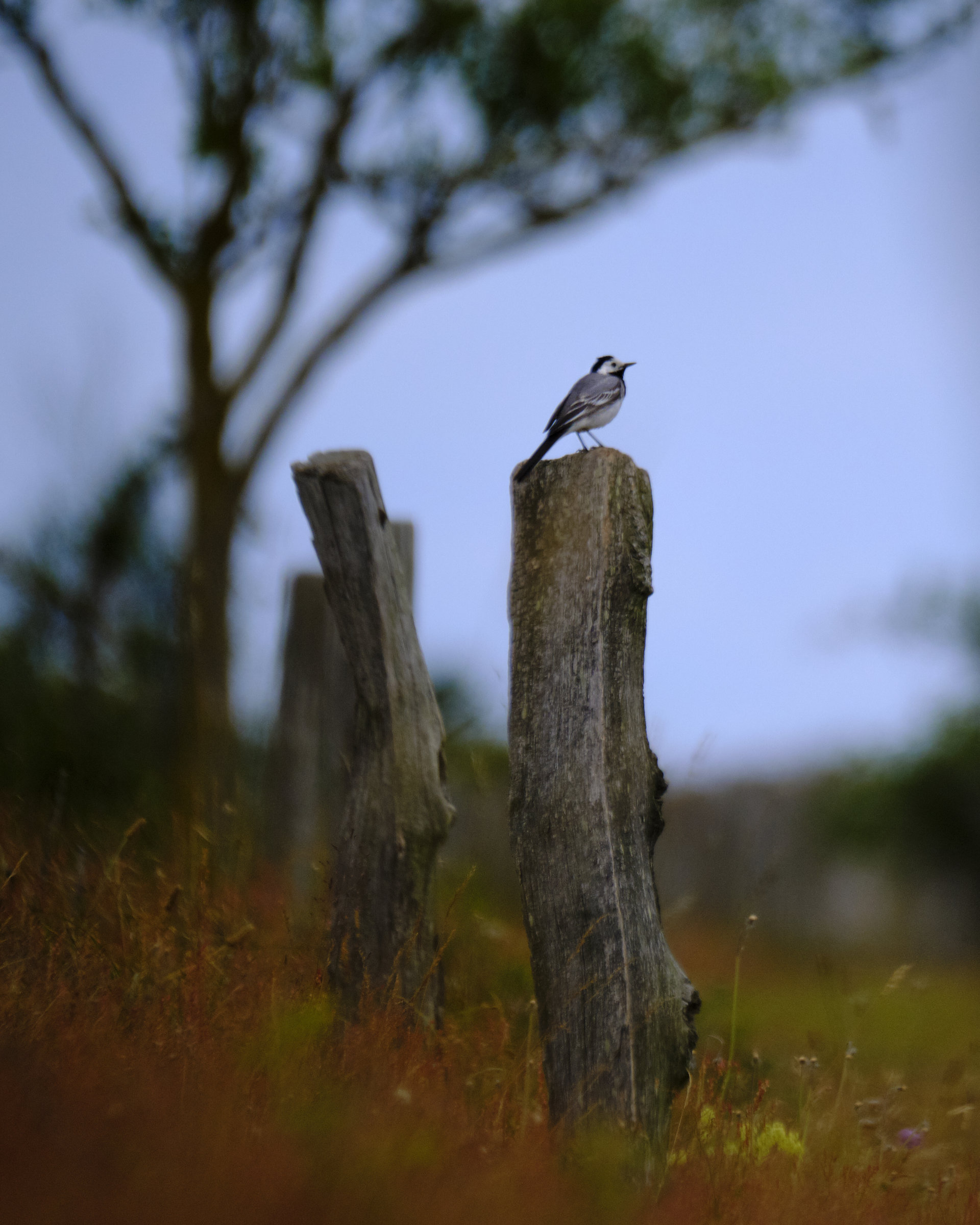
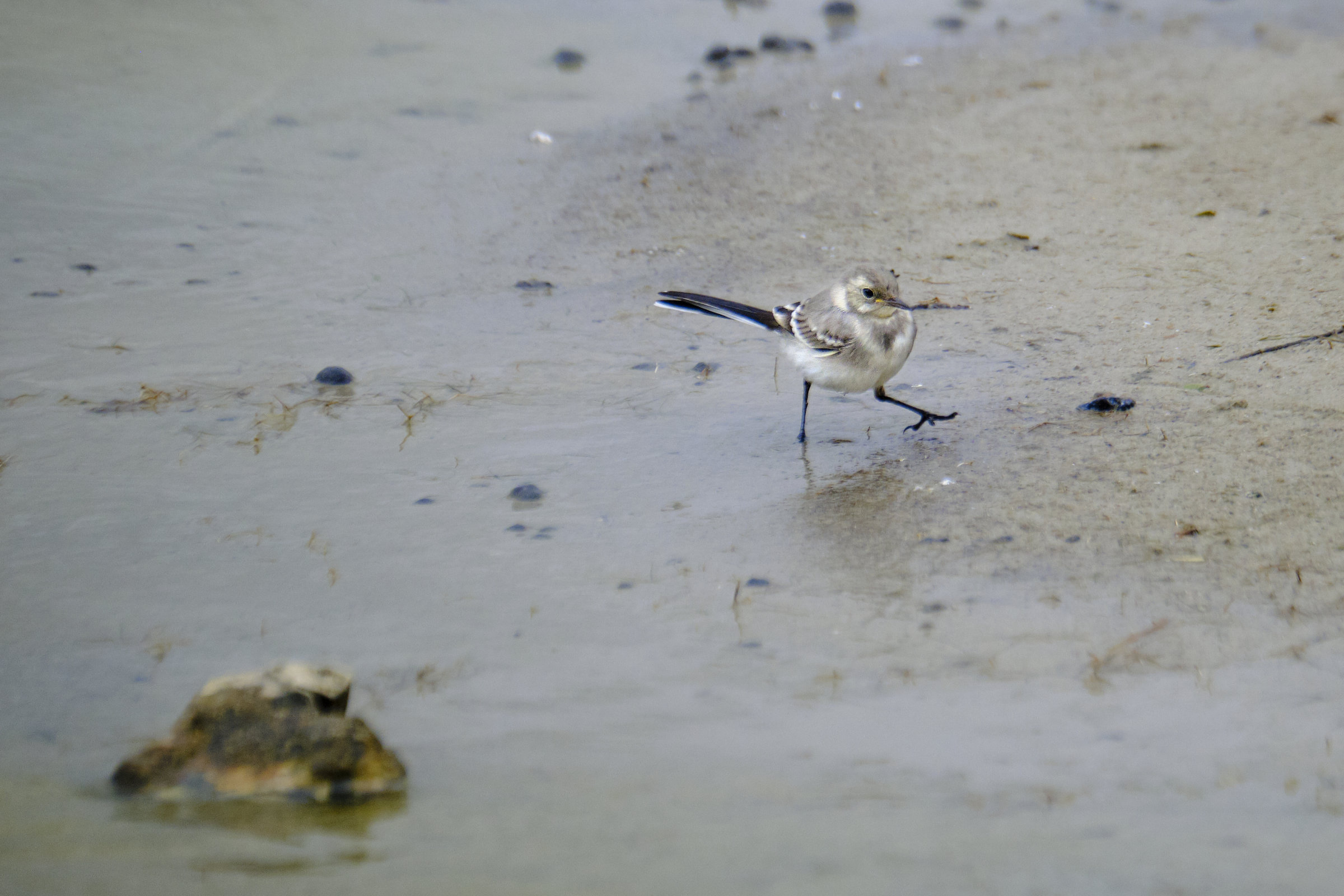
A very little White wagtail.

The star of my first day was an adventurous little wagtail, who paraded the gravel path directly in front of the main building. It drew so many eyes that its mother had a hard time feeding it. Every evening, three branchlings of a Long-eared owl gave its ear-piercing begging calls. On my third day, I saw an Eurasian bittern flying by. The first of my live.

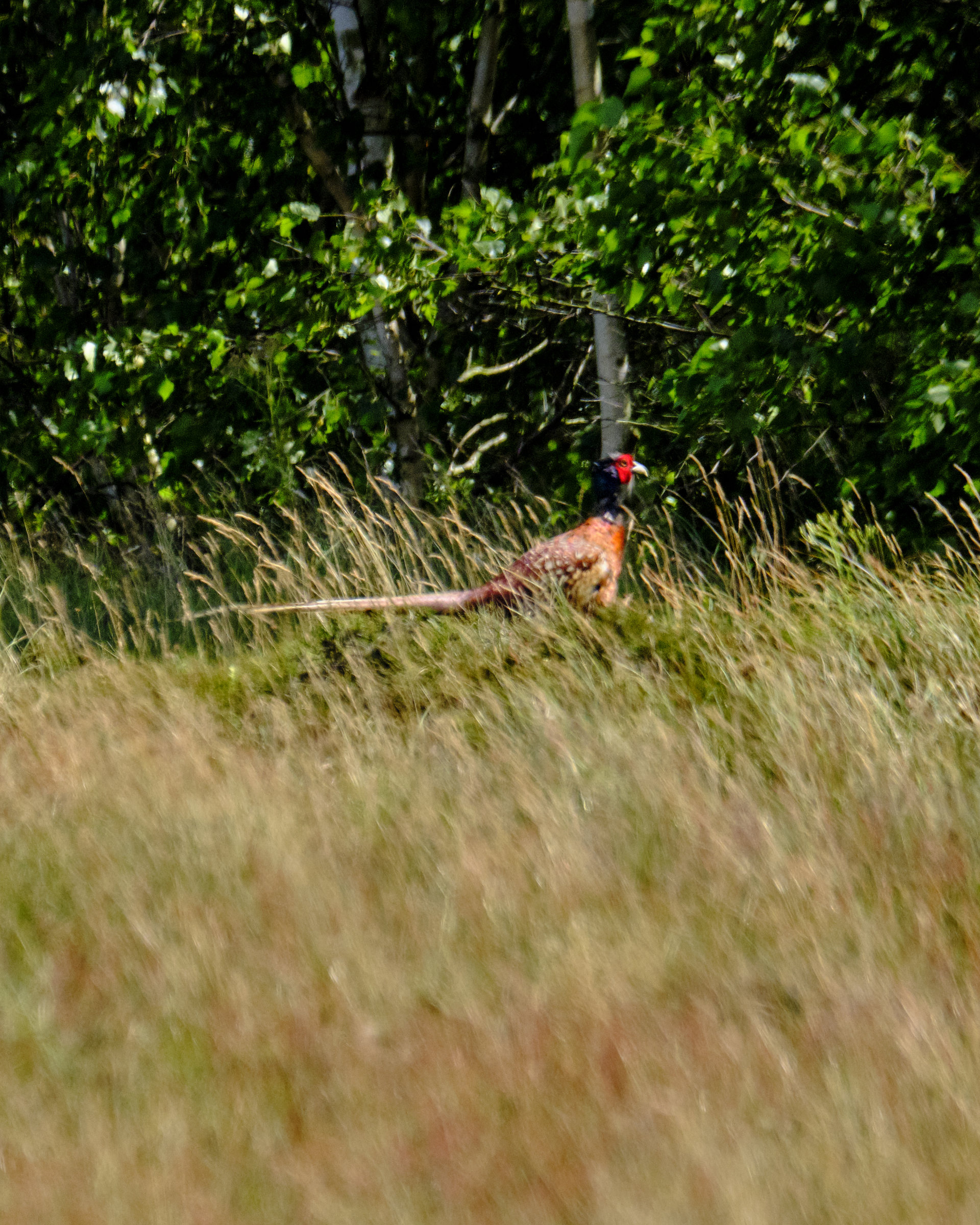
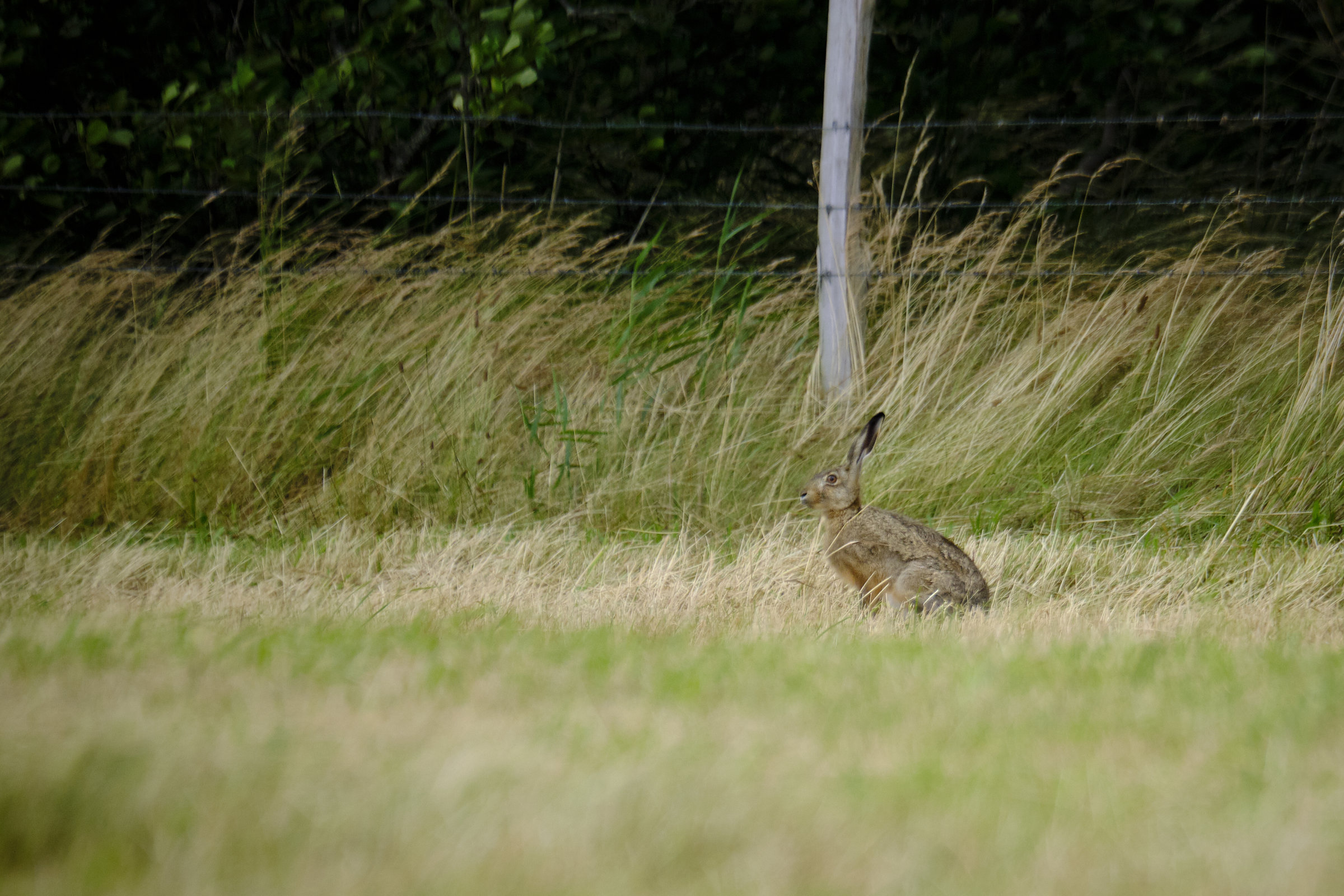
The list goes on and on. Even outside the reserve, the area is astonishingly beautiful. Hares, deer and foxes are patrolling the meadows nearby. The Baltic Sea is crashing against the old dyke, which is protecting Wallnau. The island of Fehmarn itself, although hugely surfaced with industrial agriculture, has its moments of beauty, too. Strips of wildflowers are edging many of the fields, with cornflowers, chamomile and poppies in full bloom. Every once in a while, a pheasant strolls by.

A Common pheasant at nature-reserve “Grüner Brink”.

A Common pheasant at nature-reserve “Grüner Brink”.

For a bird lover or anyone, who is interested in nature, I highly recommend visiting this place. I will most definitely come back.

Until then, I happily share my observation-list and my images with you.

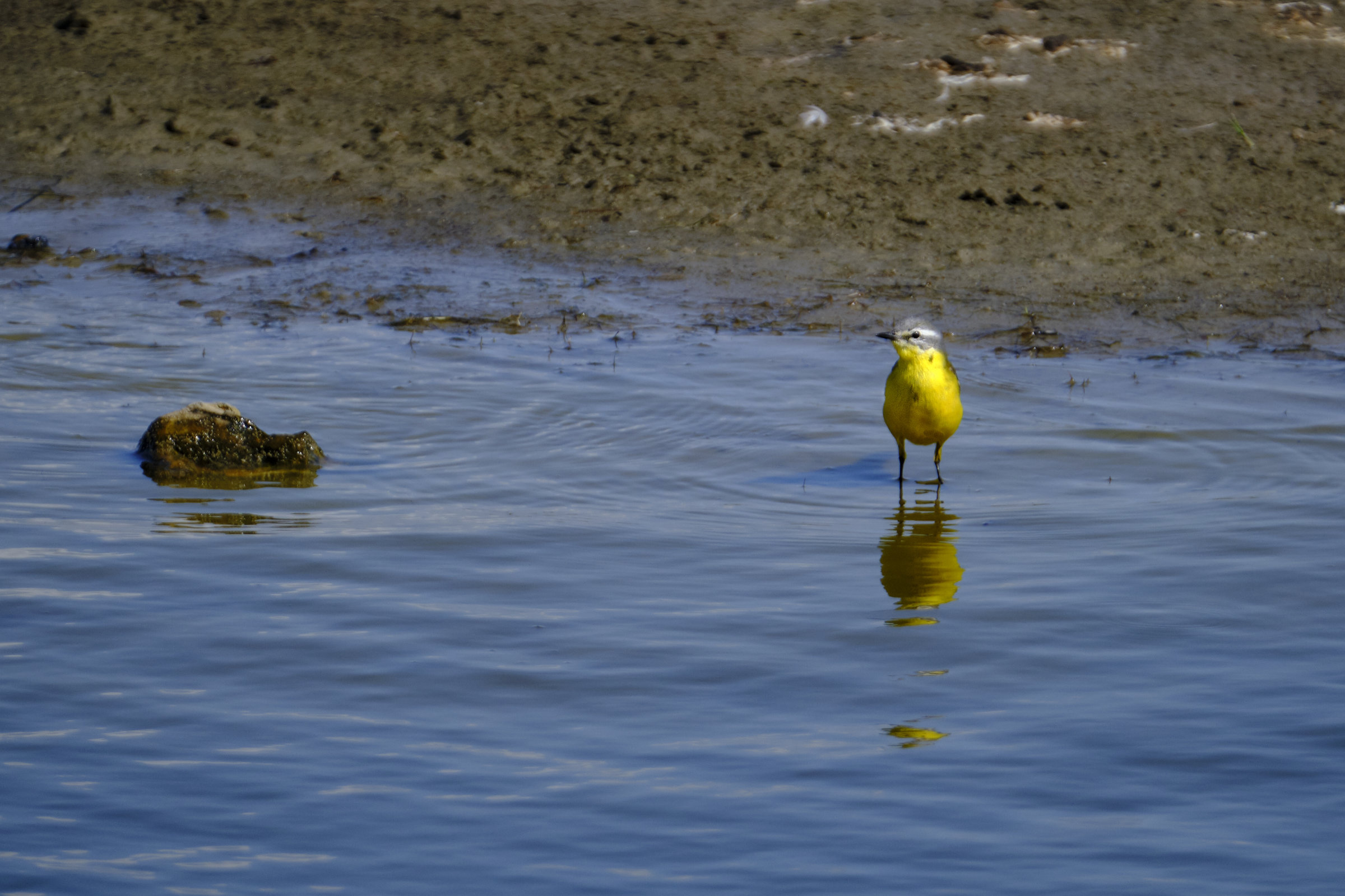
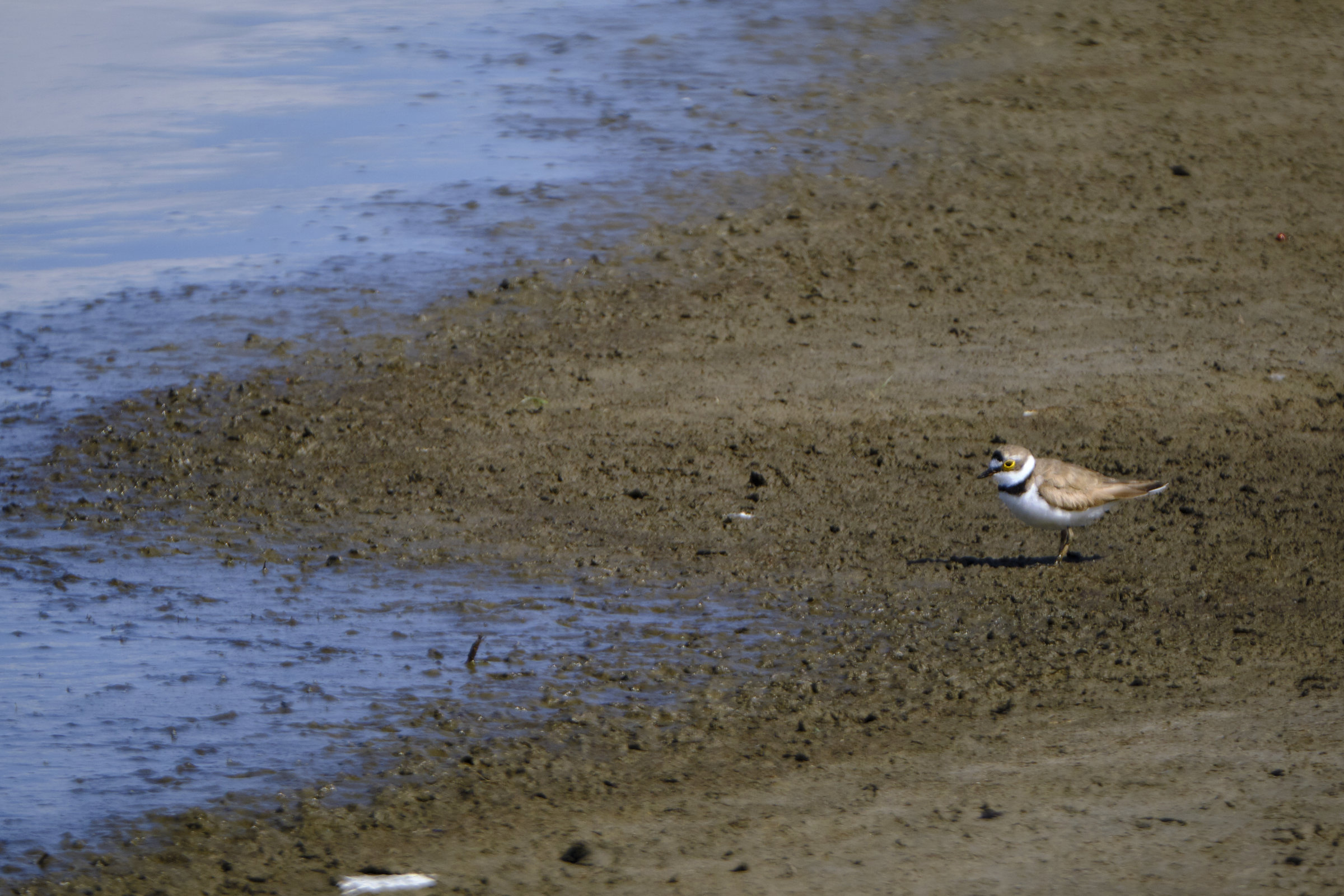
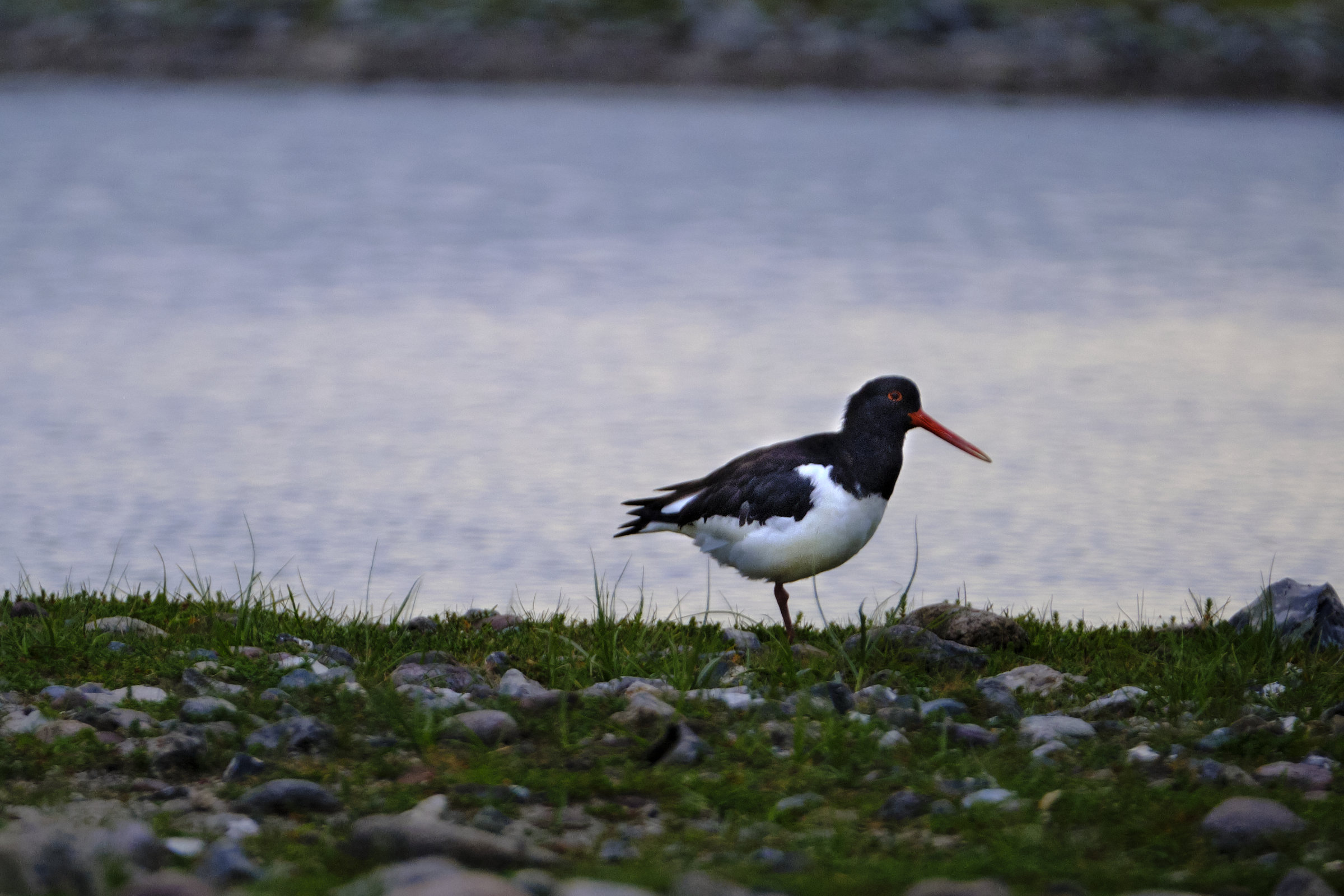
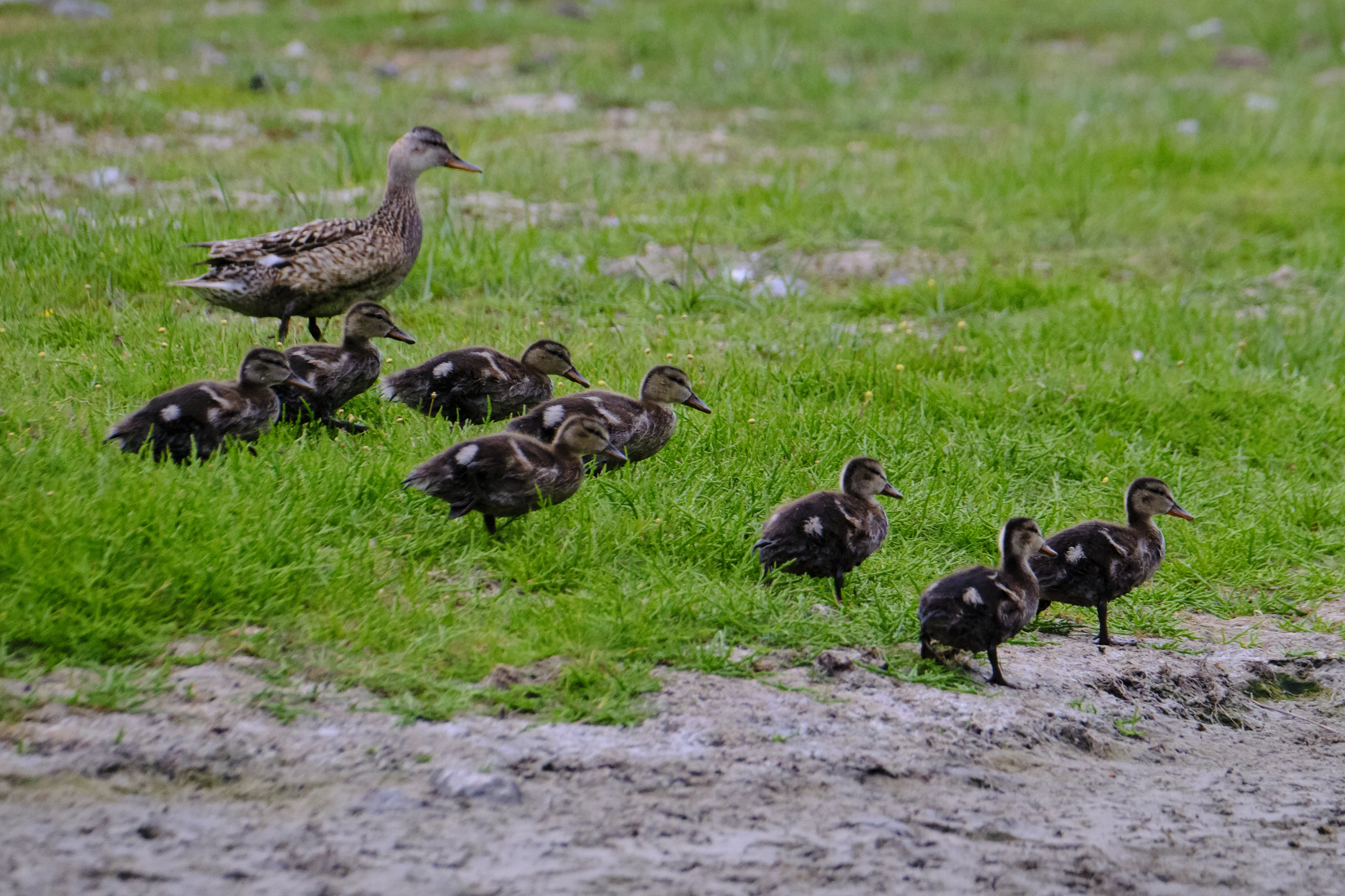
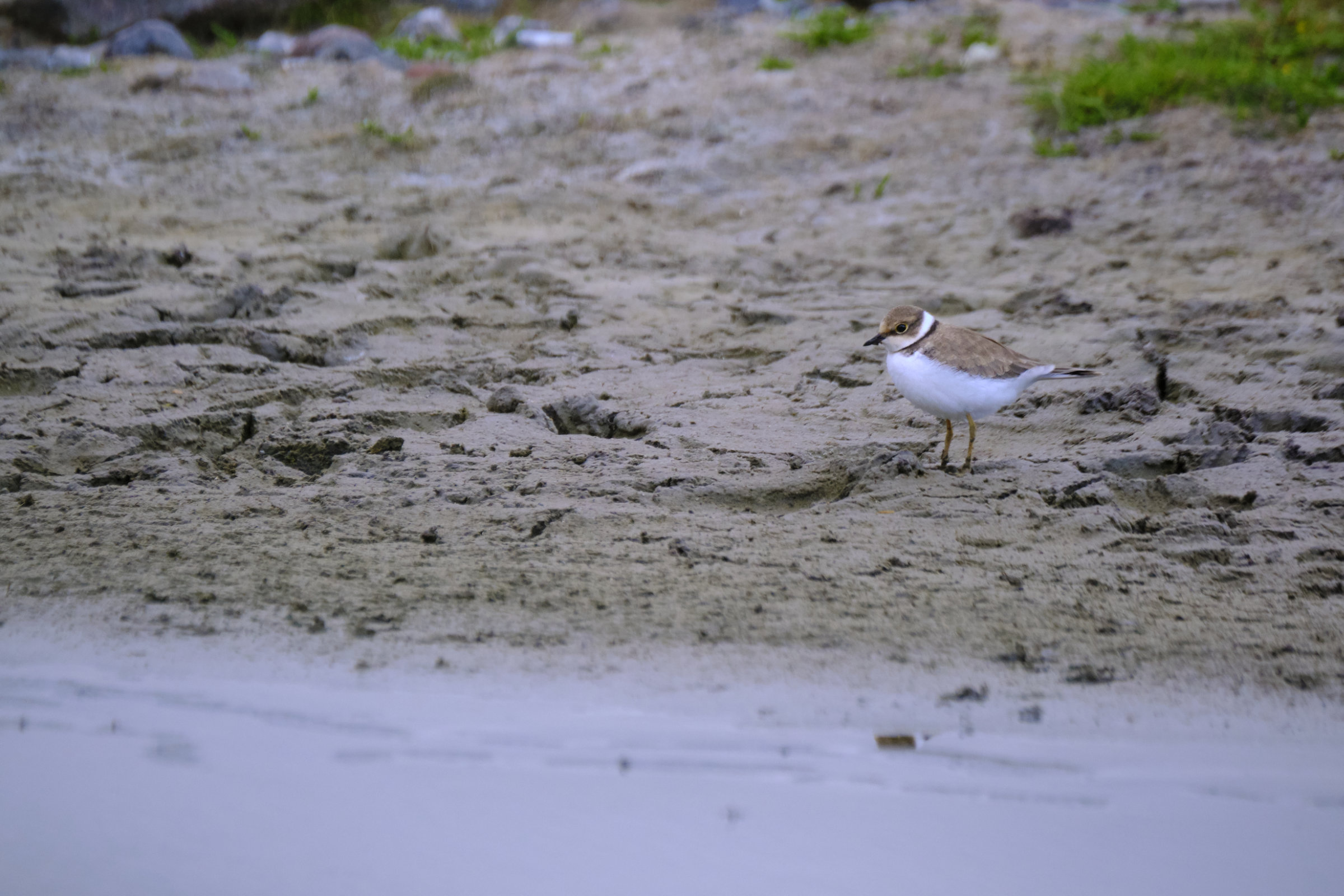
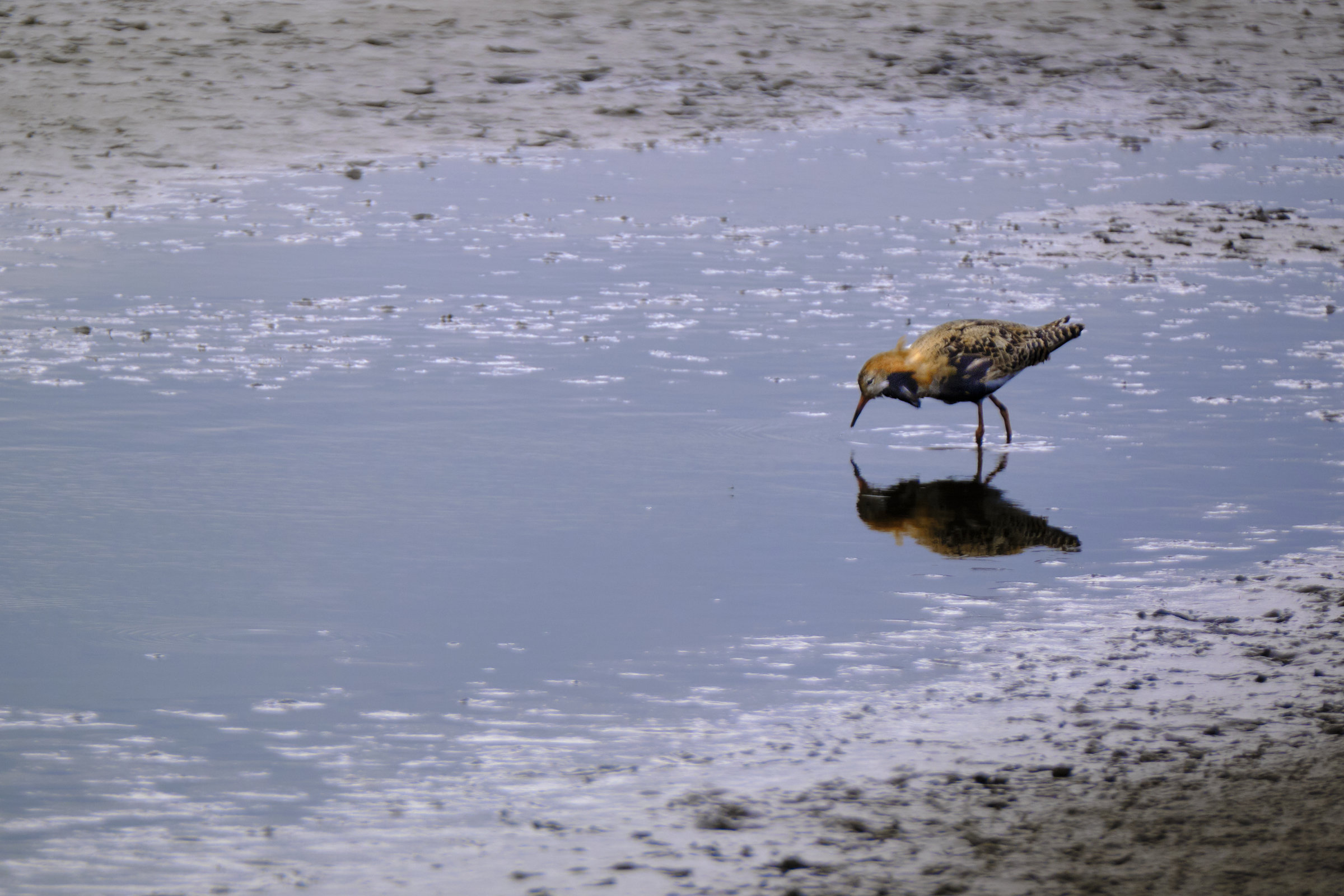
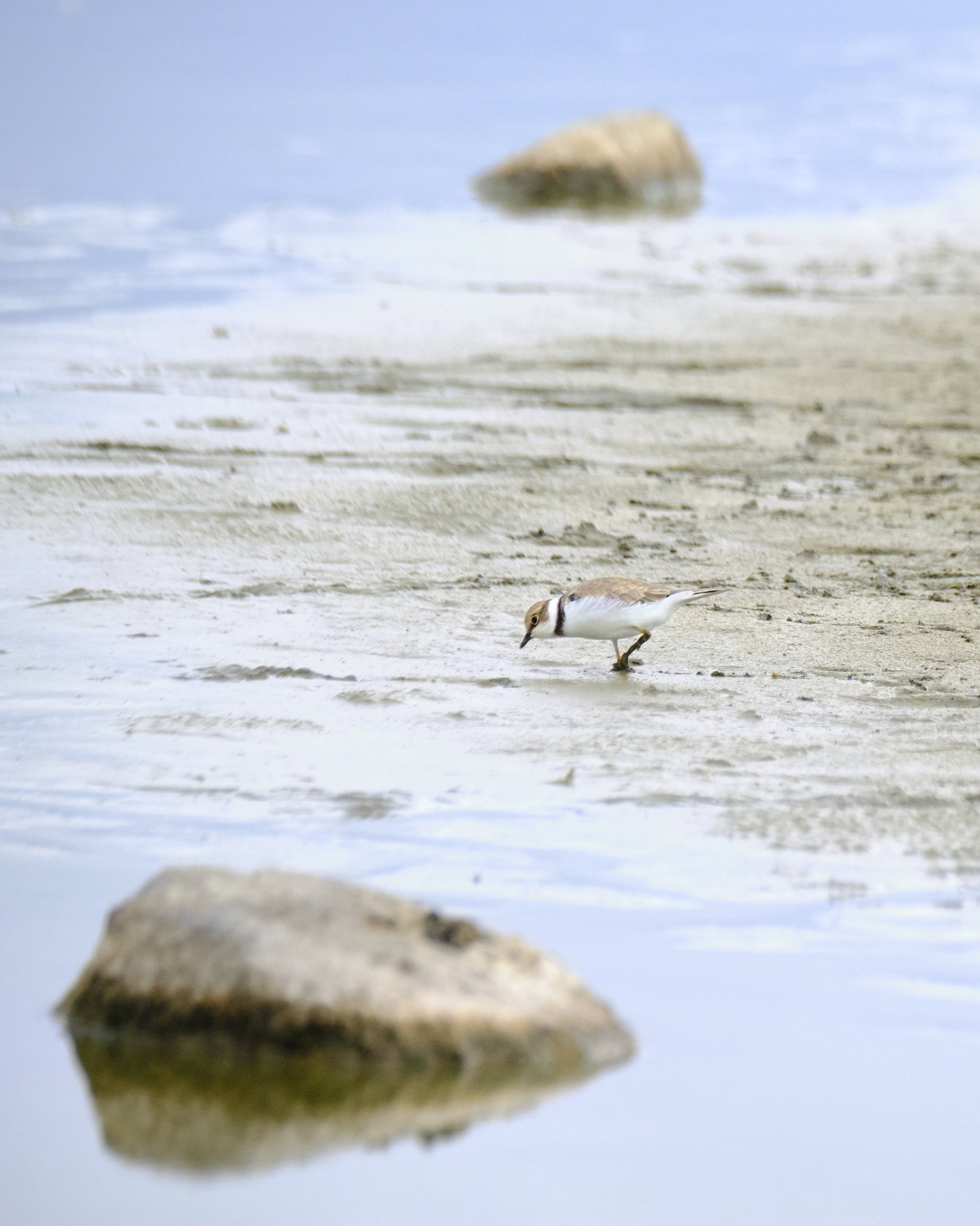
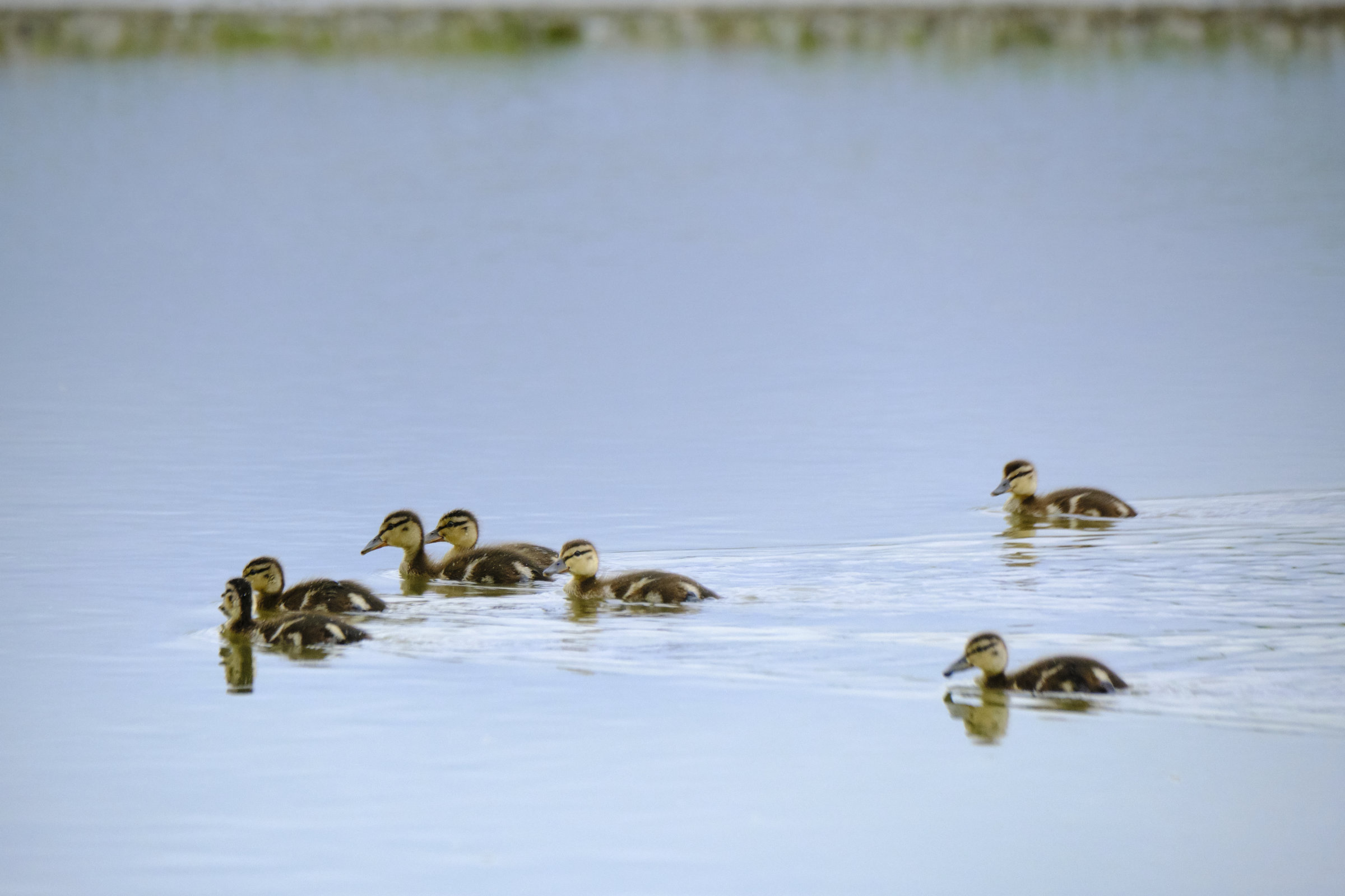
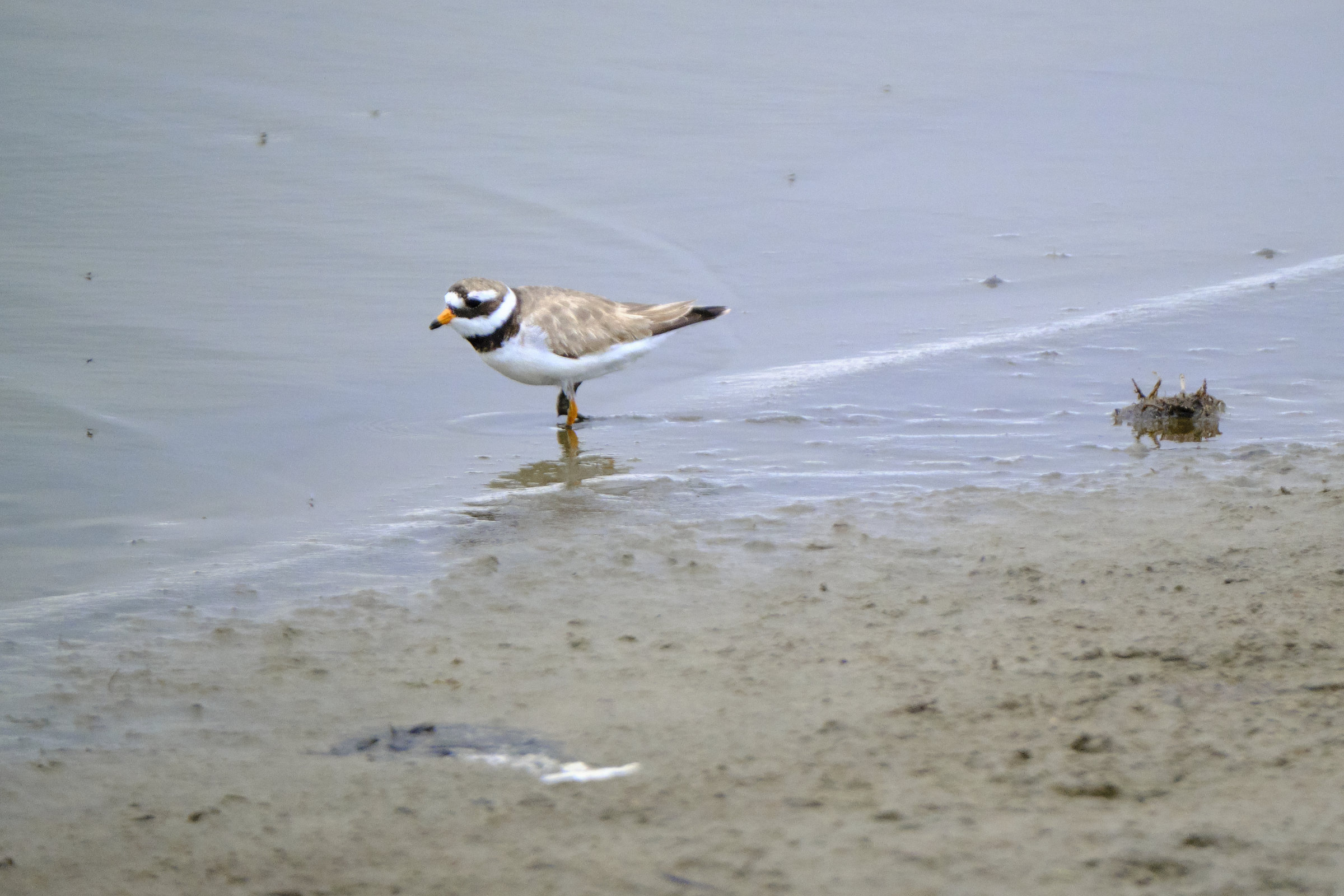
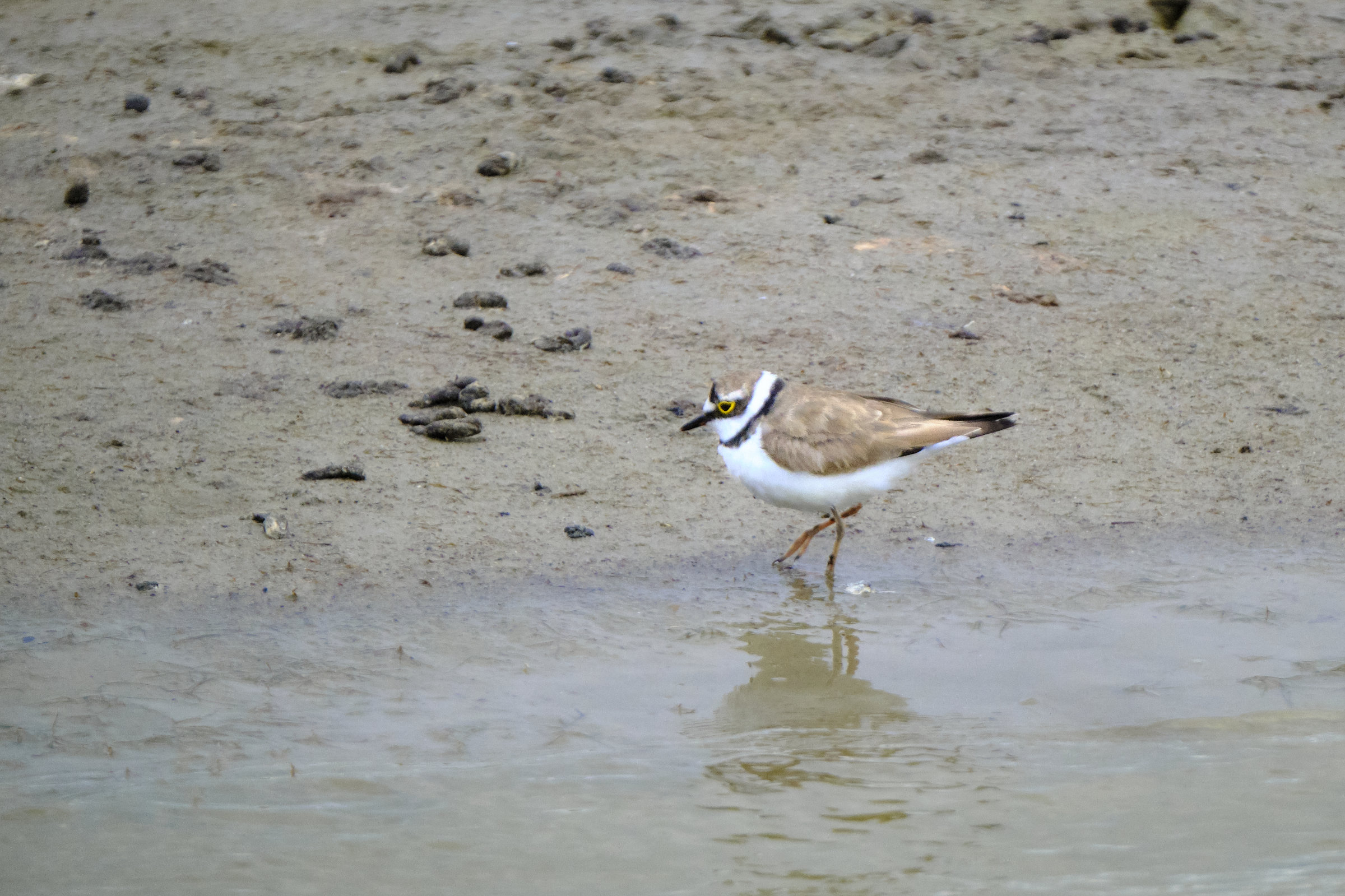
Barn swallow, Barnacle goose, Black-headed gull, Black-tailed godwit, Carrion crow, Common blackbird, Common cuckoo, Common eider, Common greenshank, Common gull, Common house martin, Common pheasant, Common pochard, Common redshank, Common reed bunting, Common ringed plover, Common sandpiper, Common shelduck, Common Starling, Common tern, Common wood pigeon, Dunlin, Eurasian bittern, Eurasian blue tit, Eurasian coot, Eurasian curlew, Eurasian oystercatcher, Eurasian skylark, Eurasian teal, European golden plover, European herring gull, Gadwall, Great cormorant, Green sandpiper, Grey heron, Greylag goose, House sparrow, Lesser whitethroat, Little ringed plover, Little stint, Long-eared owl, Mallard, Mute swan, Northern lapwing, Northern shoveler, Pied avocet, Red-breasted merganser, Red-necked grebe, Rook, Ruff, Spotted redshank, Tufted duck, Western yellow wagtail, White wagtail, Willow warbler, Wood sandpiper

Spring is here /  by Arne Bischoff

Spring has arrived in Northern Germany. With temperatures rising over 15° C and beautiful sunny weather, the bird-sound-level multiplied. Wherever you walk, wherever you put your ear, you hear them display their songs. Ten days ago blackbirds, tits, robins and corvids dominated the gardens, today you see and hear nuthatches and starlings, green woodpeckers hold their courtships and yes, even the first white storks are back (to be honest, some particularly daring individuals went thus far to hibernate here, so they are not back - they were never gone). Oh soul, rejoice. It’s spring.

The stoic /  by Arne Bischoff

Kingfishers are a bit of superstars in the realm of birds. So it comes as a surprise how often they actually go unnoticed. A lot of these beautiful birds dwell near us humans. It's not that they are dedicated synanthrope as for example Common Sparrows, crows or kestrels. Usually they have no alternative. They suffer from a dramatic loss of habitat. They hunt from well hidden look-outs such as overhanging branches or twigs and they need steep, sandy or loamy banks to nest in. Both have become exceptionally rare in modern agricultural landscape, so they take what they can get.

In my hometown, there are at least four hunting grounds, which the kingfishers visit frequently. All four are hotspots for human recreation. But despite the popularity of its hunting grounds, its flamboyant colours, its ear-piercing call and its eye-catching flight, nearly everyone seems to overlook our little superstar-bird.

I captured the first image at an old cemetery that serves more as a local park than an actual graveyard. In its middle sits a lake. Around this lake, there are at least five benches, offering rest for walkers. One sunny fall-morning, I was on the outlook for the little fellow and after some minutes, I heard his hunting-call. He kept hidden in the overhanging trees for some more minutes, before he set watch on a high and well visible branch just over the centre of the lake. In a period of about one and a half hour, he made at least five dives, two or three of it successful. After each dive, he vanished into the protection of the dense bushes, waited, gave his piercing call and then perched again. Me and the bird were surrounded of dozens of walkers and - surprisingly - Pokemon-Go players. No one took any notice of the bird. And the bird? Well, he did not take any notice either. He continued his hunt. Then, he vanished over the railroad tracks. This was when I thought, I might call him the Stoic.

Behind the image /  by Arne Bischoff

In Germany there is a popular saying. If you want to say somebody is stupid, you call him a “Spatzenhirn“, which literally translates to “sparrowbrain“ and has the same meaning as the English “birdbrain“. I long find this rather stupid. House sparrows are among the most adaptable species of wildlife. While their smaller sibling, the Eurasian tree sparrow, suffer from loss of habitat, house sparrows conquer our cities, villages or farmhouses from Anchorage tu Ushuaia and from Sydney to Svalbard. They thrive on our leftovers.
This particular individual and around twenty of its specimen came to a tree right in front of my office window for 30 to 60 minutes every day. They sat on the ground picking seeds until something stirred them up. Than they flew into the tree. That made it pretty easy for me.

Dozens and almost hundreds of sparrows besiege the bakery I oft go for lunch in the summer. The little birds wait patiently for a crumb to drop or a piece of crust to be left over. They even venture inside the bakery when its doors are open in warm weather. They precisely distinguish an open glass-door from a closed one and they find their way out with such ease that it almost looks cheeky. I don't know if they suffer from a high percentage of body fat, but they have plenty to eat at least.

My summer holiday led me to Norway. While I was waiting at a harbour to board one of its thousands of ferries to cross a fjord, I beheld to house sparrows – one female, one male – picking the dead insects from the number plates of the waiting cars. They found themselves a brilliant ecological niche. Every 30 minutes, they get fresh food delivered right to their doorstep. So don't say birdbrain anymore. They might turn out smarter than you.

The beginning /  by Arne Bischoff

So this is the beginning of this page. But what was my beginning? A so-good friend kindled both: the interest in photography and the appreciation for birds. The former was easier to ignite. I was allowed to use her D90 a lot and my interest grew with every picture I shot. But it took quite some time to go further than interest. I was missing a subject. I was missing something that I wanted to photograph. I was missing a reason to photograph.

Enter birds. I always was an outdoorsy person. And since I was a young boy, I was fascinated with nature documentary. I breathlessly watched tigers and snow-leopards and whales and and and in the tele. Subsequently I was dreaming of “spectacular“ subjects to photograph. But there are not so many spectacular species in Northern Germany. You can consider yourself lucky to see a pouncing fox. But as a matter of fact, there is hardly a more spectacular subject than birds. This is what my friend told me. And my friend told me more but never dug into my heels, giving me the room to understand myself. It took a while, but I did. Today I love that I see birds wherever I may go. They come in all varieties and they are literally everywhere. Be it the metropolis or the remote wilderness. They adapt to every possible habitat. And they come with so many behavioural patterns, sizes, shapes, colours, species. Of course, you have to work a little to fully appreciate all this. But the more you know, the more you understand, the more fascinating it gets. My friend knew.

My love for birds in particular and for watching animals exceeds my interest in photography. If I can choose only to watch or only to photograph, I'll watch. But more often than not, I do both. And of both I will tell you in this weblog. Of birds, of experiences watching wildlife and a little of photography.

Stay tuned and see my first ever picture of birds …