Seabirds in North Frisia: Where Germany ends /  by Arne Bischoff

An Arctic tern hunting over the water.

In the northwestern corner of Germany lies the province of “North Frisia”. It has a coastline with the Northern Sea of over 400 kilometres and is famous for its “Warden Sea” and Schleswig-Holstein Warden Sea National Park, the largest in Germany. Together with the neighbouring Wadden Sea national parks it is over 8.000 km² large. Around two thirds of the area is permanently under water, while one third is periodically dry. The Wadden Sea is one of the most important resting habitats of arctic birds in Europe if not the world during the annual bird migration. The neighbouring salt marshes are a large and important breeding ground.

Land of the Wadden Sea

Black-tailed godwit (Limosa limosa) in breeding plumage.

At the German coast, the North Sea has a tidal range of about three to four and a half metres. During low tide the water retracts and exposes mud flats of up to 40 kilometres width: The Wadden Sea. It is an enormously important habitat for nature and wildlife of all kinds. Hundreds of thousands of birds have their feast on marine worm, shellfish, crab and other. With high tide, when the water returns every twelve hours, all those birds are force inwards towards the shoreline and beyond into their rest places in the saltwater marshes and koog’s (a large type of polder) which makes for an unique observation and photography opportunity. And this is, why I recently went there with a group of local birdwatchers. To watch and marvel and photograph.

Birds, birds, birds

A Grey plover (Pluvialis squatarola) in breeding plumage.

Mid-May the area is a birding paradise. Waders, terns, seabirds, gulls, songbirds, birds of prey. They were there in abundance. The sheer numbers of waders, and terns but also of White-tailed eagle and Harriers was simply astonishing. This and the high number of observation spots and hides made for some unique birding, some in really close proximity, such as a Black-tailed godwit (Limosa limosa) and lots of Northern lapwings (Vanellus vanellus) right next to the street. The smaller waders such as Dunlins (Calidris alpina) and Red knots (Calidris canutus) proved a lot harder to photograph, but still beautiful to watch. Bearded reedlings (Panurus biarmicus) were feeding their young in the reeds. Warblers and skylarks were singing everywhere.

Waders, waders, waders …

From left to right:

  • Black-tailed godwit (Limosa limosa): A large, long-long-legged, long-billed shorebird which is actually breeding in the Northern Frisia region.

  • Grey plover (Pluvialis squatarola): A circum-polar arctic breeder with a striking breeding plumage of black, white and golden speckles.

  • Bar-tailed godwit (Limosa lapponica): This species holds the record for the longest non-stop flight for any birds. In August 2007, a female specimen departed on an eight-day non-stop flight from western Alaska to New Zealand: 11,680 km (7,258 mi). This female then continued a 174 day round-trip journey of 29,280 km (18,194 mi) within 20 days of flying.

  • A flock of Dunlins (Calidris alpina): One of the most common species of waders in Europe. Flying in large and spectacular formations.

  • Northern lapwings (Vanellus vanellus) do have an unmistakable flight-call. Its sound (“Ki-Witt”) lead to its German name (Kiebitz). They perform spectacular courting flights.

Terns, terns, terns

One beautiful evening, our little group was watching the high-tide resting place in a local “Koog” behind the dyke, when a member of the group pointed to a group of hunting terns (both Artic Terns; Sterna paradisaea and Common Terns; Sterna hirundo respectively) right at the far side of the levee. The scenerey was astonishing. Back-lit, with the sun causing millions of beautiful reflections in the sea. Terns are famous as blazing-fast flyers and to see them hunting so close was really impressive. I shot a lot of frames and luckily captured one or two moments when the terns caught some prey.

An Arctic tern hunting.

The best of the rest: Reedling, Warbler, Hare, and so much more!

But this was far from it. There were animals literally everywhere. Bearded reedlings (Panurus biarmicus) feeding its young. A Sedge warbler (Acrocephalus schoenobaenus) displaying right in front of me. Grey partridges (Perdix perdix) in the evening. So many sheep. A White-tailed eagle (Haliaeetus albicilla) on a fence (“Lahnung”). And a European hare (Lepus europaeus) crossing a sandbank at full speed.

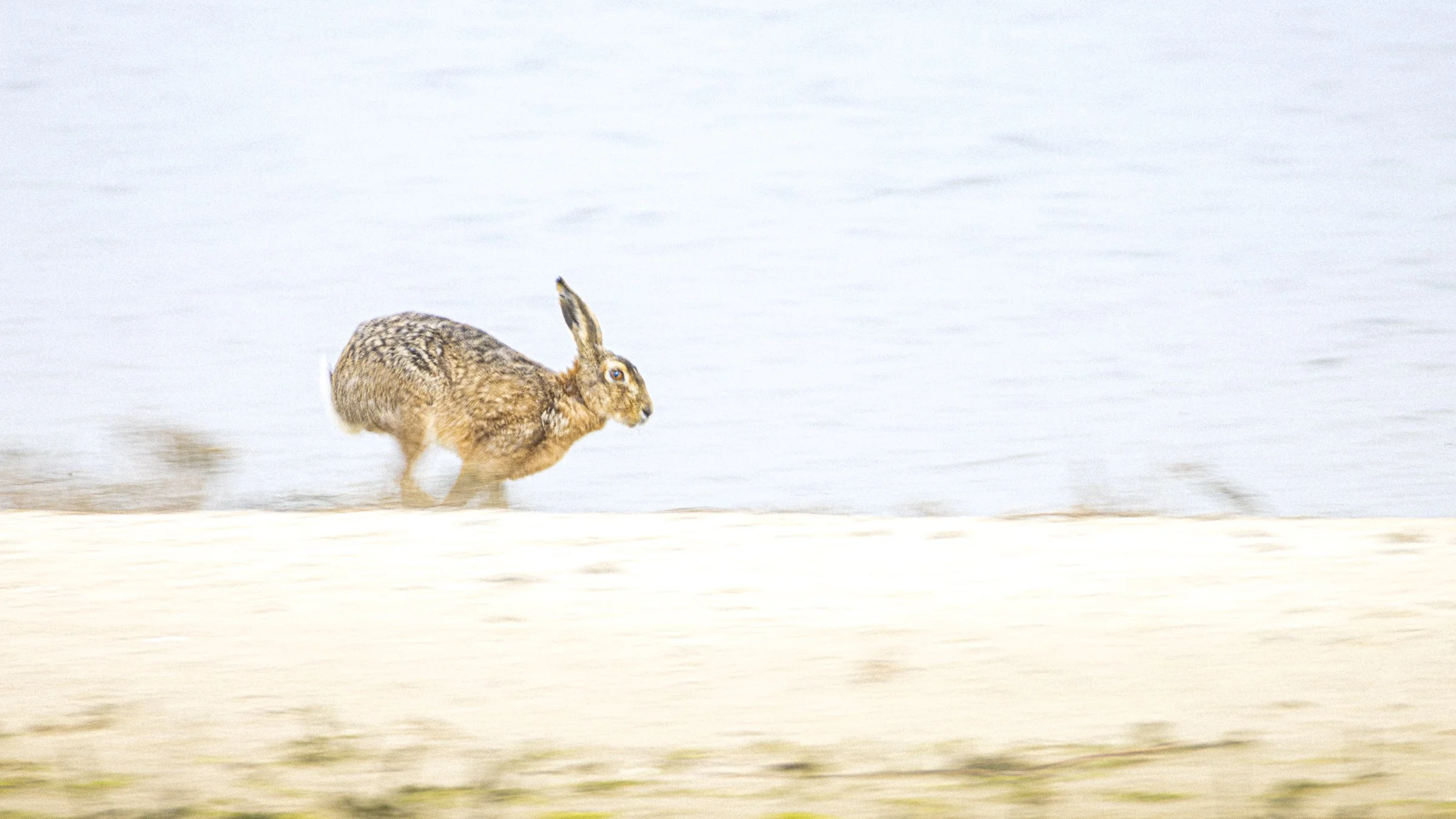
A European hare (Lepus europaeus) running over a sandbank.

Rarities

During our five-day trip we even beheld some absolute rarities, such as Gull-billed tern (Sterna nilotica), Red-necked phalarope (Phalaropus lobatus), Eurasian dotterel (Eudromias morinellus), Green-winged teal (Anas carolinensis) and Ruddy duck (Oxyura jamaicensis). Of course birding is not all about rarities, but it still is nice to see them.

The Ruddy duck

Great crested grebe's courting.

A Red-necked phalarope searching for food by rotating around its own.

Northern lights

While at the North Sea, we were not only graced by bird rarities, but also by a very special solar phenomenon. Northern Germany was hit by a heavy solar storm which caused us to see Northern lights (Aurora borealis), which is extremely scarce as far south. Although the photographic sensor (in this case a quite crappy smartphone) enhanced the colours quite a bit, it was beautiful and visible to the bare eye, too.

The grand finale

For the grand finale, please enjoy all images in one large gallery. Please navigate with the left and right buttons.

Trip list

The whole trip made up for 122 species of birds. You find the whole list below (German only). A big thankyou to Christian Dienemann for keeping both track and account!

Birdrace 2024 /  by Arne Bischoff

High speed on an E-trike bicycle.

Every first Saturday in May is a special day in the German birding community. It’s birdrace day. The goal: To ID as many bird species as possible within 24 hours and one district. For 20 years, the birdrace is there to cherish bio- and bird-diversity, raise awareness for the ongoing biodiversity crisis and money for ornitho.de: way over half a million Euro since 2004. Ornitho is one of the largest citizen science plattforms in the world with over 70 million bird observations in Germany alone. The platform has a lot of sister platforms all over Europe. Its knowledge base is invaluable for science, conservation and policy making.

A big shoutout to DDA e. V. for hosting ornitho and organising the birdrace. And another big shoutout to all fellow birders, who make this day to a festive day for all nature lovers by sharing rather than competing. You are a great community.

In 2024 I participated with an electrically assisted tri-wheeled recumbent due to a shoulder injury. You find my full list of observations down below (German and Latin).

📷 Luka Gorjup | Lux Fotowerk

The full list

Life and death /  by Arne Bischoff

A Bluethroat (Luscinia svecica) defies the monotony of modern rapeseed fields.

Right now in late spring, the rapeseed (canola) flowering is fully on. With its vibrant yellow colors you can be forgiven to think of it of as an epitomy of life. In fact. It's death. Modern rapeseed fields are highly industrialised, highly pesticided, life-defying wastelands. Nothing else is growing in it and next to no animals flourish from it. Some Bluethroats or European Stonechats maybe. But when the vibrant yellow is gone, a brown monoculture of stems is revealed.

This is what you see in the second image. On the right side. The death side. On the left side, you see a stripe of wildflowers long past its bloom, but still full of life and food. A window in a cultural landscape still close to nature that once was. Before industrial agriculture arrived.

Left is life. Right is death. While the sun is setting.

An ode to the Fire salamander /  by Arne Bischoff

Fire salamander (Salamandra salamandra).

I stumbled over one of the little Fire salamander (Salamandra salamandra) fellows this very morning when I was doing my woodpecker monitoring round. And boy, do I love them! It’s a sad kind of love though. When I moved into the area, nearly 20 years ago, they were ubiquitous in the local Harz mountains. Climate change with less precipitation and more heat and especially the Batrachochytrium salamandrivorans (Salamanderpest) fungus decimated the beautiful salamander heavily. The chytrid fungus has only been described scientifically in 2013. In the past ten years, the fungus has killed 98 percent of the population in the federal state of Niedersachsen (Lower Saxony), This brings the little guy to the brik of extinction within only ten years.

It’s our shoes and our dogs who trasmit the disease. So please desinfect your shoes regularly and keep your dogs leashed when in Salamander area.

The Botanical Garden /  by Arne Bischoff

A bunch of pasqueflowers (Pulsatilla vulgaris).

My hometown of Goettingen boasts not only one, but three huge Botanical gardens, all founded by the university. As one of Germanys oldest universities, the gardens are very old, too. The oldest of the three, subsequently named “Alter Botanischer Garten”, was founded back in 1736 by famous botanist Albrecht von Haller. All three are quite different, but very beautiful. And throughout the year, they are a place of bloom and beauty. Recently, I visited this “Old Botanical Garten” right in the city center, to photograph the spring bloom. While it was midday and the light very, very bright and harsh, I focussed on my recent area of interest, which is high key.

I concentrated on mainly three topics. Pasqueflower, winter heath and grape hyacinth. But I was very happy to notice the humming and buzzing around me. The gardens are home to a lot of wild bees and also bumblebees. And of course, birds. But this is a matter for a different blog post.

At the fox den again /  by Arne Bischoff

Mr inquisitive!

I know quite a lot of fox and badger dens in my local area. But this one came as a complete surprise. Last year, my friend Luka (make sure to check his work!) called me. His dog, Boris the pointer, had been a good boy and sniffed out a fox den in the most unlikely of places: inside a huge stack of wood right beside a forest track only a kilometre from the next village. Fear not: Boris only pointed to the young foxes, but did them no harm.

It turned out the little fox cubs had come out every evening to play and explore the huge world outside their stack. And this is right when I went there.

The curious little guys where punctual like a clock. About an hour before sunset they came out. I usually heard them sniffing and playing before I saw them. They never strayed far from the safety of the stack though and if, then in the opposite direction of me into thick thorns and bushes. One pup was particulary inquistive and hit the forest road more than once. Exploring and sniffing. But even he kept quite close to the stack which provided him for safety and me with a quite ugly backdrop.

The experience was still beautiful though: Seeing the young cubs play and explore. I even saw mother bring food once and call them out. It was only then when I saw all four pups together.

I hope all five of them made it and they are happily roaming the area. Looking forward to seeing next generation of young foxes in a few weeks time. At another place. Special thanks to Paul for your company!

Spring again /  by Arne Bischoff

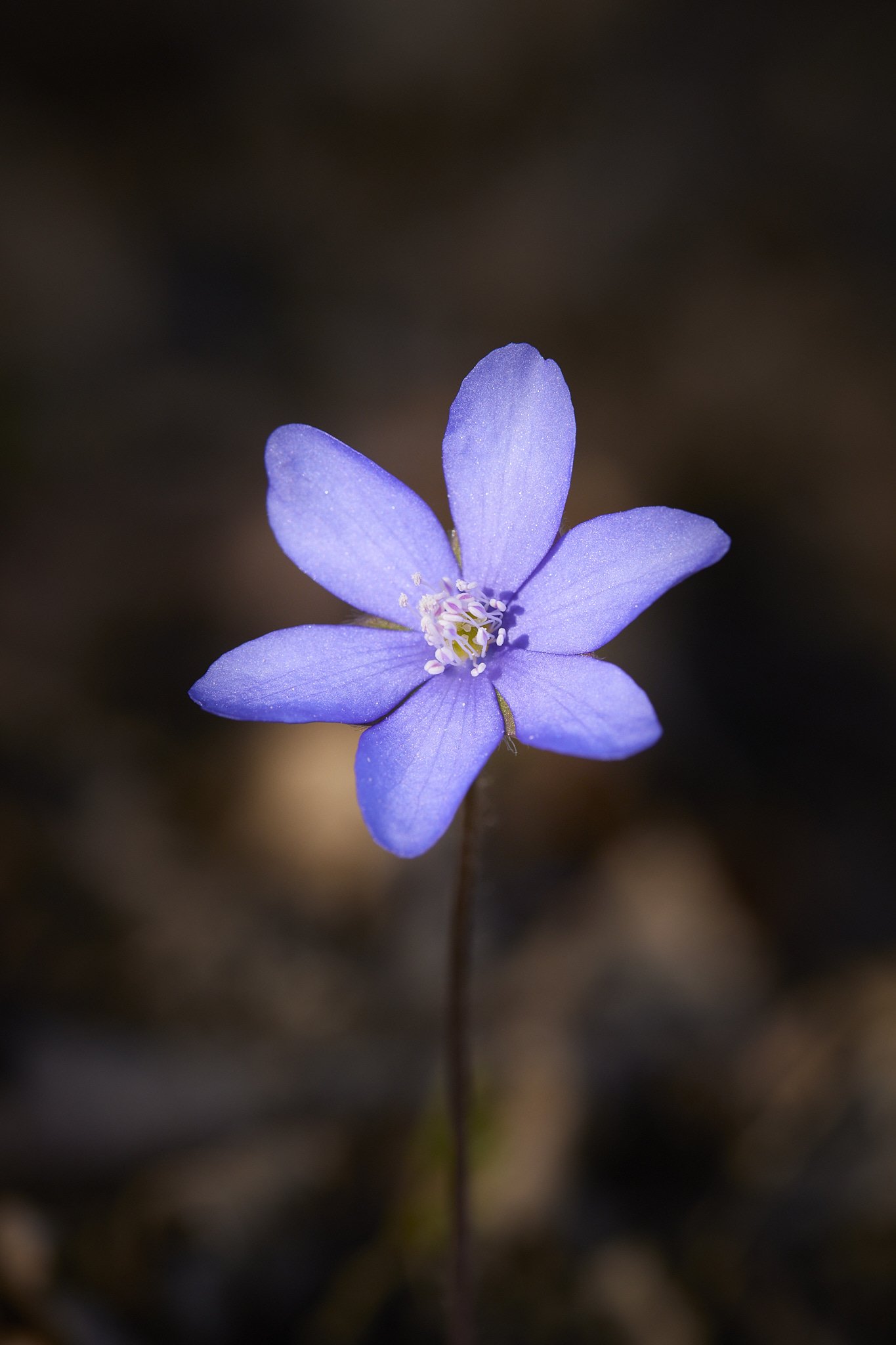
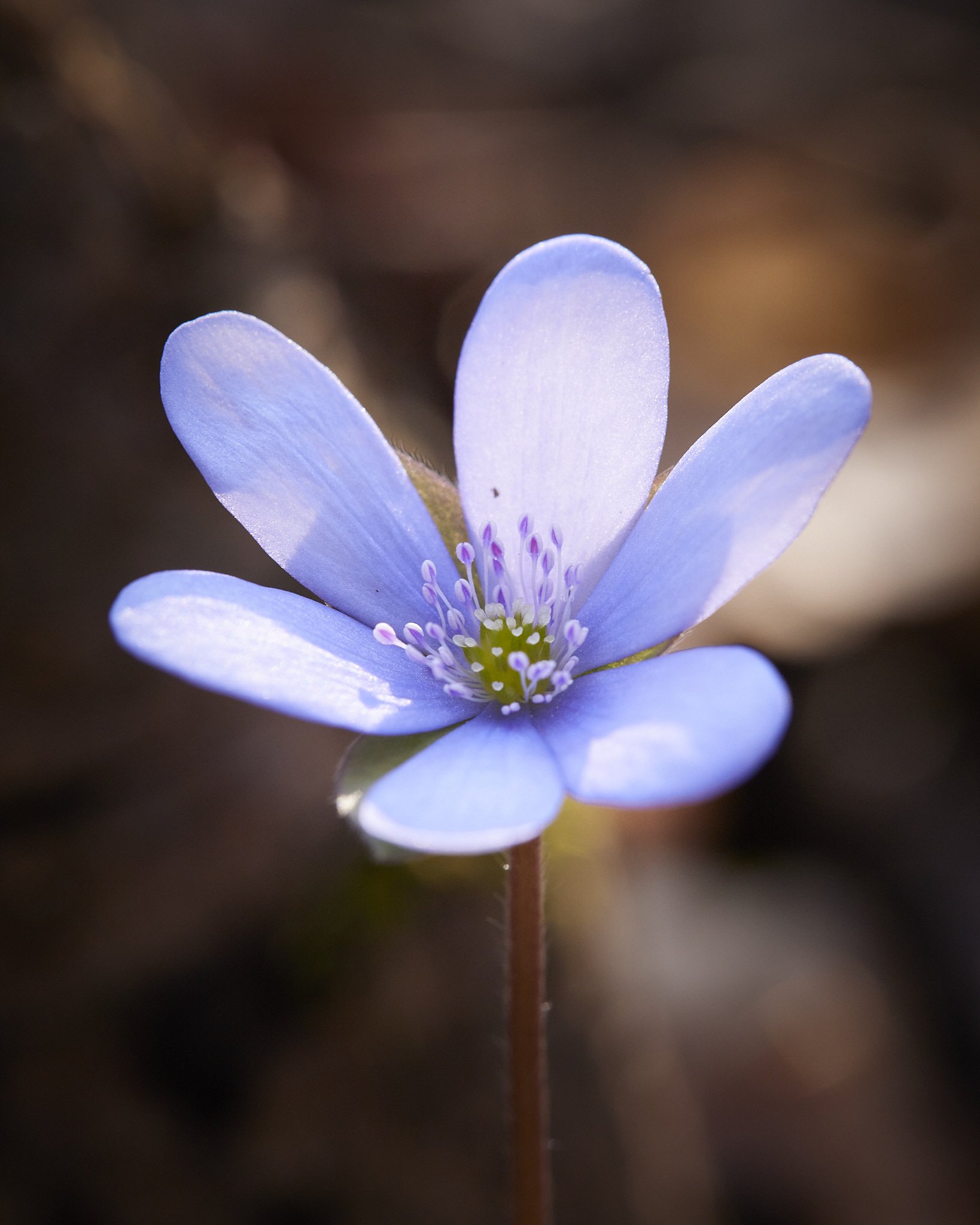
Common liverleaf | Leberblühmchen | Hepatica nobilis

I nearly missed those beauties and all the other early blossomer this year. Most of them are gone already, hanging their heads. But one or two remain still beautiful. And of course there is a lot more beauty in an early spring German beech forest.

The dirt spot /  by Arne Bischoff

I mainly blog about birds, nature and nature photography. But I happen to be an enthusiastic mountainbike rider for longer than I am into birds and I do work in bicycle media, too. So cycling and especially mountainbiking is quite a big thing in my life.

Recently, my friends from Trailtech Mountainbiking accomplished a community pump track project. A pump track is a circuit of rollers, banked turns and features, designed to be ridden completely by "pumping" – generating momentum by up and down body movements, instead of pedaling.

Kudos and a massive thank you to everyone involved in the project. The place has quickly become an attraction in the small community and more: a wonderfully inclusive, inviting and immersive spot for young and old, bicycle affected or not - for everyone! And boy, do I love this pumping!

Pheasant tales: Beautiful bird, sad bird /  by Arne Bischoff

When it comes to splendour and grand air, not a lot of European birds rival the Common Pheasant (Phasianus colchicus). But this is where the sad part starts. Because it is actually not even European.

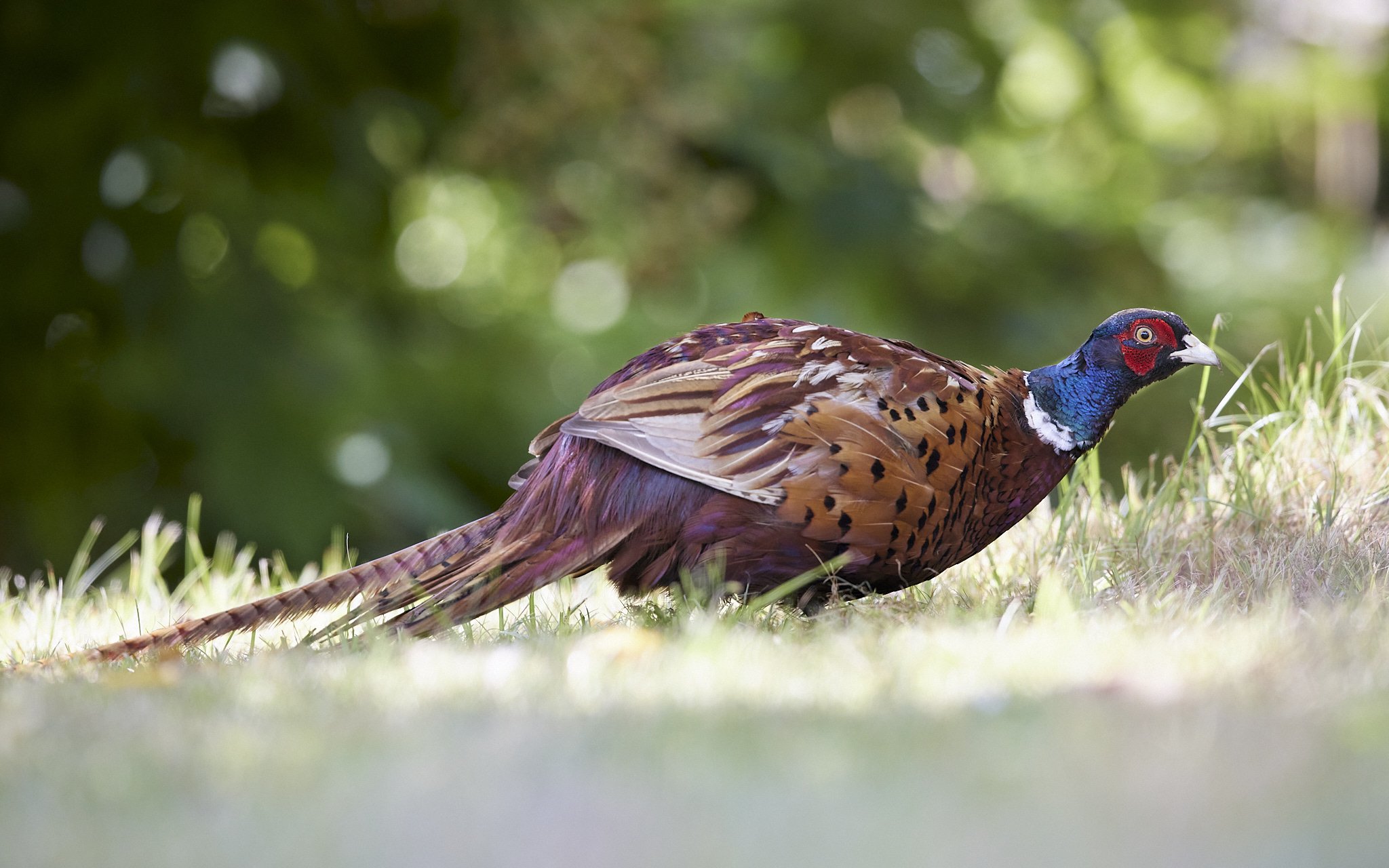
Jagdfasan. The pheasant which lives to be hunted.

The Common Pheasant is native to East Asia. During the medieval period it has been introduced to European courts and royalty. With the beginning of the 19th Century humans began to breed and raise Pheasants to be released into the wild only for hunting purposes. This sad practice continues to this day and is reflected in the Common Pheasants German name “Jagdfasan”, which literally translates to “The pheasant for hunt”. The population is not self-sufficient, so every year a new breed of the colorful Gallinaceous birds is released to “freedom” to be shot. The birds that escape the shooting will sooner or later die of cold or predation.

Colourful beauty

Whenever I see a Pheasant, I feel both: Joy and sadness. Joy, because it’s such a gloriously beautiful creature. And sadness, because it only lives to be shot.

Lovely local Tawny Owls /  by Arne Bischoff

So much fluff!

After a one year break, my well known urban Tawny owls came back to the local park nearby to bread. You recognise the female owl by its distinct reddish hue. In 2021 it bred downtown, 2022 it evaded an Eagle owl, and 2023 it came back.

The early owl

Tawny owlets begging

I was more than a little surprised when I heard the little owlets begging as early as the first week of April. The next few days revealed three branchlings - one distinctly smaller - who all seem to have made it through the dangerous first days and weeks before they finally learned to fly and I lost track of it.

Spring love

I visited the owls nearly every day for a period of nearly two weeks. By day, they and their watchful parents preferred to hide within the dense branches of a Thuja. After dusk they roamed a considerably larger area, sitting every night in different branches of the surrounding trees, begging. With the owls, the park vegetation grew and grew, too. A lovely spring!

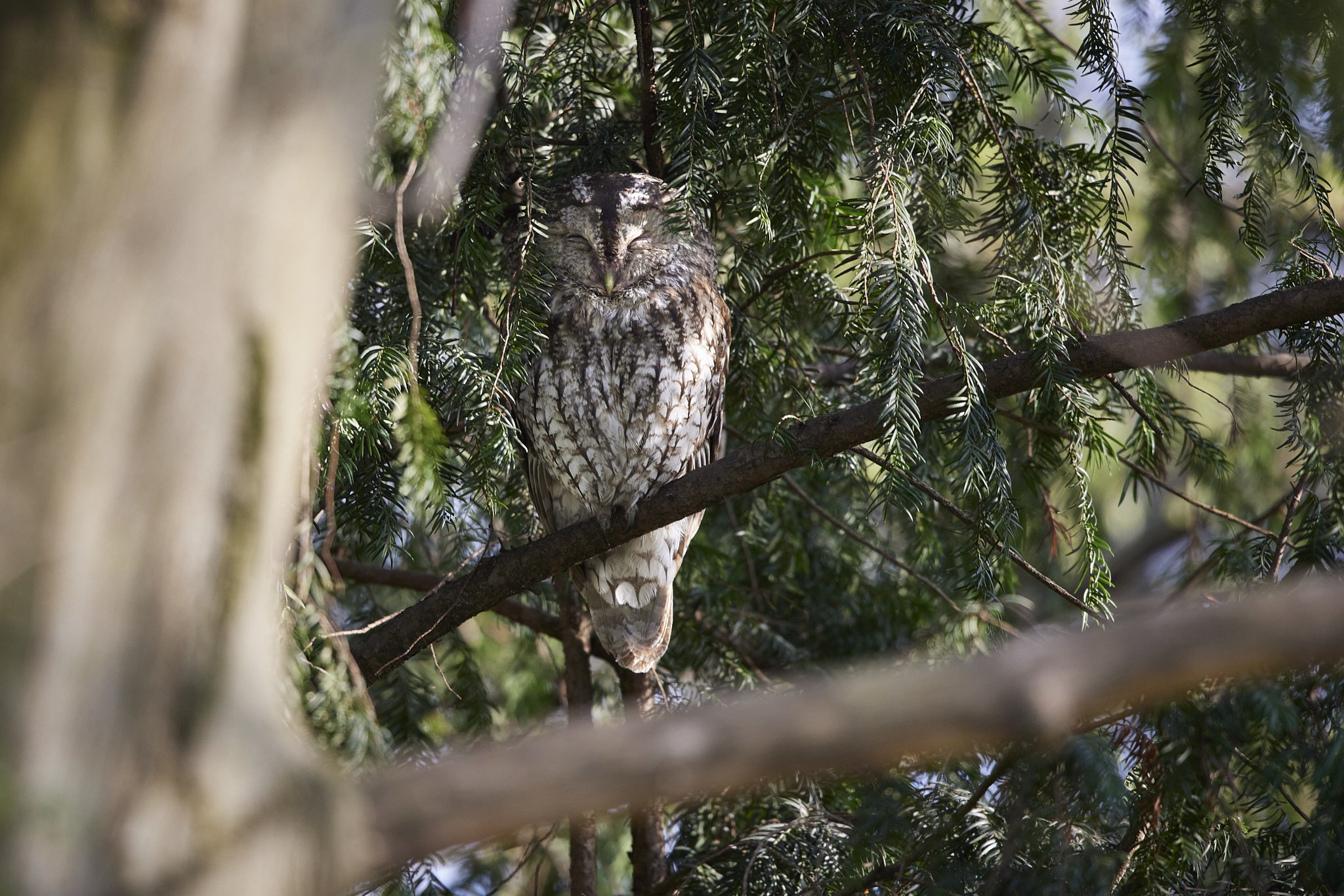
Seems sleepy, but always keeps an eye open. A parent owl.

Early blossomers: Liverleaf, wood anemone and snowdrop /  by Arne Bischoff

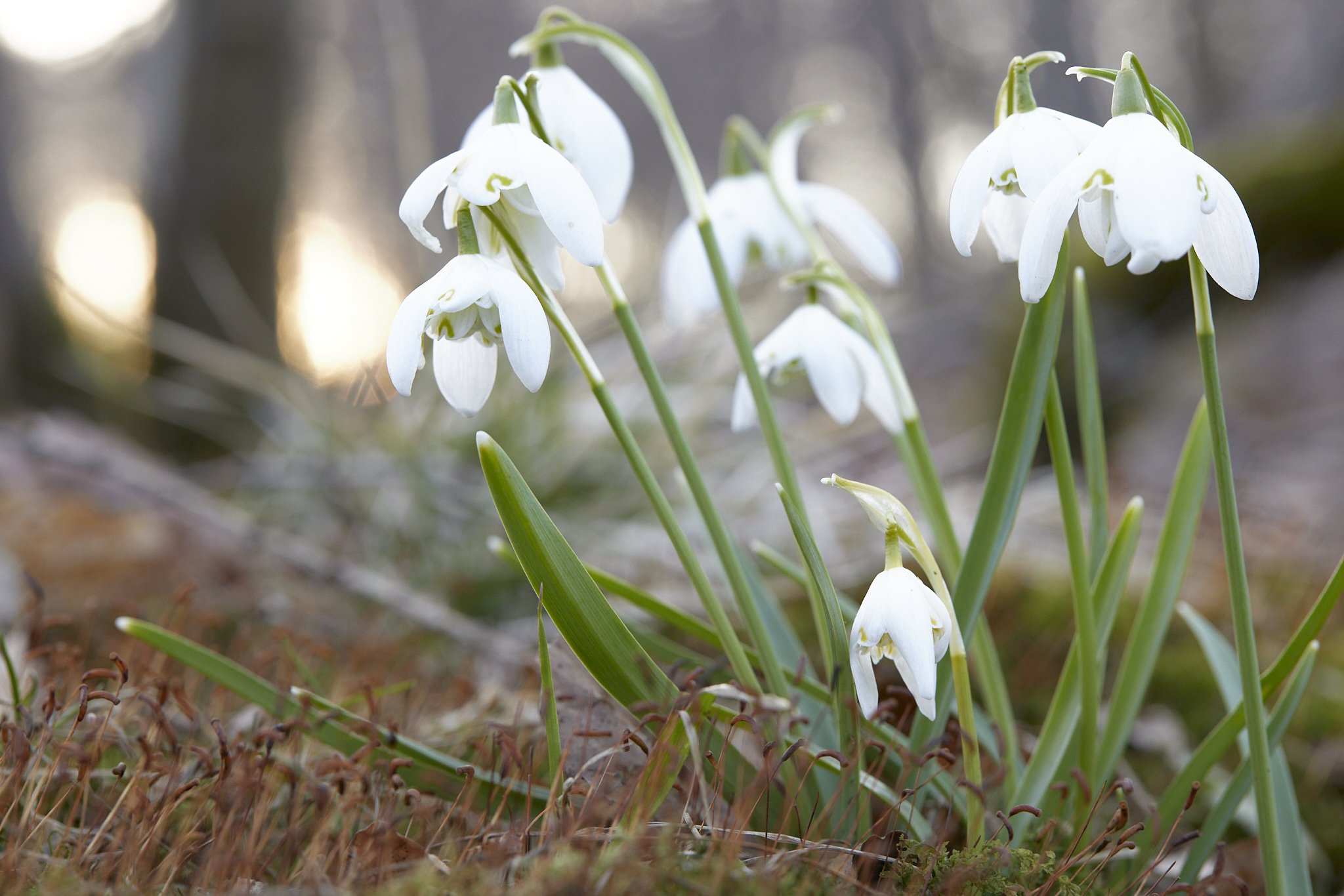
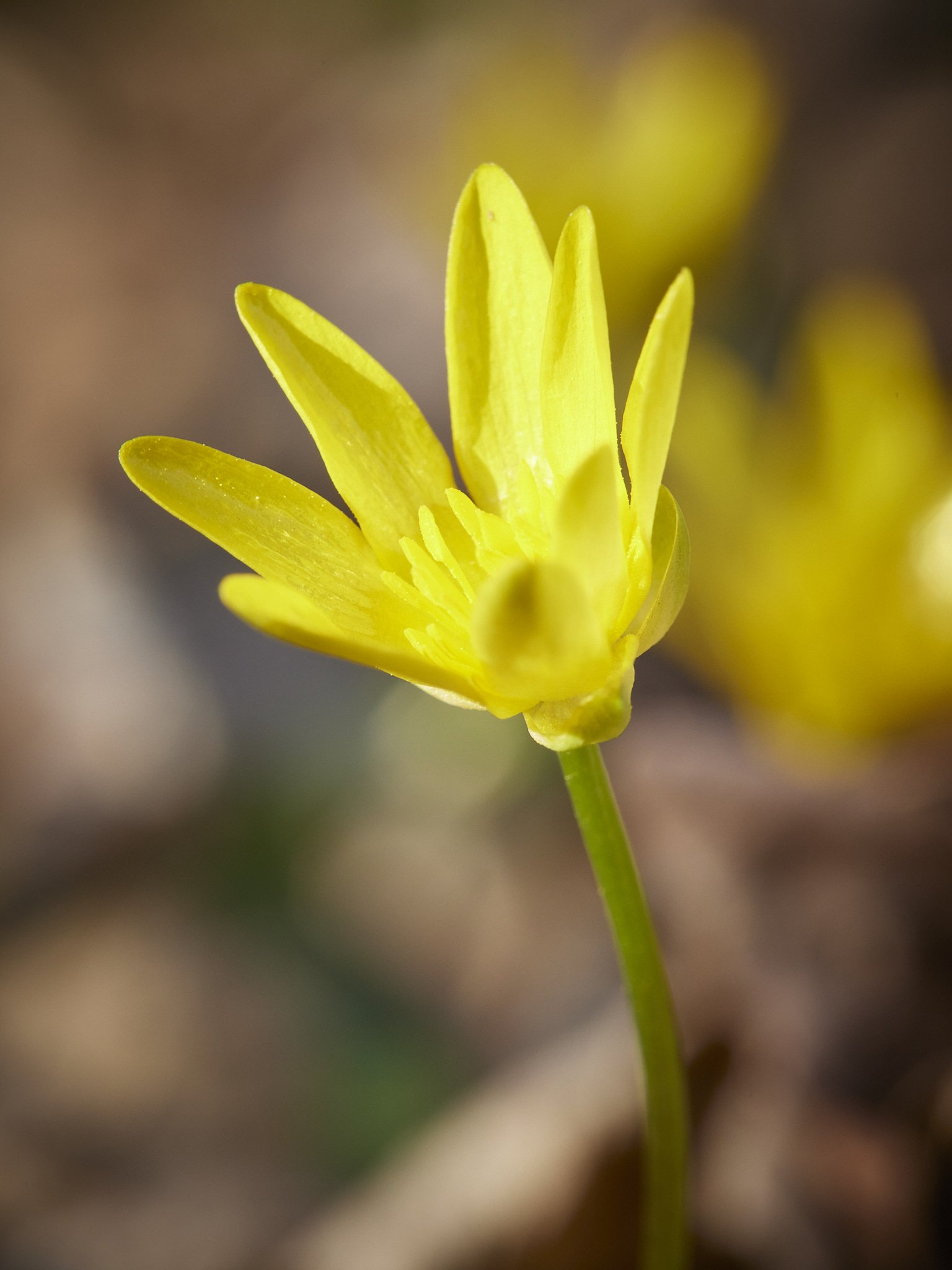
Right now, while I am writing these lines, the first liverleafs stretch their heads through the ground. Time for me to revisit two wonderful days in spring 2022 with lots of liverleaf (Anemone hepatica), wood anemone (Anemonoides nemorosa and Anemonoides ranunculoides) and snowdrops (Galanthus nivalis).

I am not a botanist, unfortunately. I had a flower lover with me, and without her, I would not have taken these images. This makes me very thankful. I myself overlook the wonder and beauty of plants way too easily, as I have very little knowledge about those beauties.

That’s why there is not much of a story that I can tell here. I leave it to you to behold and wonder and make your own story of it.

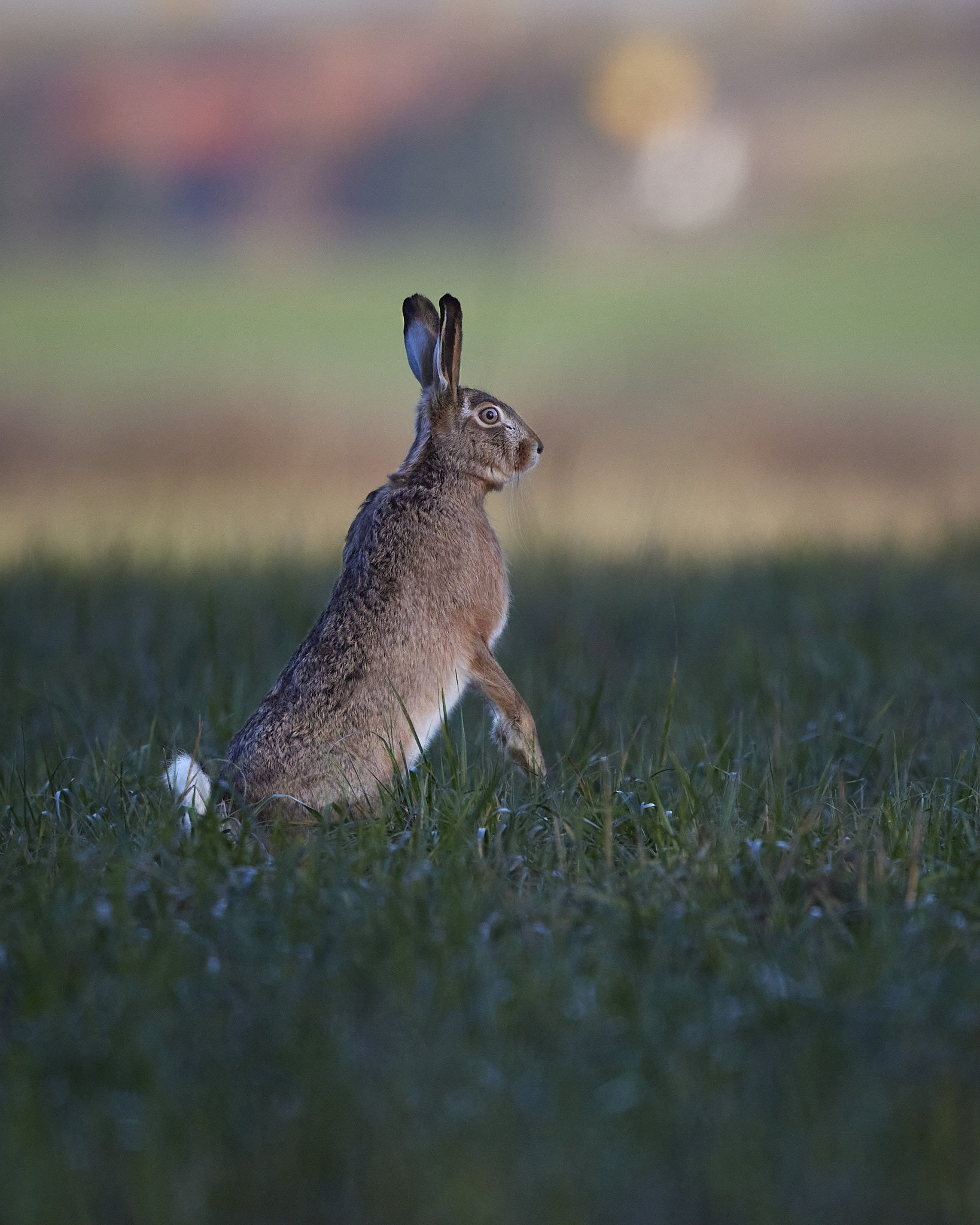
PS Oh and of course, I met some animals, too.

A winter walk with the GDT /  by Arne Bischoff

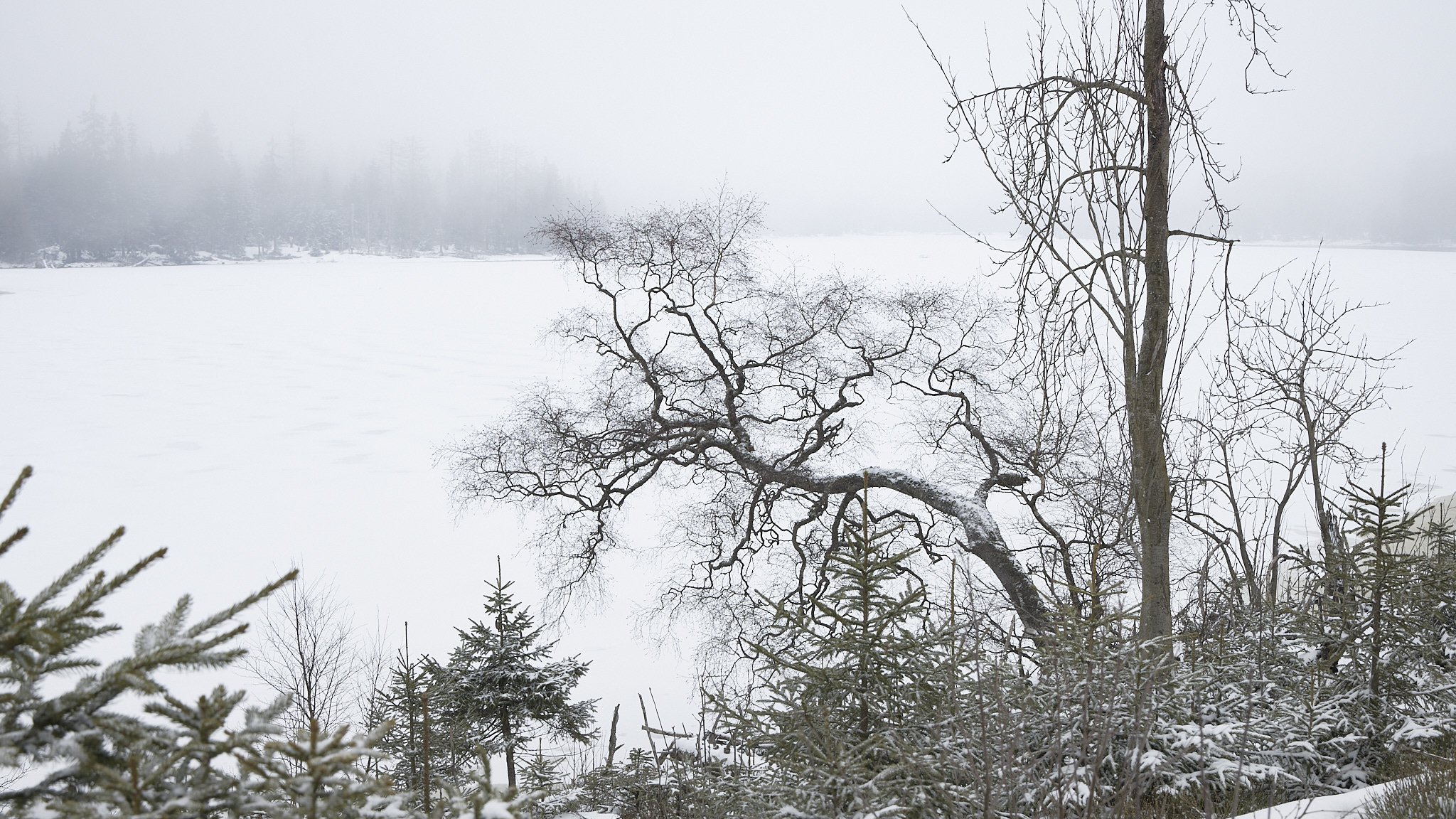
The winterly Oderteich lake seen from the eastern shore.

Back in February 2022, I spent some time in the local Harz mountain range. I was out with a group of the German Society for Nature Photgraphy (GDT). The GDT is one of the most renowned nature photography organisations in the world, best know for its annual competitions European Wildlife Photographer of the Year and GDT Nature Photographer of the Year. The society is organised within regional sub groups, who go out on excursions, do exhibitions, book projects, critique images together or just share some time with like-minded spirits. And this is exactly what we did. I accompanied my friends through “my mountains”, sharing a little local knowledge and learning from much more skilled and accomplished nature photographers.

Harz mountains: Nature’s building site

The Harz mountains are a classic Mittelgebirge. Its highest summit the Brocken sits only 1,141 m above sea level but features a Scandinavian or Alpine climate. The mountain range was subject to centuries of mining which lead to the plantation and harvest of fast growing spruce monoculture. In recent years, the Harz lost nearly 75 percent of the spruce biomass to a combination of climate change, heat, drought and the bark beetle benefitting from all of it. The erstwhile dense spruce forests seem dead to a lot of people, but it is not. The local national park (Nationalpark Harz) does not intervene with natural processes and lets nature do its very own rewilding programme. Especially the standing Coarse woody debris and the open space attract a lot of pioneer species and lead to a renewed ecological succession. What many perceive as dead is actually more biological diverse and species-rich than the plantations, we learned to know as “nature” (if you are interested in an in-depth explanation, check the embedded video). Losing the spruce monoculture is actually a win for bio-diversity.

Winter photography at Oderteich

Oderteich - a barrier lake - sits at the heart of the national park. It was a quite obvious location choice. You can experience all changes of the ecological succession here. Living spruce, dying spruce, dead but standing spruce, windthrown spruce, pioneer plants such as white birch or mountain-ash; and of course the winterly lake with ice, frost, snow, open water, and mute colors in all its glory.

I know the place really well, but this visit was a true first for me. We were a group of twelve (ish) and everyone was on his or her own and together at the same time. Wandering alone or sharing ideas or thoughts and working, slowly and deliberately their crafts. I felt a little shy in the beginning and was completely unused to this style of photography, usually preferring to be a lonely wanderer with animals as my hasty subject. So I did not take a lot of images. But I learned a lot. Thank you, for the experience, my friends!